For an interview with one seated storyteller, a recorder with built-in microphones that’s easy to set up is a natural starting point, provided you check the recording at the interview location. If you want your questions to remain clear and be easy to edit separately, two microphones connected to separate inputs may be a better fit. Make sure you’ve checked the power, storage, test recording and how you plan to use the recording before the interview.
Which recorder is right for you?
Recording one person’s first-hand account
If you’re having a quiet conversation with someone who’s seated, a recorder with built-in microphones can keep the set-up simple. Oral-History.Digital at Freie Universität Berlin stresses that the interviewee’s account should take priority. A test recording from the seat will help you check how clear it sounds.
Recording both sides of the conversation
If you also want your questions to remain clearly audible, separate microphones and inputs may affect which recorder is right for you. The Library of Congress recommends testing your equipment before the interview; Zoom specifies two XLR/TRS inputs for the Zoom H4essential.
Recording and reviewing longer interviews
For longer conversations, make sure the battery is charged, there’s enough storage and you can play back a test file. The Library of Congress recommends these checks before an oral history interview. If you’re considering cloud transcription, you should also clarify how the recordings will be used.
What should you look for when choosing?
When interviewing a seated person, the recording should serve their account. Oral-History.Digital at Freie Universität Berlin emphasises that it should take priority, while the Library of Congress recommends checking the battery, storage and settings beforehand.
Handheld recorder with built-in microphones
Suitable if: you mainly want to record a seated storyteller in a quiet room and value a simple set-up.
Consider: Microphone placement and room noise still matter. A simple set-up doesn’t guarantee a clear recording.
Multitrack recorder with separate inputs
Suitable if: you want to record the storyteller and your questions separately using suitable microphones. Zoom specifies two XLR/TRS inputs for the H4essential.
Consider: The microphones, connections, cables and set-up all need to suit the recording you have planned.
Voice recorder with internal storage
Suitable if: simple file management and voice-recording features matter more to you than separate tracks from external microphones.
Consider: Check the available recording time in the format you actually plan to use, and test the built-in microphones with the seating arrangement you have in mind.
| What you’re looking for |
What to check before buying |
Who is this most important to? |
| A clear voice recording |
Check microphone placement at the seat and listen to a test recording. |
If I mainly want to capture one person’s account, a clear voice at the actual recording location matters to me. Around 36% of consumers therefore put a clear voice recording first. |
| Separate voices in the conversation |
Check the number of independent inputs, compatible connectors and the tracks you’ll need. |
If I want my questions to remain clear and easy to follow, I want to be able to record both voices separately. Around 29% of consumers prioritise recording the storyteller and questions separately. |
| Recording for longer without interruption |
Check the power supply, available storage, recording format and that you can play back a test file. |
During a longer conversation, I don’t want to lose important passages because of a flat battery, full storage or an untested setting. Around 21% of consumers prioritise recording longer conversations in full. |
| Reviewing files later |
Consider supported formats, how you’ll transfer files and how you plan to use them. |
If I want to edit recordings later or archive them as agreed, the format and file management need to suit that process. Around 14% of consumers put reviewing and managing files later first. |
Common mistakes when choosing
-
Assuming 32-bit float will automatically make speech clear
A recording feature that helps manage levels is no substitute for suitable microphone placement or a test recording. Even with the recording formats listed by Zoom and Tascam, what matters is whether the voice is picked up clearly from the seat.
Test the recorder from the actual seat and listen to the test recording before the interview.
-
Assuming one microphone socket means two independent inputs
Tascam lists a stereo mini-jack for the DR-05XP, while Zoom specifies two XLR/TRS inputs for the H4essential. So a single socket is not the same as two separately usable inputs.
Before buying, check the number of inputs, the connectors and whether you need separate tracks for the specific model. If you need separate tracks, remember to allow for suitable microphones and cables too.
Extra microphones and cables can make the set-up more involved; otherwise, you may need a recorder with the right inputs.
-
Assuming the maximum recording time applies to every file format
The recording time available on the Philips VoiceTracer DVT4115 depends on the format you choose. So a general maximum doesn’t necessarily tell you how long you can record an interview in PCM/WAV.
Choose the format you want, then check the available recording time shown on the device.
-
Assuming permission to record includes permission to share
Recording, processing and making a recording available later may be separate activities. Permission to record doesn’t automatically mean you can share the file with others or archive it publicly.
Before the conversation, check that you’re authorised to record, and consider cloud transcription or making the recording public separately.
Key brands to consider
Zoom
The H1essential and H4essential may suit different set-ups using built-in microphones.
- Zoom specifies built-in X/Y microphones and a mono mode for the H1essential. The manufacturer also lists two XLR/TRS inputs and four tracks for the H4essential.
- The 32-bit float details come from the manufacturer; they aren’t independent proof that voices will be recorded clearly in a particular interview room.
Tascam
The DR-05XP is a handheld recorder with built-in microphones and an external stereo mini-jack.
- Tascam lists 32-bit float as well as other recording formats.
- A stereo mini-jack isn’t the same as two separately specified XLR/TRS inputs. Recording-quality claims come from the manufacturer.
Philips
The VoiceTracer DVT4115 is a voice recorder with internal storage and MP3 and PCM/WAV recording.
- Philips lists app control and the option to pair the recorder with cloud-based transcription.
- Available recording time depends on the format. If you use the cloud, you’ll also need to consider how the recording will be processed.
Sony
The ICD-UX570 is a compact voice recorder with Linear PCM and MP3 recording, internal storage and a recording monitor.
- Sony Germany’s technical specifications list these features for the ICD-UX570.
- These features don’t prove that the microphones will perform better in a particular interview room. Before the interview, check there’s enough free storage for your chosen format.
Recorders at Joybuy
This Joybuy selection includes voice recorders for seated conversations. For longer interviews, check the storage, recording format and that you can play back a test recording beforehand.
 No image available
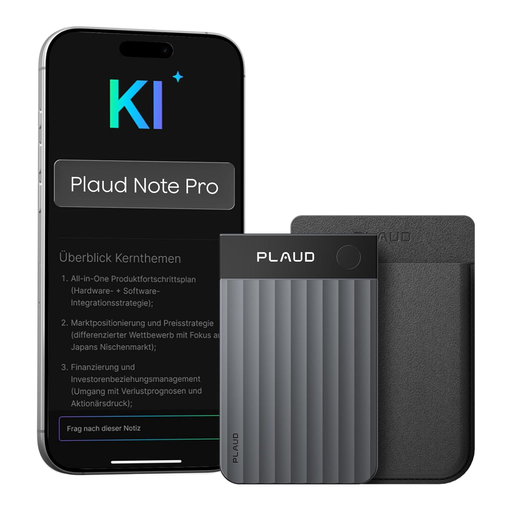
PLAUD Note Pro Voice Recorder, 64 GB
For seated conversations when you’re looking for a recorder with built-in microphones and internal storage.
Product details list four MEMS microphones, 64 GB of internal storage, up to 30 hours of recording and WAV recording. The product description lists 300 minutes per month for AI transcription.
View at Joybuy
 No image available
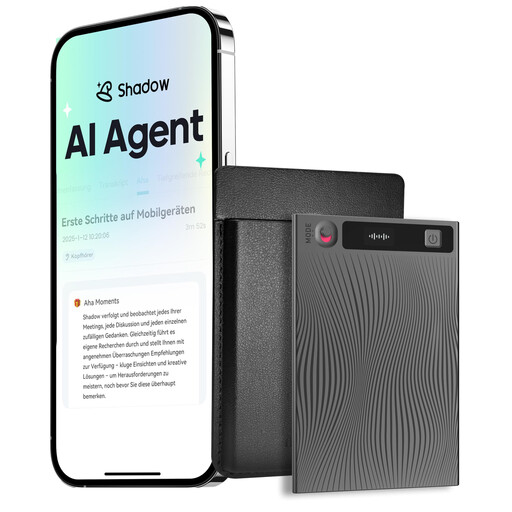
Mobvoi TicNote Standard AI Voice Recorder, 64 GB
An option for seated conversations if you’re looking for a voice recorder with multiple microphones and internal storage.
Product details list three microphones, 64 GB of storage, Wi-Fi, Bluetooth and an OLED display. The product description says the Plus Plan includes 600 minutes per month for AI features.
View at Joybuy
 No image available
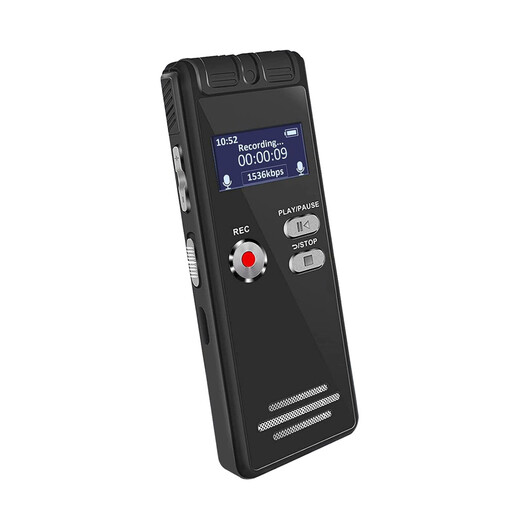
Rexsun Portable Digital Voice Recorder, 64 GB, L15
For conversations where a portable recorder with built-in microphones and one-button recording may be suitable.
Product details list two omnidirectional microphones, an included 64 GB TF card and up to 22 hours of recording. The card should not be removed while recording.
View at Joybuy
 No image available
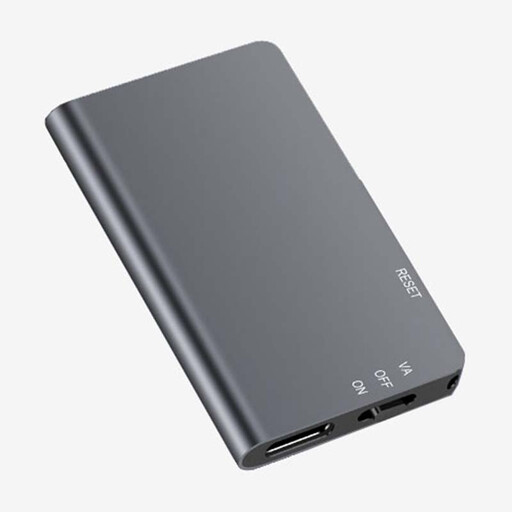
Rexsun Digital Voice Recorder, 64 GB, L810
For interviews where simple start-and-stop controls and transferring files later are important.
Product details list MP3 and WAV recording, timestamps, USB-C and up to 35 hours of continuous recording.
View at Joybuy
 No image available
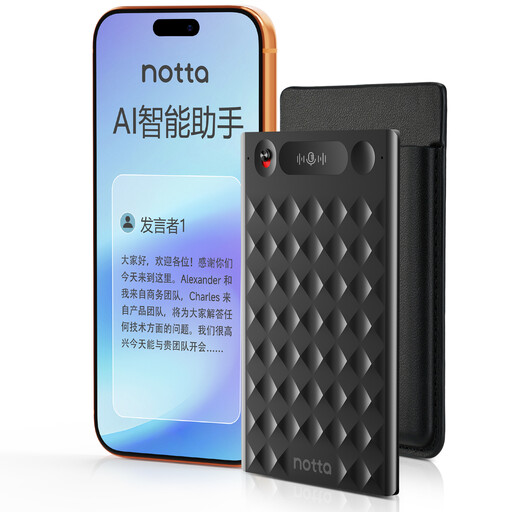
AI Voice Recorder with Case, 32 GB
An option for interviews if you’re looking for a voice recorder with internal storage and a choice of recording formats.
Product details list 32 GB of storage, up to 30 hours of recording, and MP3 and PCM/WAV recording.
View at Joybuy
Frequently asked questions
What should I test before a longer interview?
Before the conversation, check the battery, available storage and settings, and make a test recording that you can play back. The Library of Congress recommends these checks for oral history interviews. The available recording time on the Philips VoiceTracer DVT4115 also depends on the format you choose.
Can I secretly record a private interview with an eyewitness?
Under § 201 of the German Criminal Code, recording another person’s private spoken words without authorisation is a criminal offence. The German Federal Ministry of Justice includes this provision in the Criminal Code; make sure you’re authorised to record before the conversation. Permission to record doesn’t automatically mean you can share or publish the file.
Does consent to recording also cover cloud transcription or a public archive?
Not automatically. If personal data is being processed and the GDPR applies, there must be an appropriate legal basis for each purpose of processing. The German Federal Commissioner for Data Protection and Freedom of Information explains that consent must be informed. Make sure you separately clarify cloud transfers and public access for your specific project.
What happens if the product is faulty: statutory rights or a guarantee?
For a consumer purchase in Germany, statutory rights against the seller are separate from a voluntary guarantee. The Verbraucherzentrale explains the difference; if a product is faulty, you may be entitled to have it repaired or replaced. The rights that apply in your particular case depend, among other things, on the purchase contract and when you bought it.


