Listeners comparing orchestral recordings
If you listen to the same quiet and loud passages repeatedly, a consistent fit, suitable tuning and unchanged playback settings will help. Etymotic, Shure and Sennheiser offer wired models worth considering.


For the most consistent listening conditions when comparing recordings repeatedly, passive-isolating wired in-ear headphones are a good choice if your playback device has the right connection and the eartips fit well. If train noise and freedom of movement matter more, consider wireless in-ear headphones with ANC. In that case, pay attention to the fit, listening mode and battery life, rather than assuming that a codec or ANC specification will give you a better comparison of orchestral recordings.
If you listen to the same quiet and loud passages repeatedly, a consistent fit, suitable tuning and unchanged playback settings will help. Etymotic, Shure and Sennheiser offer wired models worth considering.
If you want to listen to music on the train without continually turning up the volume, fit and noise reduction are important factors to consider. The World Health Organization recommends well-fitting, noise-reducing headphones to help you avoid turning the volume up as much in noisy surroundings.
If you need to keep up with travel announcements while listening to music, a secure fit and easily accessible listening modes matter. Apple lists a Transparency mode for AirPods Pro 3, while Sony describes an Ambient Sound mode for the WF-1000XM6.
When comparing recordings on the train, your priorities will largely depend on whether consistent sound, noise isolation, awareness of your surroundings or how the device operates matters most to you.
Suitable if: you want to listen to the same passages repeatedly and your playback device has the right connection.
Consider: The fit determines the seal. A cable can get in the way when travelling, and strong isolation can make announcements harder to hear.
Suitable if: you want to reduce train noise and switch to an ambient or transparency mode when needed.
Consider: Fit and settings affect what you hear. For repeatable comparisons, keep the listening mode and sound settings consistent.
| What matters | What to check when buying | Who it matters most to |
|---|---|---|
| Consistent sound tuning | Check the tuning and fit, and use the same settings for both recordings. Etymotic describes the ER2SE as having a flat tuning and the ER2XR as having more prominent bass. | If you want to judge the differences between orchestral recordings, keep the fit and settings as consistent as possible. Around 29 % of consumers put comparing sound first for this reason. |
| Background noise during quiet passages | Look for a good fit and seal. Etymotic quotes 35–42 dB of passive attenuation for the ER2SE, while Shure quotes up to 37 dB for the SE215. These manufacturer figures are not directly comparable measurements taken on a train. | If train noise drowns out quiet musical details, effective noise reduction is especially important. Around 36 % of consumers prioritise blocking out ambient noise. |
| Fit and travel announcements | Check the available eartip sizes and whether the listening modes are easy to use. Apple lists five silicone tip sizes for AirPods Pro 3; an ambient mode does not guarantee that every announcement will be clear. | If you need to keep up with travel announcements while listening to music, fit and a listening mode suited to the situation matter. Around 21 % of consumers place particular importance on fit and situational awareness. |
| Connection and battery life | Make sure the connection is compatible with your playback device and check battery life in your preferred mode. Sennheiser lists a 3.5 mm plug for the IE 200, while Sony and Apple each quote up to 8 hours with noise cancelling enabled for the models mentioned. | If your playback device needs a particular connection or you want to listen without stopping to recharge, how the headphones are powered and connected matters. Around 14 % of consumers prioritise device compatibility and battery life. |
The World Health Organization notes that hearing is affected by both volume and listening time. Well-fitting, noise-reducing headphones can help you avoid turning the volume up as much in noisy surroundings.
First check the fit of the eartips and the noise reduction, then compare the recordings at a moderate volume.
Turning the volume up unnecessarily to drown out train noise can increase the strain on your hearing.
A manufacturer's passive attenuation figure does not tell you how ANC performs on a train or how neutral a pair of in-ear headphones sounds. Etymotic and Shure's figures are also not based on directly comparable measurements taken on a train.
Assess fit, noise reduction and sound tuning separately, and don't treat manufacturers' figures as a direct comparison between models.
A wired model needs a compatible output or adapter. Shure and Sennheiser both list a 3.5 mm plug for the SE215 and IE 200.
Check that the connection works with your playback device and find out which accessories are included with the specific model before you buy.
Depending on your playback device, you may need a compatible adapter.
Deutsche Bahn says that listening to music loudly, including through headphones, is not permitted in the ICE quiet zone.
Set the volume so that your music doesn't disturb other people.
The ER2SE and ER2XR are wired options for listeners who want to choose between a tuning the manufacturer describes as flat and one with more bass.
The SE215 is a wired in-ear monitor supplied with a range of eartips and a detachable cable.
According to the manufacturer, the IE 200 is for listeners looking for a wired in-ear with balanced tuning and adjustable bass response.
The WF-1000XM6 is a wireless ANC option with an ambient mode for travellers weighing up noise reduction and use with multiple devices.
AirPods Pro 3 are a wireless ANC option if the features of your Apple device matter to you.
According to Bose, the 2nd Generation QuietComfort Ultra Earbuds feature adjustable ANC, with separate eartips and stability bands to help you get a secure fit.
The models below include wired in-ear headphones and a wireless pair with ANC. Check the fit, settings and connection to make sure they suit your listening comparison and playback device.
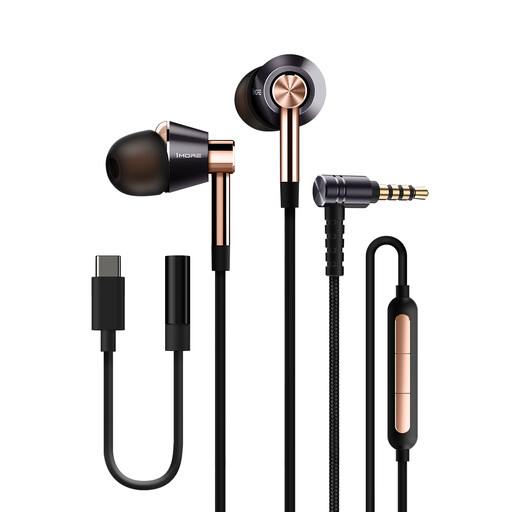 No image available
A wired option if you want to listen without worrying about your headphones running out of battery.
Three drivers; silicone and foam eartips; noise-isolating design.
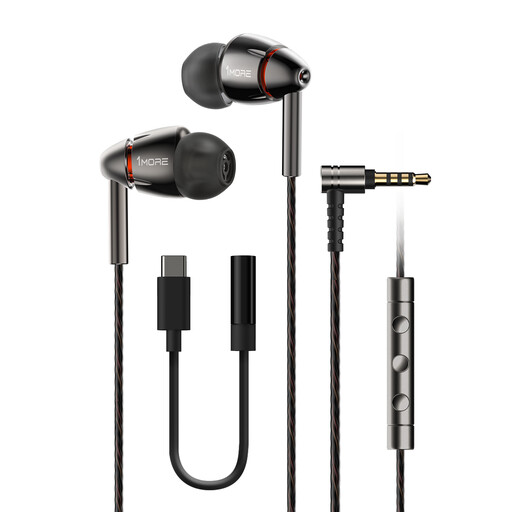 No image available
A wired option if you're looking for an adjustable fit and listening without worrying about your headphones running out of battery.
Four-driver system; eight pairs of eartips; product details list a 3.5 mm to USB-C adapter.
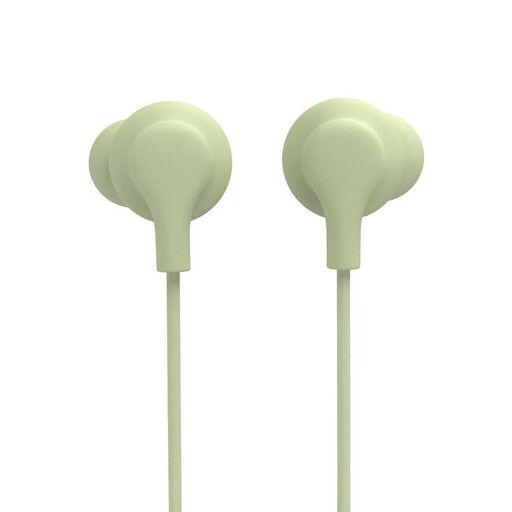 No image available
A wired option for a playback device with USB-C audio output.
USB-C connection; in-line remote with microphone; silicone eartips.
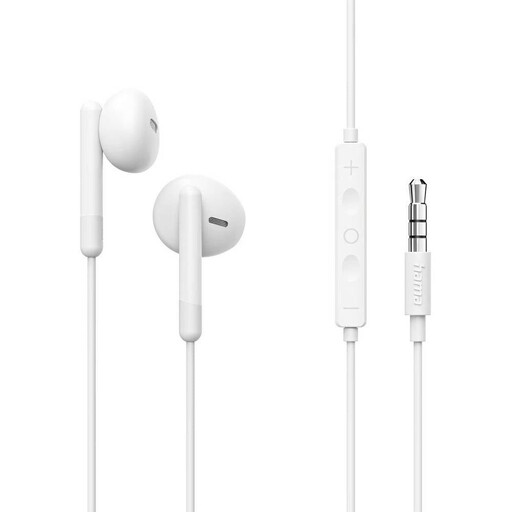 No image available
A wired option if your playback device has a compatible 3.5 mm audio connection.
3.5 mm connection; in-line remote with microphone.
 No image available
A wireless option if you want to use ANC on train journeys and adjust the eartip size.
Adaptive noise cancelling; five pairs of eartips in sizes XS to XL; adjustable EQ settings; multipoint connectivity.
According to the product description, brief audio dropouts may occur in busy 2.4 GHz environments.
Play the same passages at a similar volume, and keep the fit, listening mode and sound settings the same for both recordings. This keeps your comparison method consistent, but doesn't guarantee objectively uncoloured playback from any particular model.
Don't simply turn up the volume to drown out train noise. The World Health Organization gives 80 dB for up to 40 hours per week as an example, and recommends well-fitting, noise-reducing headphones to help you avoid turning up the volume as much in noisy surroundings. This is general guidance, not a measurement of your actual listening level.
First check that ANC is switched on and that the eartips are the right size and fit securely. Sony lists both as possible factors affecting the WF-1000XM6; for other models, check the relevant instructions.
Deutsche Bahn says that listening to music loudly, including through headphones, is not permitted in the ICE quiet zone. Make sure your music doesn't disturb other people. This applies to the quiet zone and isn't a general ban on in-ear headphones.
The connection must be compatible with your playback device. Check that it has a suitable audio output or whether you'll need a compatible adapter; a 3.5 mm plug alone doesn't tell you whether you can connect to your device without an adapter.