An organic bar could be a good after-school snack if its ingredients, portion size and allergen information suit your child. For a packaged organic product, first check for the EU organic logo and the code number of the organic control body. Organic certification does not mean a product is low in sugar. Next, compare the nutritional information per 100 g and read the ingredients list and any precautionary allergen statements.
Who is this choice relevant to?
Families comparing sugar and ingredients
If you’re packing a bar in your child’s school bag for after school, it’s worth looking beyond the organic label to check the sugar per 100 g and the order of the ingredients. The Consumer Advice Centre points out that you need to check the nutritional information to see the sugar content.
Families with allergen or gluten requirements
The label for the specific variety is what matters when making your choice. The Federal Centre for Nutrition explains that allergenic ingredients are highlighted in the ingredients list; any precautionary statements about possible traces are also worth checking.
Families packing a snack for on the go
An individually wrapped portion can be handy for the journey home or an afternoon snack. Weight, packaging and any eating instructions are all relevant, as is whether the product is actually a bar.
What should you look for when buying?
Start by deciding whether you’re looking for a bar or another packaged snack. With bars, you can check the organic label, ingredients and sugar content on the specific pack. Allergens and ease of use can help narrow down your options further.
| Criterion | What to check | Who it matters most to |
|---|
| Sugar and ingredients |
Compare the sugar per 100 g and read the ingredients in the order listed. |
If fruit ingredients or sweet-sounding packaging influence my choice, I want to know how much sugar the bar actually contains. For around 31% of consumers, this comparison is a priority. |
| Allergens and traces |
Check the highlighted allergenic ingredients and any possible traces on the current pack. |
If someone in the family has an allergy, you need to choose the specific variety based on its labelling. Around 23% of consumers prioritise this check. |
| Organic certification |
For a packaged organic product, check for the EU organic logo and the code number of the organic control body. |
If you’re specifically looking to buy organic, you need clear certification rather than packaging that simply looks natural. This is the main concern for around 23% of consumers. |
| Portion and practicality |
Check the weight per portion, packaging and any eating instructions. |
For the journey home, the snack should be easy to pack and come in a suitable portion; younger children may also need eating instructions. Around 23% of consumers prioritise this everyday practicality. |
Common buying pitfalls
-
Assuming organic means low in sugar
Organic certification relates to how a product is produced, not its sugar content. biozentrale’s product information lists 26 g of sugar per 100 g for its BioKids Strawberry Crunch Bar; MOGLi lists 39.0 g per 100 g for its Forest Berry bar. These figures apply to these two varieties, not to all organic bars.
Always compare sugar per 100 g, then take the actual portion size into account.
-
Taking fruit sweetness as proof of low sugar
MOGLi says that the sweetness in its Forest Berry bar comes exclusively from fruit. Its nutritional information still lists 39.0 g of sugar per 100 g. So, where the sweetness comes from doesn’t replace checking the nutrition table.
When you see claims about sweetness, check both the ingredients list and the sugar content for that specific variety.
-
Assuming allergen information applies to every variety from a brand
Ingredients vary from bar to bar. Sesame is an allergen in the organic sesame bar described by EDEKA; possible traces of peanuts and tree nuts are also listed.
Check the current packaging for each variety, especially if certain ingredients or traces need to be avoided.
-
Assuming an online listing means it will be in stock locally
EDEKA notes that its sesame bar may not be available in every shop, and that the information may differ from what’s shown on the pack.
If you’re making a special trip, check local stock and read the information on the pack before putting it in your bag.
If the variety you need isn’t available locally, you may have to make an extra trip.
Brands to consider
These examples show different approaches to the product. Information about ingredients, nutritional values and allergens applies to the specific variety or product range mentioned, not to every bar from that brand.
biozentrale
The BioKids range includes small crunchy bars; biozentrale describes its strawberry variety as a snack for school and on the go.
- The BioKids Strawberry Crunch Bar is described as a 20-g portion; the control body code DE-ÖKO-001 is given for this variety.
- For the same variety, biozentrale lists 26 g of sugar per 100 g, as well as gluten and milk as allergens. Check for possible traces too.
MOGLi
MOGLi offers organic fruit-based bars for children, including a Forest Berry bar weighing 25 g per piece.
- According to MOGLi, the sweetness in its Forest Berry bar comes exclusively from fruit.
- The nutritional information lists 39.0 g of sugar per 100 g; according to the manufacturer, traces of milk and tree nuts may be present.
Pumpkin Organics
Pumpkin Organics’ soft organic oat bars are aimed mainly at younger children and families looking for a snack on the go.
- The manufacturer describes the range as having no added sugar; the bars contain naturally occurring sugars.
- For school-age children, the portion size and texture of the variety you choose should be suitable. If you have gluten or allergen requirements, always check the current packaging.
REWE Bio
REWE Bio is a supermarket own-brand within a range that also includes organic bars from other brands.
- The range includes different fruit, oat and muesli bars, so you can compare the ingredients lists for the specific products.
- Being part of the organic range doesn’t mean that every product has the same sugar content or allergen information.
EDEKA Bio
An organic sesame crunch bar described by EDEKA is sold in a pack of 3 × 25 g.
- The product information identifies this sesame bar as organic and lists 35.5 g of sugar per 100 g.
- It contains sesame; possible traces of peanuts and tree nuts are listed. EDEKA advises checking the pack in case its information differs.
Organic snacks at Joybuy
Here are two different options for an after-school snack: a fruit pouch and a muesli bar. If you’re specifically looking for a bar, the fruit pouch isn’t a like-for-like alternative, even though it comes in a small portion.
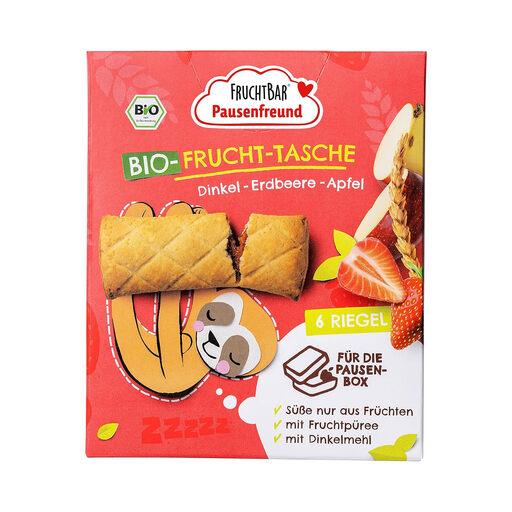 Image unavailable
FruchtBar Pausenfreund organic fruit pouch with spelt, apple and strawberry, from 3 years, 6 × 22 g
An individually portioned fruit pouch for on the go, but not a substitute for a bar if you want something with a firmer texture.
If you have allergen requirements, or want to check the sugar content before choosing, read the current pack information and nutritional details. Also check for the EU organic logo and the code number of the organic control body on the pack.
View at Joybuy
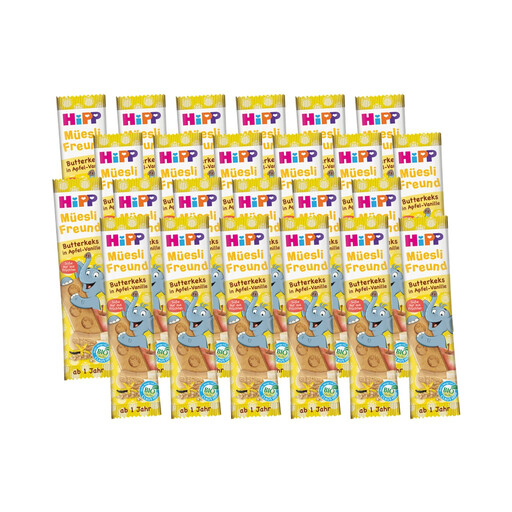 Image unavailable
Hipp organic muesli bar, butter biscuit in apple and vanilla, from 12 months, 24 × 20 g
An individually wrapped muesli bar for families who would rather pack a bar than a fruit pouch.
The age guidance of 12 months and over doesn’t necessarily mean the portion size and flavour will suit a school-age child. Before buying, check the sugar content, allergen information, EU organic logo and code number of the organic control body on the current pack.
View at Joybuy
Frequently asked questions
How can I identify a packaged organic bar?
For packaged organic food from the EU, look for the EU organic logo and the stated organic control body. The Consumer Advice Centre explains that the logo shows the product meets European organic standards; packaging that simply looks natural doesn’t do the same job.
Is an organic bar automatically low in sugar?
No. Organic certification doesn’t assess sugar content. Compare the sugar per 100 g, then consider the size of the portion you want to pack.
What does ‘no added sugar’ mean for a fruit bar?
It doesn’t mean the bar contains no sugar. Sugar from fruit ingredients also appears in the nutritional information, so check the per-100-g figure for the specific variety.
How do I check allergens in an organic bar?
Read the ingredients list and any precautionary statements about traces on the current pack for each variety. The Federal Centre for Nutrition notes that allergenic ingredients are highlighted in the ingredients list; the brand name and organic label are no substitute for this check.


