
Lieferung heute & morgen

Qualitätsgarantie

Willkommens-Angebote freischalten: KOSTENLOSE Lieferung | Bis zu 80 % RABATT | Kostenlose 30-Tage-JoyPlus-Testphase
App herunterladen
Starting weaning brings practical questions: which organic baby food from 5 months is right for your baby’s stage of development? Is a bedtime porridge a better choice than a vegetable purée? And how can you tell whether a product really suits your shopping needs?
Packaging often features claims such as ‘mild’, ‘natural’ or ‘no added sugar’. However, these claims don’t automatically give you a complete basis for comparison. Parents and carers should look out for three common pitfalls:
Baby purée from 5 months is often designed for the early stages of weaning, with finely puréed vegetables or simple meals. Products from 8 or 10 months may already contain small pieces, cereal flakes or have a firmer texture. These differences are relevant to your baby’s individual eating habits.
For example, a baby vegetable purée from 5 months can be a straightforward introduction, with just a few ingredients. A meal containing meat, cereals or pulses has a more complex ingredients list. The age guidance, texture and information on the label are all important.
These points can help you make an informed choice:
A organic baby porridge labelled ‘no added sugar’ doesn’t automatically have a low sugar content. A fruit purée made with apple and banana, for example, naturally contains sugar. This is different from added sugar.
Jars, pots and powders differ in how they’re stored and prepared. Powdered cereals, such as baby cereal porridge, are freshly mixed with water and should be measured according to the pack instructions. Opened jars and pots should be refrigerated as directed by the manufacturer and used promptly.
If you’re buying a multipack of baby food, also check that every individual portion is undamaged and that you have enough storage space. Any food left over after heating should generally not be offered again. Always follow the instructions on the packaging.
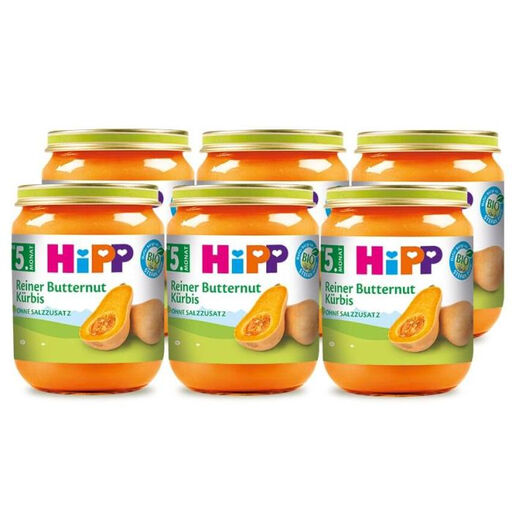
Why this product suits this profile: This finely puréed vegetable provides six small portions, making it a practical choice for a planned introduction to solid food.
The ingredients list is simple: butternut squash and water. According to the product information, it contains no added salt, flavourings, preservatives or colourings.
EU organic certification, 125 g portions and 33 kcal per 100 g according to the product data.
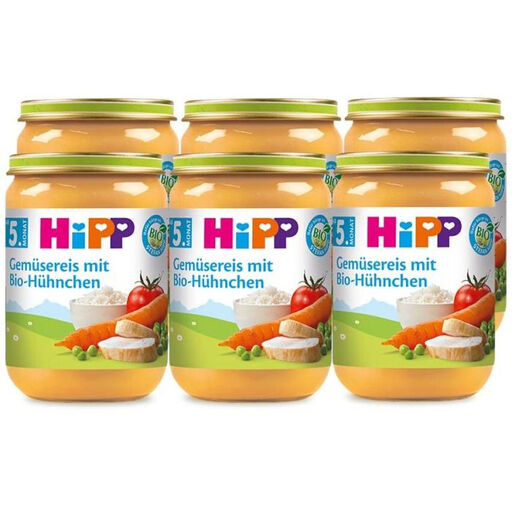
Why this product suits this profile: This meal combines vegetables, rice and chicken in a single 190 g portion and is labelled for the early weaning stage.
The product information states that no salt is added and that it contains no artificial flavourings, preservatives or colourings. You should still check the ingredients and allergen information.
Organic ingredients, six jars and 65 kcal per 100 g according to the product description.
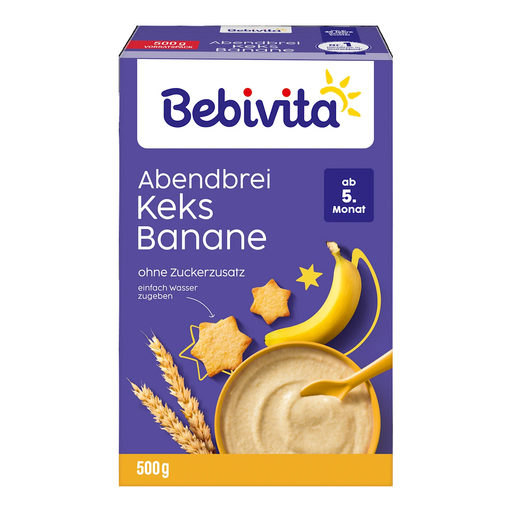
Why this product suits this profile: This milk and cereal porridge is mixed with water in individual portions and is labelled as a baby bedtime porridge from 5 months.
The product information states that it contains no added sugar or sweetened juice concentrates. It does, however, contain naturally occurring sugars, wheat and milk, and may contain traces of other allergens.
500 g pack, prepared with water, and fortified with calcium, iron and vitamin D, as stated on the label.
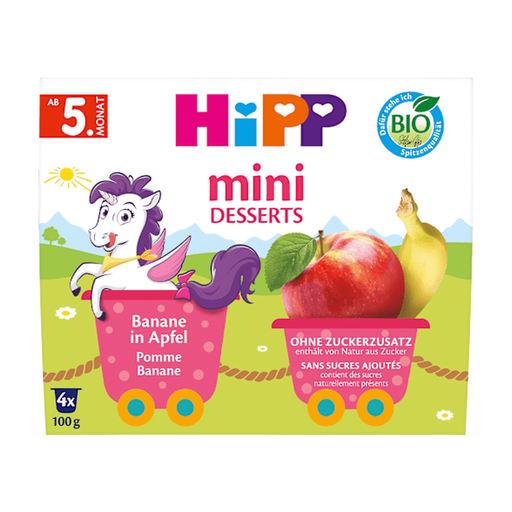
Why this product suits this profile: According to the product information, the shatterproof pots are handy for use on the go. The fruit purée can also be served as a baby fruit purée or added to porridge.
The ingredients list is simple, with apple and banana. However, ‘no added sugar’ doesn’t mean you can ignore the naturally occurring sugar content of 12.5 g per 100 g.
100% organic fruit purée according to the product data, four individual pots and age guidance from 5 months.
We’ve put together a complete, regularly updated list of products that meet these strict selection criteria and fully comply with the safety regulations in force in the EU.
As a general rule, only products whose packaging specifically states that they’re suitable for this age group should be considered. Finely puréed vegetables, simple fruit purées and milk and cereal porridges labelled for this age may be suitable for getting started. You should also take your baby’s individual readiness for solid food and advice from your child’s GP practice into account.
Baby bedtime porridge is often made with cereals and milk, or mixed with water. Baby vegetable purée, on the other hand, mainly contains vegetables and may include rice, meat or oil, depending on the product. The two options therefore differ in their ingredients, nutritional values, allergens and preparation.
This depends on the type of product and the manufacturer’s instructions. Opened jars and pots often need to be refrigerated and used within one day. Dry powder should be kept dry, sealed well and used within the stated period. Before each meal, check the condition of the packaging, the best-before date and the preparation instructions.