
Lieferung heute & morgen

Qualitätsgarantie

Willkommens-Angebote freischalten: KOSTENLOSE Lieferung | Bis zu 80 % RABATT | Kostenlose 30-Tage-JoyPlus-Testphase
App herunterladen
Introducing solid foods raises many practical questions: Which baby porridge from 6 months is right for your baby’s stage of development? Does “no added sugar” mean the same as sugar-free? And is a multipack of baby porridge worthwhile when products have a short shelf life once opened?
As a Joybuy Product Recommendation Officer, I filter the relevant product information and explain what parents and carers should look for when buying organic baby food from 6 months. The key considerations are not eye-catching packaging or marketing claims, but the recommended age, ingredients list, preparation instructions and practical storage.
A sugar-free baby porridge in the literal sense is rarely the most useful search criterion. Many products contain no added sugar, but naturally occurring sugars from fruit, milk or cereals. A fruit purée can therefore have a relatively high sugar content despite containing no household sugar.
Example: According to the product information, FruchtBar Organic Fruit Purée with strawberry, pear, grape, banana and oats contains 12 g of sugar per 100 g. The sugar comes from the ingredients. When choosing a product, it is therefore important to check the ingredients list and nutritional table carefully.
“From 6 months” and “from 10 months” are not interchangeable indications. A baby cereal porridge with a smooth consistency may be intended for the start of weaning, while a ready-made baby breakfast porridge containing milk, oats or several ingredients may only be suitable at a later stage.
Your baby’s individual readiness for solid foods is also important. The age recommendation on the packaging should be considered alongside advice from your paediatrician’s practice or midwife. If your baby has allergies, intolerances or if you are unsure, personalised advice can be helpful.
A multipack may seem practical at first glance and can make shopping easier. However, powdered porridges often need to be used within around three to four weeks of opening. For opened fruit purées in pouches, the product information usually recommends refrigerated storage and consumption within two days.
Before buying organic baby porridge in a multipack, consider how often you will actually offer the product. This helps you avoid unsuitable purchases and unnecessary food waste.
First, check the exact age indication:
A baby bedtime porridge is not automatically suitable for the start of weaning. Similarly, fruit purée should not be used permanently as a substitute for a varied meal.
The types of cereal used are particularly important in cereal porridges. A pure oat porridge has a different ingredient base from a five-grain porridge containing oats, wheat, barley, spelt and rye. For products containing wheat, spelt, rye or oats, check the information about cereals containing gluten.
One example of a clearly defined recipe is HiPP Organic Rice Cereal: according to the product information, it consists of 100% rice flour and vitamin B1. This may appeal to buyers looking for a porridge made with just one type of cereal. However, the statement “may contain mustard” should still be taken into account.
The EU organic logo or a named control body provides information about the certified origin of the ingredients. The claims “organic”, “no added sugar” and “no additives” should be assessed separately.
You should also check:
Fruit purée is convenient, but usually contains little cereal and protein. A baby cereal porridge, on the other hand, can be prepared with water, milk or infant formula, depending on the product. The preparation instructions on the packaging should always be followed.
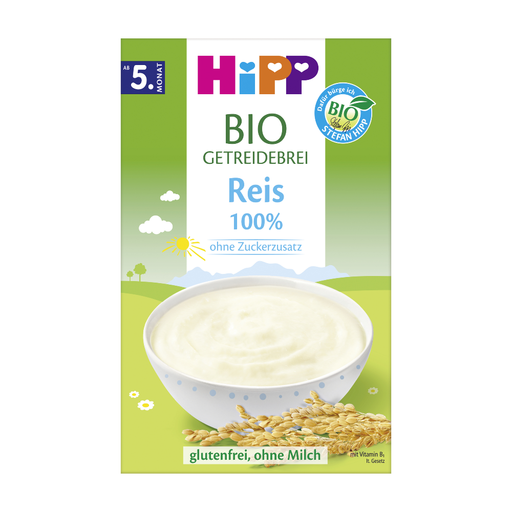
Why this product suits this profile: The recipe is limited to a single type of cereal, and the multipack contains seven 200 g packs. This makes planning easier for families who want to introduce solid foods gradually.
The product information specifies 100% rice flour and no added sugar. This makes the ingredient base easy to understand, although the naturally occurring sugar content should still be taken into account.
Single-grain recipe, gluten-free according to the product description, and enriched with vitamin B1. Fresh preparation for each meal.
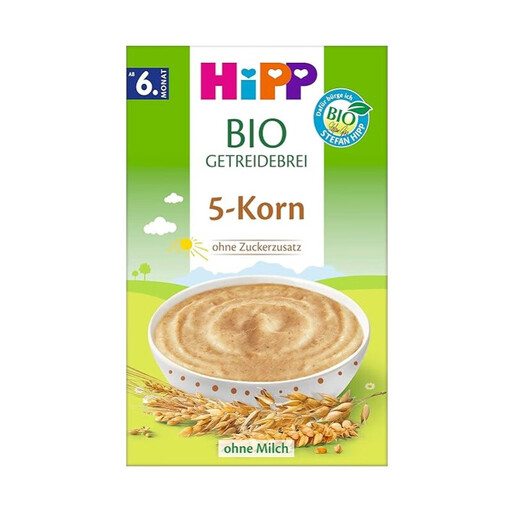
Why this product suits this profile: The blend of several organic wholegrains is aimed at buyers who prefer a versatile cereal base and detailed product information.
The recommendation from 6 months is clearly stated. The ingredients list names the cereals included; it should be checked particularly carefully in cases of gluten or mustard sensitivity.
Five organic cereals, a wholegrain base and vitamin B1. According to the product information, the porridge contains no added sugar.
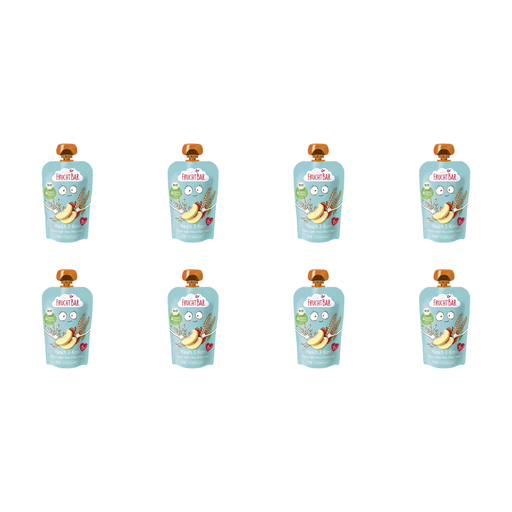
Why this product suits this profile: The individual pouches are ideal for taking with you or for households that want to offer ready-made fruit purée regularly.
The pack contains eight individual 100 g portions. This means you do not have to open a larger jar every time. However, the storage instructions on the packaging still apply once opened.
Organic fruit purée with apple, peach and apricot, plus oat, spelt and millet flour. According to the product information, it contains no added sugar and comes in a resealable pouch.
For a ready-made baby fruit purée containing several types of fruit, consider the FruchtBar Organic Fruit Purée with Raspberry, Blueberry, Grape, Banana, Apple and Oats. It contains eight 100 g pouches and, according to the product description, is suitable for babies from 6 months.
A baby breakfast porridge with a later recommended age is HiPP Breakfast Porridge Banana–Blueberry–Oat from 10 Months, 6 x 160 g. The jars contain milk, fruit and oats and, according to the product information, can be served warm or cold. For an evening porridge from 8 months, HiPP Good Night Milk Porridge with Oats and Apple is designed for this purpose.
We have put together a complete, regularly updated list of products that fully meet these strict selection criteria and the safety regulations applicable in the EU.
Suitable products are those whose packaging explicitly states that they can be used from 6 months or from the start of weaning. A pure cereal porridge can be prepared with water, milk or infant formula. The specific preparation instructions and your baby’s individual readiness for solid foods should be taken into account.
No. “No added sugar” means that no additional sugar has been added. Fruit, milk and cereals can still contain naturally occurring sugars. This is why the ingredients list and nutritional information should be read together.
This depends on the type of product. Dry mixes are generally stored in a dry, hygienic place at room temperature and used within the stated period. Opened fruit purées often need to be refrigerated and consumed within two days. The instructions on the relevant packaging should always be followed.