
Lieferung heute & morgen

Qualitätsgarantie

Willkommens-Angebote freischalten: KOSTENLOSE Lieferung | Bis zu 80 % RABATT | Kostenlose 30-Tage-JoyPlus-Testphase
App herunterladen
Starting your baby on solid foods brings plenty of product questions: should it be a vegetable purée, milk porridge, cereal porridge or fruit purée? Are squeeze pouches suitable for on-the-go? And is a multipack really worth it?
When shopping for organic baby food from 6 months, three common pitfalls often lead to the wrong purchases:
An organic label describes the origin and production requirements of the ingredients. It doesn’t automatically mean a product is sugar-free or suitable for every age. Look out for:
With baby porridge, simple recipes are often easier to assess. Alnatura Organic Carrot Purée, for example, contains carrots and water and is labelled from the fifth month. A fruit purée like the FruchtBar varieties, on the other hand, naturally contains more sugar from fruit, even if no extra sugar has been added.
The “from 6 months” label is an important guide, but it doesn’t replace your own judgement. Texture and intended use are also relevant when choosing:
Always check the current packaging information. Recipes and age recommendations can change.
Milk porridges often contain milk, wheat, oats or other gluten-containing cereals. If you know your baby has any intolerances, the full ingredients and allergen list is essential. A note like “May contain traces of…” should also be taken into account.
For powdered porridges, preparation is especially important: boil water, let it cool to the recommended temperature, stir in the powder fresh, and check the temperature before feeding. Do not reuse leftovers. Opened jars and pouches must be stored according to the manufacturer’s instructions and used within the stated time frame.
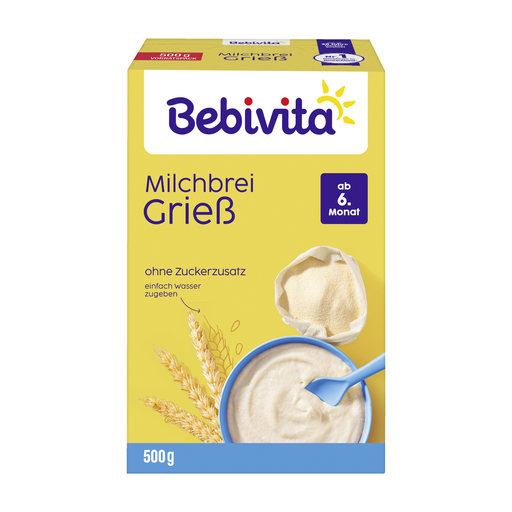
Why this product fits the profile: The 500g bag is ideal for families who prepare milk porridge regularly and prefer a bulk pack. The powder is mixed with water.
The product label states no added sugar or sweetening juice concentrates. You should still check the ingredients list before buying.
Suitable from 6 months, with wheat semolina, milk components and declared amounts of calcium, iron and vitamin B1.
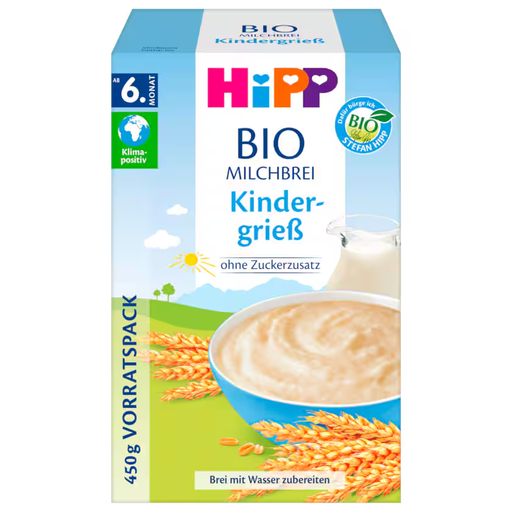
Why this product fits the profile: This organic milk porridge is designed for weaning from 6 months and is prepared with water. The pack size is ideal for regular evening meals.
The ingredients and nutritional information are clearly stated. “No added sugar” should still not be equated with a sugar-free product.
Organic ingredients, wheat and milk powder, plus declared nutrients such as calcium, iron, vitamin D and vitamin B1.
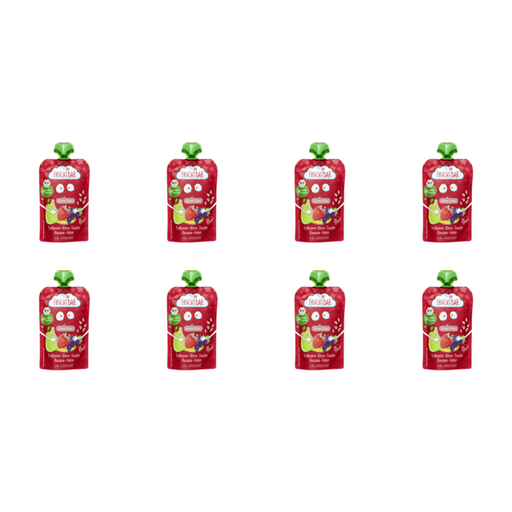
Why this product fits the profile: Eight resealable 100g portions are perfect for days out, nursery bags or stocking up. The product is labelled from 6 months.
The pack states no added sugar. However, because of the fruit content, the purée contains naturally occurring sugar; prolonged sucking should be avoided.
Organic fruit purée with 4% oats, resealable packaging and 800g total content in a multipack.
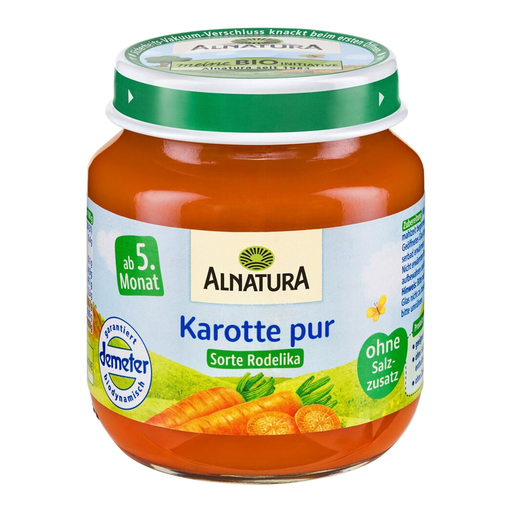
Why this product fits the profile: The finely puréed recipe with carrots and water is labelled for the start of vegetable weaning.
The short ingredients list makes it easy to check for salt, added sugars and allergens. The age recommendation from 5 months should be matched with your own weaning plan.
Carrots from Demeter farming, no added salt and a 125g portion in a jar.
We’ve put together a full, regularly updated list of products that meet these strict selection criteria and the safety regulations in force across the EU.
Depending on your baby’s development, suitable options include vegetable purées, simple cereal porridges, milk porridges and certain fruit purées with the appropriate age label. The information on the packaging and your individual weaning plan are what matter most.
No. “No added sugar” means that no extra sugar or sweetening ingredient has been added. Fruits, milk and cereals can still naturally contain sugar.
This depends on the product and packaging. Opened jars are usually stored sealed in the fridge and used the next day. For squeeze pouches, the product information often states 24 to 48 hours. The specific manufacturer’s instructions on the label take priority.