
Lieferung heute & morgen

Qualitätsgarantie

Willkommens-Angebote freischalten: KOSTENLOSE Lieferung | Bis zu 80 % RABATT | Kostenlose 30-Tage-JoyPlus-Testphase
App herunterladen
An organic baby food 6-pack may seem practical at first glance: the jars are portioned, have a long shelf life and are usually cheaper than buying individual units. However, larger packs do not automatically mean you are making the right choice. The key factors are the age stage, ingredients list, consistency, allergens and the actual quantity you are stocking up on.
When introducing complementary foods, three common purchasing mistakes can easily be avoided:
For baby food jars from 6 months, the product should carry the label “from 6 months” or an equivalent statement from the manufacturer. Meals for baby food from 8 months may have a different consistency or contain softer pieces. Baby food from 12 months often has a coarser texture designed to reflect the child’s developing chewing skills.
The age recommendation is not a blanket recommendation for every child. If you are unsure about introducing individual foods or your child has known intolerances, you can consult your paediatrician’s practice or a qualified nutritionist.
Pay attention to the texture as well:
A product containing vegetables and pieces may be useful during the transition, but it is not automatically suitable for every child.
When choosing vegetarian baby food or plant-based baby food, it is worth taking a close look at the source of protein. The range includes meals containing ingredients such as pea protein or chickpeas. The term “plant-based” should always be checked against the complete ingredients list.
According to the product information, HiPP Organic Macaroni with Peas and Vegetables contains, among other ingredients, carrots, peas, spinach, pasta and pea protein. The stated vegetable content is 48 per cent. The meal is described as fully plant-based and is intended for babies from 8 months. However, it contains wheat and gluten; celery is also listed. According to the labelling, it may contain egg and mustard.
The ingredients list is also important for HiPP Organic Spaghetti with Peas Bolognese: tomatoes, carrots and peas make up key components, alongside pasta and pea protein. The product is described as 100 per cent plant-based and suitable from 6 months. It contains wheat and gluten, while egg and mustard may be listed as traces or possible ingredients.
EU organic certification is a verifiable labelling feature. However, it does not by itself indicate whether a meal has been made without added salt. If you are looking for an organic baby meal with no added salt, check the manufacturer’s specific statement.
The HiPP meals mentioned above are labelled “no added salt”. This does not mean that the product is sodium-free. The nutritional information may show a naturally occurring salt content from the ingredients. For comparison, the HiPP Organic Macaroni meal contains 0.05 g of salt per 100 g, while the HiPP Spaghetti meal contains 0.03 g per 100 g.
Bebivita Couscous and Vegetable with Sweet Potato is intended for children from 12 months and, according to the ingredients list, contains iodised table salt. It is described as an organic product with no added flavourings, but this should not be confused with a meal containing no added salt. The 250 g jars provide more per portion than many meals intended for younger babies.
The following recommendations group the products according to specific usage profiles. The current packaging information, best-before date and your child’s individual tolerance remain the deciding factors.
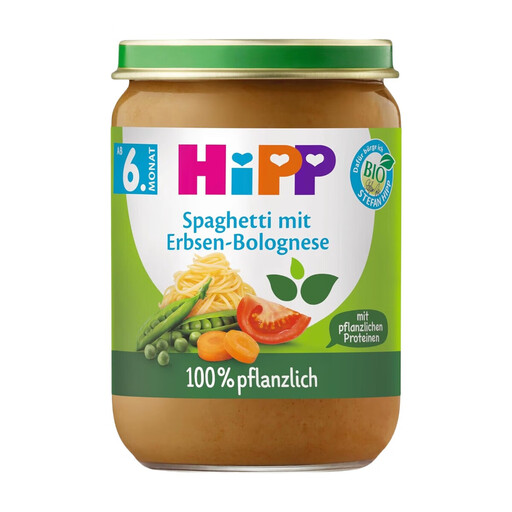
Why this product suits the profile: The six 190 g jars are ideal for households that want to build up a supply in portions and are looking for a plant-based meal from 6 months.
The age recommendation, the statement that it contains 100 per cent plant-based ingredients and the “no added salt” claim can all be checked separately in the product information.
EU organic-certified ingredients, 190 g portions and a finely puréed texture with soft pieces.
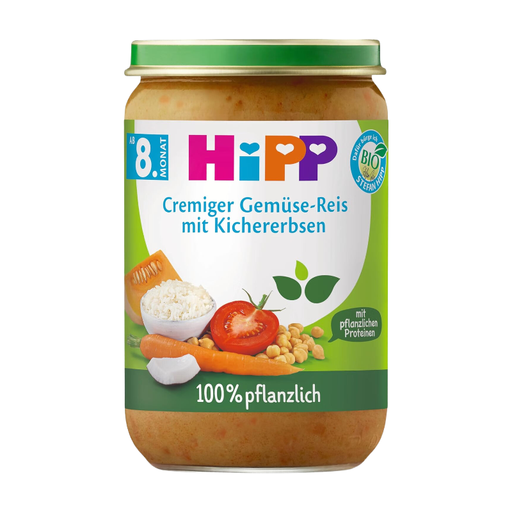
Why this product suits the profile: Suitable for parents who prefer a stated vegetable content and a plant-based combination of rice and chickpeas.
The product description states that it contains 51 per cent organic vegetables, contains no added salt and is suitable from 8 months.
220 g jars, organic vegetables, chickpeas and rice; specified as a meal from 8 months.
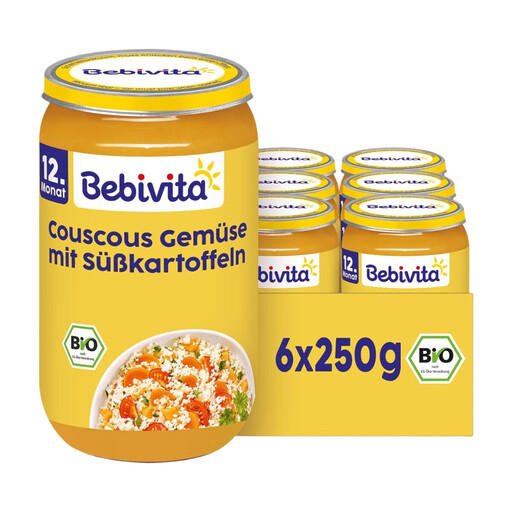
Why this product suits the profile: The 250 g portions are designed for toddlers from 12 months and are suitable for families planning larger meals as part of their stock.
The selection takes the coarser, age-appropriate texture into account. Added iodised table salt is clearly listed in the ingredients and is not confused with “no added flavourings”.
EU organic-certified ingredients, 250 g jars and a chunky consistency for children from 12 months.
A 6-pack should be stored in a cool, dry place away from direct sunlight. Before opening, check the lid, jar and best-before date. A bulging lid, damaged jar or unusual popping sound when opening are reasons not to use the product.
Once opened:
A 6-pack can make shopping easier when you are out and about. However, check that the daily quantity, preferred consistency and ingredients are genuinely suitable for your child’s stage of development.
We have put together a complete, regularly updated list of products that fully meet these strict selection criteria and the safety regulations applicable in the EU.
That depends on the price per item, total weight and delivery costs. Do not compare only the pack price; also check the price per 100 g. A 6-pack with 190 g per jar contains significantly less food overall than a pack of 250 g jars.
Unheated leftovers should be covered and stored in the fridge, then used according to the manufacturer’s instructions, often by the following day. Heated or already fed leftovers should not be returned to your supply.
Yes, some plant-based meals are sold with the statement “no added salt”. Nevertheless, check the ingredients list and nutritional information. “Vegetarian”, “plant-based”, “organic” and “no added salt” are different product characteristics and should each be checked separately.