
Lieferung heute & morgen

Qualitätsgarantie

Willkommens-Angebote freischalten: KOSTENLOSE Lieferung | Bis zu 80 % RABATT | Kostenlose 30-Tage-JoyPlus-Testphase
App herunterladen
Organic baby food should suit your child’s age, stage of development and everyday routine. The selection ranges from vegetable jars and baby porridge from 4 months to organic snacks for toddlers. At the same time, similar packaging, terms such as “natural” and large multipacks can make comparison difficult. Checking the ingredients list, age recommendation and portion size before buying can help you avoid unsuitable purchases.
The EU organic logo mainly describes the origin and processing of the ingredients. On its own, it does not indicate whether a product is intended as a vegetable accompaniment, snack or complete meal. A vegetable-only jar such as pumpkin may be suitable when starting complementary feeding, but it does not automatically replace a varied meal.
Fruit purée for babies naturally contains sugar. A product with no added sugar simply means that no additional sugar is listed in the ingredients. It is therefore worth checking the nutritional information and the order of the ingredients. Products containing fruit concentrates or agave syrup should also be assessed accordingly.
Baby porridge from 4 months, baby porridge from 6 months and products from 8 or 12 months often differ in texture and ingredients. Smooth purées are not automatically suitable for every child at the same stage of development. Children should also be sitting upright and supervised when eating snacks to help reduce the risk of choking.
The age recommendation on the label is an important guide:
The actual introduction of foods should suit your child’s individual stage of development. If you have questions about complementary feeding or possible intolerances, advice from a paediatrician or qualified nutrition professional may be helpful.
A short ingredients list makes it easier to assess a product. In particular, check:
HiPP organic baby food, for example, includes vegetable jars, meals, fruit and cereal products, and milk porridges. Alnatura organic baby food also offers single ingredients, cereal products and snacks. However, the brand name and organic claim do not replace checking each label individually.
Buying baby food in a multipack can make stocking up easier and reduce the unit price. Before buying, however, consider how much you are likely to use, the best-before date and your available storage space. Opened jars and fruit products should be refrigerated according to the manufacturer’s instructions and used within the stated period. Unopened products should be stored in a dry, cool place away from direct sunlight.
For products served warm: remove the portion, heat it, stir thoroughly and check the temperature. Leftovers that have already come into contact with a used spoon should not be stored again.
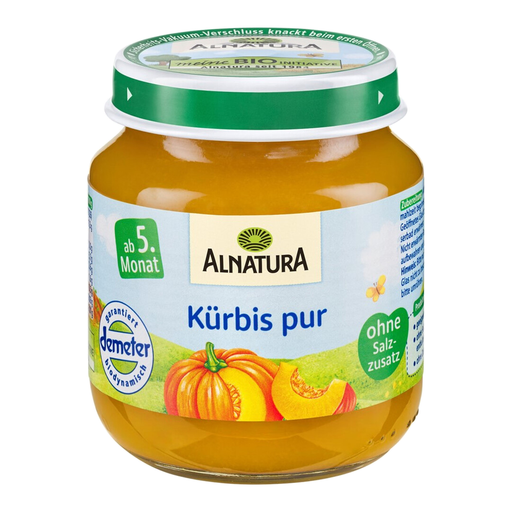
Why this product suits the profile: This single-ingredient jar is suitable for families who want to start complementary feeding with a simple recipe.
The recipe contains 95% organic pumpkin and water; according to the product information, no added salt is included.
Finely puréed, gluten-free and labelled as suitable from the 4th month; suitable as an individual vegetable component.
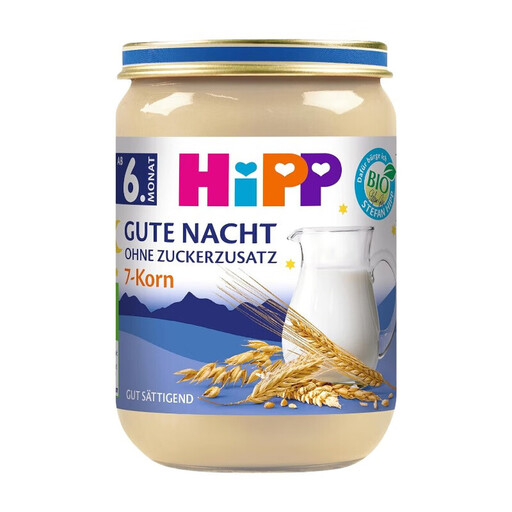
Why this product suits the profile: For families looking for a ready-made evening porridge for babies containing several types of cereal.
The age recommendation from 6 months and the “no added sugar” claim are clearly stated; however, the recipe contains milk and cereals containing gluten.
Seven organic cereals, milk preparation and vitamins A, B1 and D according to the product information; can be served warm or cold.
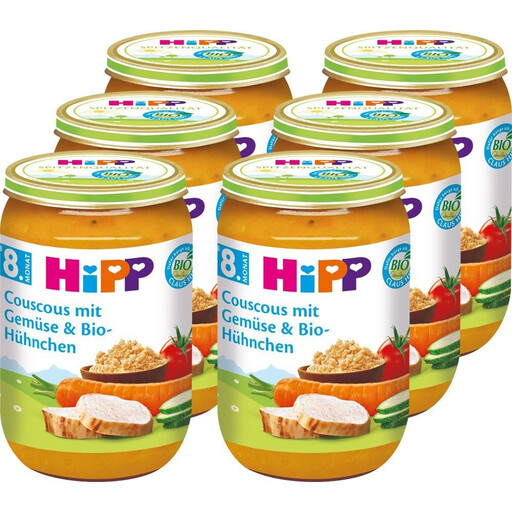
Why this product suits the profile: This multipack is aimed at households that regularly need a ready-made lunch meal with a textured consistency.
The product description states that it contains 49% organic vegetables, small pieces and no added salt. Gluten from the couscous should still be considered as an allergen.
Six jars of 220 g each, labelled as a complete meal; suitable from 8 months.
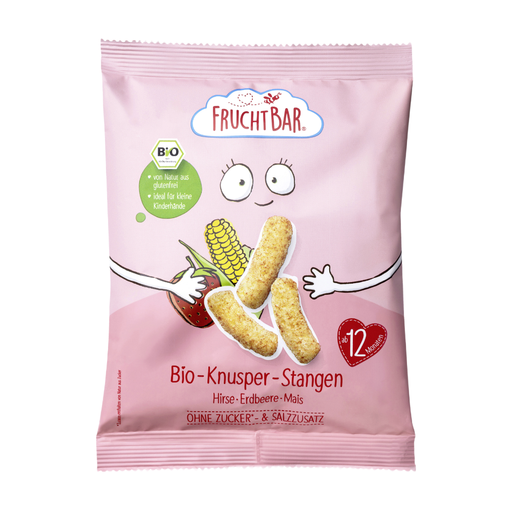
Why this product suits the profile: The small pack is intended for taking out and about or as an occasional extra for children from 12 months.
The information states that no sugar or salt has been added and that the recipe is gluten-free. Because of the firm shape, children must be supervised while eating.
Organic millet as the main ingredient, strawberry powder and a compact 30-g pack; according to the product information, suitable from 12 months.
We have put together a complete, regularly updated list of products that fully meet these strict selection criteria and the safety regulations applicable in the EU.
Finely puréed single ingredients such as vegetables are often used when introducing complementary foods. A product labelled “from 4 months” can provide a useful guide. However, the recommendations of your child’s GP or paediatric practice and your child’s readiness to accept solid food are also important.
This depends on the product. Many opened vegetable and meal jars should be refrigerated and used the following day. Fruit purées may sometimes be kept for up to three days. Always follow the instructions on the relevant packaging.
A multipack can reduce the unit price and the number of orders you need to place. Whether it is worthwhile depends on the price, shelf life, storage space and how much you actually use. Only buy larger quantities if the age stage, ingredients and flavour are likely to suit your child’s needs.