
Lieferung heute & morgen

Qualitätsgarantie

Willkommens-Angebote freischalten: KOSTENLOSE Lieferung | Bis zu 80 % RABATT | Kostenlose 30-Tage-JoyPlus-Testphase
App herunterladen
Organic baby food should suit your child’s stage of development, have a clear list of ingredients and be practical for everyday family life. However, there are clear differences between porridge powder, fruit-and-cereal meals and baby meals in jars. An organic seal alone does not tell you whether a product is suitable for your child.
The wording “from 5 months”, “from 6 months” or “from 8 months” is not simply a marketing statement. It describes the age stage intended by the manufacturer and often the consistency, too. A finely puréed meal for starting complementary feeding is made differently from a porridge with fine pieces for older babies.
Therefore, check the following before buying:
Baby food with no added sugar can still contain sugar from fruit, milk or cereals. This is to be expected in a baby fruit purée. The key is to check the ingredients list: does it contain added sugar, sweetening juice concentrates or syrup? If not, the sugars listed will generally come from the ingredients used.
For example, HiPP organic baby food includes products which, according to the product information, contain no added sugar. Bebivita baby food is also available in several varieties without added sugar. The specific recipe should be checked on the packaging before every order.
An organic baby food multipack often reduces the price per item and makes it easier to plan your supplies. At the same time, there is a greater risk that your child will not accept a particular flavour, or that several jars will be opened at once. For products with a short recommended consumption period after opening, this can lead to unnecessary waste.
A multipack is particularly useful when:
For starting complementary feeding, products such as a baby vegetable purée or a finely puréed meal may be suitable. According to the product information, the Bebivita meal “Rice with Carrots and Turkey from 5 Months” is intended from 5 months and contains carrots, turkey, potatoes and rice starch. HiPP Vegetable Risotto is also listed as suitable from the 5th month and contains vegetables and rice, among other ingredients.
From 6 months, cereal porridges, milk porridges and fruit-and-cereal combinations can broaden the selection. A baby cereal porridge should be checked for the types of cereal it contains. Oats, wheat, barley, rye and spelt have different ingredient profiles and may contain gluten.
From 8 or 10 months, foods with fine pieces are often recommended. According to the product information, a product such as “HiPP Organic Baby Menu Potato, Carrot & Beef” is suitable from 8 months and contains fine pieces. Baby breakfast porridge and muesli in jars are listed in some of the available product data as suitable from 10 months.
The organic seal relates to the production requirements for the labelled ingredients. It does not replace checking the individual composition. Pay particular attention to:
For fruit products, the fruit content should be considered alongside the consistency. A baby fruit purée with cereal may be more filling than a pure fruit purée, but it is not automatically a complete main meal.
Jars are ready to use and make portioning easier. After opening, follow the instructions on the label. Depending on the product, uneaten portions that have not been heated must be sealed, stored in the fridge and often consumed the following day. Some fruit-and-cereal products specify a longer period of up to three days. The specific packaging always takes precedence.
Dry porridges such as HiPP 100% Oats Porridge are prepared with water, milk or infant formula. After opening, the pack should be stored in a dry, hygienic place at room temperature. Use clean utensils and check the temperature before feeding.
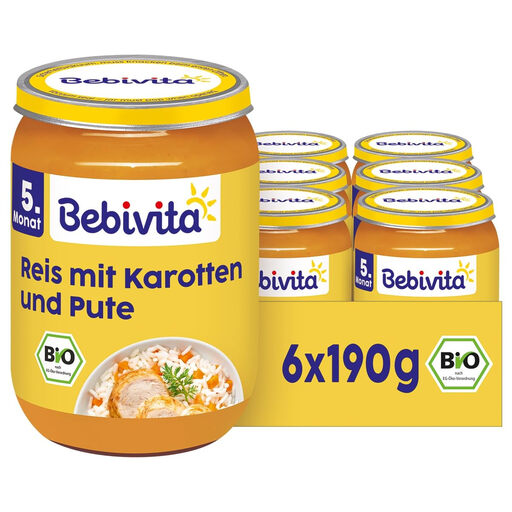
Why this product suits this profile: The 6-pack contains six portioned jars for starting complementary feeding and, according to the product information, is intended from 5 months.
The clear age recommendation and finely puréed consistency help you avoid buying food with pieces that is unsuitable for the early stages.
35% carrot content, turkey and rice starch; according to the product data, with no added salt.
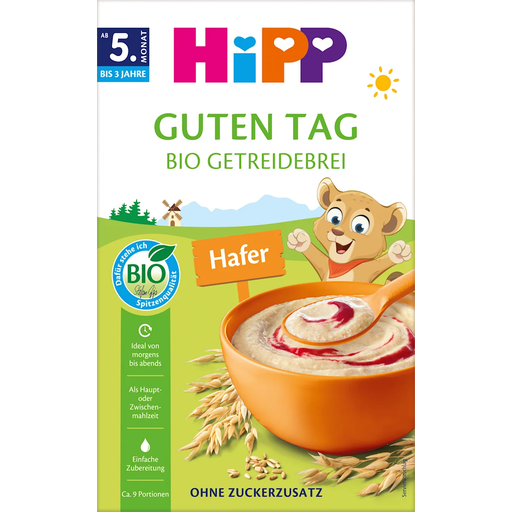
Why this product suits this profile: According to the product information, the recipe consists of 100% organic oat flour and is suitable from 5 months.
The short ingredients list makes it clear which type of cereal is included, rather than leaving you to assess a difficult-to-interpret mixed recipe.
7 packs of 200 g each; according to the product description, with no added sugar and containing vitamin B1.
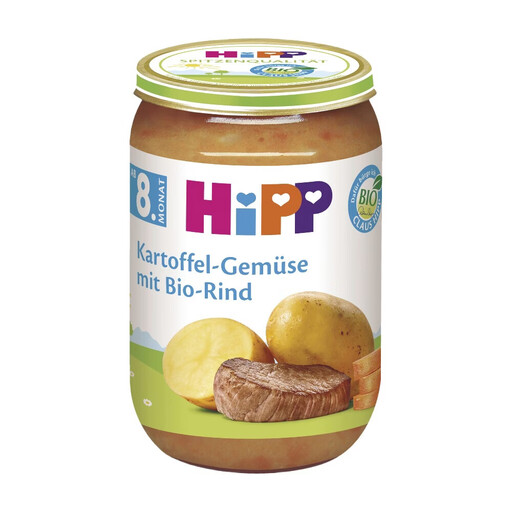
Why this product suits this profile: Six 220 g jars are ideal for families who regularly need a portioned main meal.
The age recommendation from 8 months and the specified fine pieces help you avoid choosing a consistency unsuitable for starting complementary feeding.
Potatoes, carrots and beef; according to the product information, with no added salt, dairy products, flavourings, preservatives or colourings.
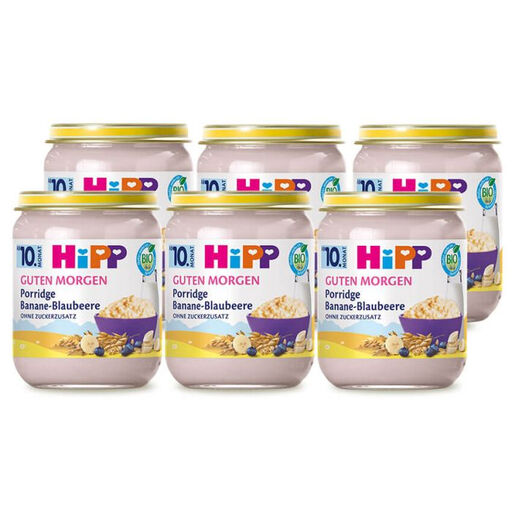
Why this product suits this profile: According to the product information, this ready-to-eat breakfast can be served hot or cold and is intended for children from 10 months.
The clear age recommendation helps prevent a breakfast product for older children from being confused with an early complementary-feeding product.
6 jars of 160 g each; organic milk, oats and fruit, according to the product data with no added sugar and containing vitamin B1.
We have put together a complete, regularly updated list of products that fully meet these strict selection criteria and the safety regulations applicable in the EU.
This depends on your child’s individual complementary-feeding situation and the recommendation on the packaging. The range includes, for example, finely puréed vegetable-and-meat meals from Bebivita and vegetable dishes from HiPP labelled “from 5 months”. Check the ingredients, consistency and age stage before serving.
This depends on the product. Heated leftovers should generally not be used again. Unheated leftovers should be sealed and stored in the fridge and, according to the label, often consumed the following day; for some fruit products, they should be consumed within three days.
A multipack can be practical and make budgeting easier if you use it regularly. However, before buying, make sure the flavour, age stage, portion size and storage period are suitable. For a first purchase, a smaller individual pack is often the better choice before ordering several jars or packs of the same variety.