
Lieferung heute & morgen

Qualitätsgarantie

Willkommens-Angebote freischalten: KOSTENLOSE Lieferung | Bis zu 80 % RABATT | Kostenlose 30-Tage-JoyPlus-Testphase
App herunterladen
Anyone looking to buy organic baby food online will quickly find a wide range of baby jars, baby meals and fruit-and-cereal purées. The selection from brands such as HiPP and Bebivita may seem straightforward, but the products are not always easy to compare in detail. Age recommendations, pack sizes, allergens and sugar content can vary considerably.
The following tips help parents and carers in Germany assess product descriptions objectively and avoid common purchasing mistakes.
The EU organic logo and German organic certification provide information about how certain ingredients are farmed. However, they do not replace checking the age recommendation and the complete ingredients list. Depending on the recipe, an organic product may be intended for babies from 5, 6, 8, 10 or 12 months.
Consistency also matters: finely puréed products differ from chunkier meals designed to help babies become accustomed to different textures in an age-appropriate way. The information on the packaging remains the deciding factor.
Fruit, milk and yoghurt naturally contain sugar. A product with no added sugar is therefore not automatically sugar-free. When choosing organic baby porridge, shoppers should distinguish between “no added sugar” and “sugar-free”, and check the “of which sugars” value per 100 grams.
For example, according to the product information, Bebivita Fruit and Cereal Muesli in Fruits contains 6.6 grams of sugar per 100 grams. At the same time, no sugar is added. Both the ingredients list and the nutritional information are therefore needed for a proper assessment.
Baby food in a multipack can be practical if one variety is eaten regularly. However, young children’s preferences and portion requirements often change. Before buying packs of six, check the shelf life, storage space, portion size and age range.
Once opened, follow the manufacturer’s instructions. Unused portions often need to be refrigerated and consumed within a specified period. Heated leftovers should not be used again.
The labels baby food from 6 months, baby food from 8 months or baby food from 12 months provide important guidance. They should be considered alongside the child’s individual dietary situation and the recommendations of their healthcare professionals.
The age recommendation is not a blanket recommendation for every child. If you have questions about introducing new foods, your paediatrician’s practice or a nutrition adviser can provide guidance.
Ingredients are listed in descending order by weight. For a vegetable-and-meat meal, it is worth checking the percentage of vegetables, meat, cereals and oil. Milk, wheat, oats, egg, celery, mustard, soya and sesame should also be checked if there are known intolerances.
Bebivita Potato and Carrot with Turkey lists, among other ingredients, 27% potatoes, 15% carrots and 8% turkey. The product also contains skimmed milk. Bebivita Couscous Vegetables with Sweet Potato contains couscous made from durum wheat as well as milk, so it is not suitable for people with the relevant allergies without further checks.
A low salt content or “no added sugar” should not be considered in isolation. The full recipe and the intended age range are what matter.
A 190-gram jar suits a different everyday situation from a 250-gram jar or a pack of six. When ordering, check:
Stir the food and check the temperature before feeding. For bowls and foil packaging, also make sure the packaging is undamaged.
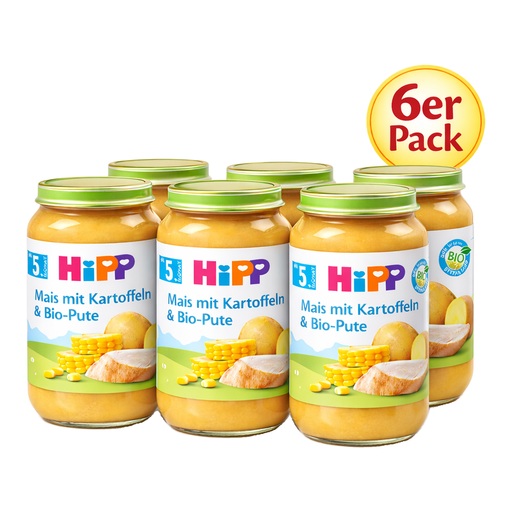
Why this product suits this profile: The six-pack offers six equal-sized portions for introducing a mild meal. The product information lists organic corn, potatoes and 8.5% organic turkey.
The age range from 5 months and the portion size are clearly stated. According to the product information, the meal contains no added salt, flavourings, preservatives or colourings.
Organic ingredients, 190-g jars and 0.0 g of salt per 100 g according to the nutritional information provided.
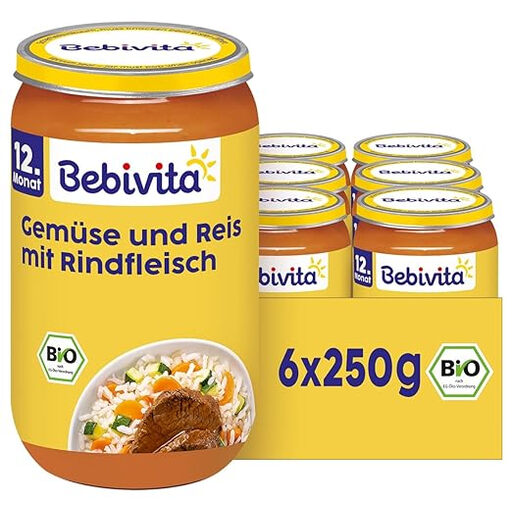
Why this product suits this profile: The 250-g portion is described as a meal for toddlers from 12 months and combines carrots, courgettes, rice and 8% beef.
The product description states that it has an age-appropriate texture and organic certification. Nevertheless, ingredients and allergens should be checked against the label before purchase.
Six-pack with 250-g jars; 66 kcal and 0.35 g of salt per 100 g according to the product data.
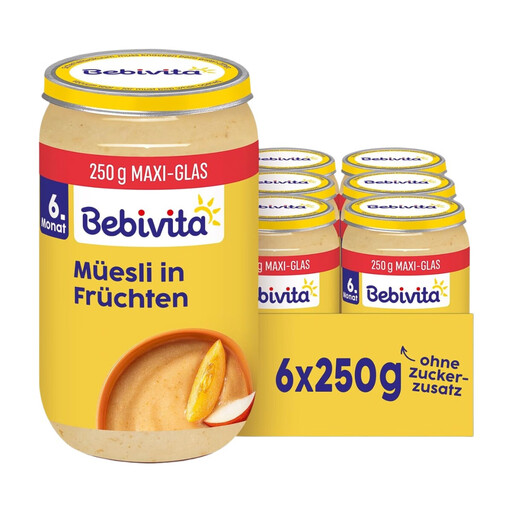
Why this product suits this profile: The six-pack is ideal for families who want to serve fruit-and-cereal porridge regularly from the 6th month onwards.
The “no added sugar” claim is put into context by the ingredients list: the fruit provides natural sugar. Wheat and oats are listed as allergens.
51% fruit content according to the product information, 250-g jars and EU organic certification.
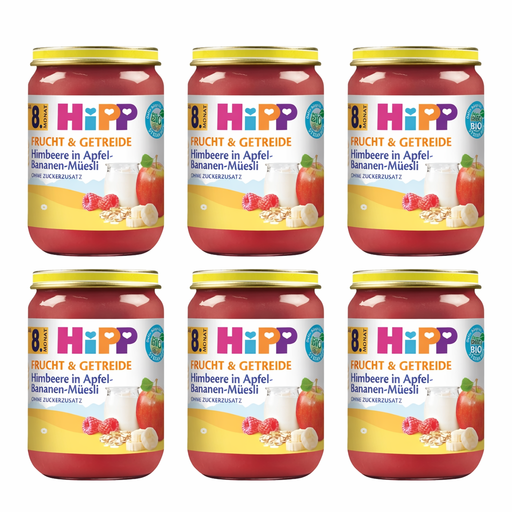
Why this product suits this profile: According to the product information, this muesli is intended for babies from 8 months and combines fruit, oats and yoghurt in a finer consistency.
The age range, allergens and storage instructions can be checked before ordering. The product is described as containing no added sugar or flavourings.
6 x 190 g, organic ingredients, plus 57 kcal and less than 0.05 g of salt per 100 g according to the product data.
We have put together a complete, regularly updated list of products that fully meet these strict selection criteria and the safety regulations applicable in the EU.
Before clicking “Buy”, it is worth carrying out this quick check:
This depends on the stated age range, consistency and the child’s individual weaning plan. Fruit-and-cereal purées and finely puréed meals may have different age classifications. The packaging should be read in full before use.
This varies by product. The information provided often recommends refrigeration and consumption by the following day; the Bebivita fruit-and-cereal product states that it can be kept for up to three days. The instructions on the relevant label are always decisive. Heated leftovers should not be used again.
No. Organic status mainly describes the origin and processing of the ingredients in accordance with the applicable requirements. Fruit and milk may contain natural sugar. Salt content also varies depending on the recipe. The nutritional information and ingredients list should therefore be compared before purchase.