
Lieferung heute & morgen

Qualitätsgarantie

Willkommens-Angebote freischalten: KOSTENLOSE Lieferung | Bis zu 80 % RABATT | Kostenlose 30-Tage-JoyPlus-Testphase
App herunterladen
Organic baby food should suit your baby’s stage of development, daily routine and eating habits. However, packaging claims such as “with vitamins”, “Good Night” or “no added sugar” can quickly appear more meaningful than they are when products are compared directly. As a Joybuy Product Recommendation Officer, I have therefore assessed the most important details using verifiable criteria.
Baby food with no added sugar may naturally contain sugar. This applies, for example, to products containing apple, banana, milk or cereals. The nutrition table shows the sugar content per 100 grams or per prepared portion. For baby food that is sugar-free in the everyday sense, the ingredients list should also be free from sugar, syrup, sweetening juice concentrates and similar ingredients.
Baby food from 5 months, baby food from 6 months and products from 8 months differ in more than just their labelling. Cereal varieties, milk ingredients, consistency and ingredient combinations may vary. A product containing chocolate, several types of cereal or a chunky texture is not automatically suitable for the beginning of weaning.
An organic seal relates to agricultural production and processing in accordance with the relevant requirements. On its own, it does not tell you whether the food contains milk, gluten, egg, nuts or other potential allergens. Claims such as “with vitamins and minerals” should also be checked against the nutrition table rather than relying solely on the front of the packaging.
For baby food from 5 months, suitable options may include finely puréed vegetable and rice meals or simple cereal products. Depending on the product, baby food from 6 months may be offered as milk porridge, cereal porridge or a fruit and cereal meal. From 8 months, you will more often find varied cereal mixes and specially labelled evening meals.
The term baby evening porridge initially describes its intended use, not necessarily any particular effect on sleep. Organic evening porridge should therefore be selected according to age, ingredients and preparation method – not solely because it is called “Good Night”.
Milk, skimmed milk powder or whey ingredients are common in baby milk porridge. If you are looking for baby cereal porridge, check which types of cereal are used. Wheat, oats, barley, rye and spelt contain gluten. Rice porridge, on the other hand, may consist of 100 per cent rice flour and be described as gluten-free.
The ingredients list is arranged in descending order by quantity. For a product containing 36 per cent rice flour or 35 per cent wholegrain wheat, this makes it easy to identify the main base of the porridge. You should also pay attention to warnings such as “may contain mustard” or “may contain egg and nuts”.
Powdered porridge is usually mixed with boiled, cooled water. The precise amount of water and powder varies. For example, different Bebivita products specify 45 grams of powder mixed with around 150 to 160 millilitres of water. The porridge should be prepared fresh, checked to ensure it is at a suitable temperature and not heated in a microwave if the product instructions advise against this.
A multipack of baby food can be convenient if it is consumed regularly. For jars, opened and heated leftovers should be stored or discarded according to the manufacturer’s instructions. Once opened, powder should be kept dry, clean and tightly sealed; several product descriptions recommend using it within three to four weeks.
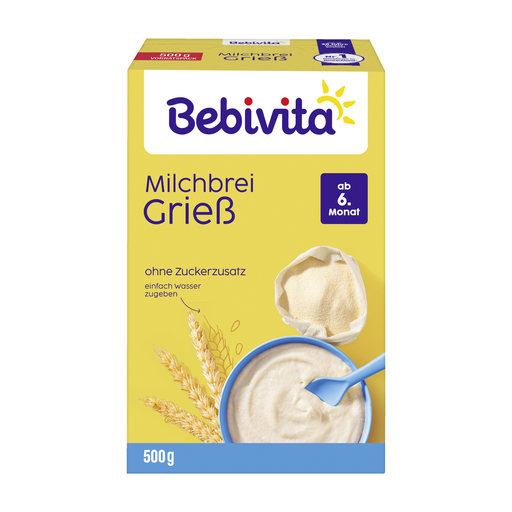
Why this product suits this profile: The 500-gram pack is designed for several servings and is recommended from 6 months. The milk porridge is mixed with water.
The “no added sugar” claim is supplemented by a note explaining that the product contains naturally occurring sugars. Gluten and milk ingredients must be taken into account.
Semolina base, preparation with water, plus stated levels of calcium, iron and vitamin D.
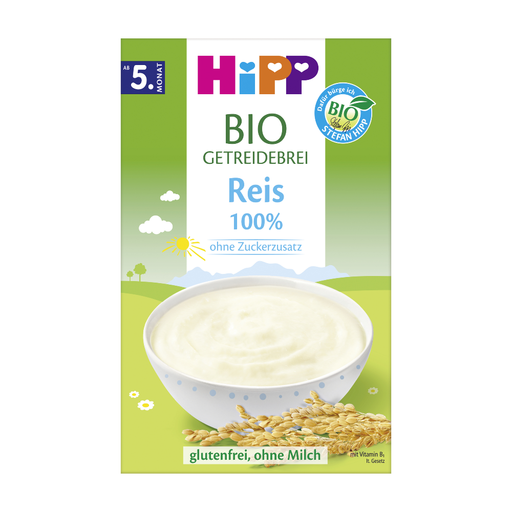
Why this product suits this profile: According to the product information, the rice porridge consists of 100 per cent organic rice flour and is intended for babies from 5 months.
The short ingredients list makes it easier to check the cereal base, absence of milk and added sugar. Nevertheless, the preparation options should be checked on the packaging.
7 sachets of 200 grams each, vitamin B1 and, according to the description, no added sugar.
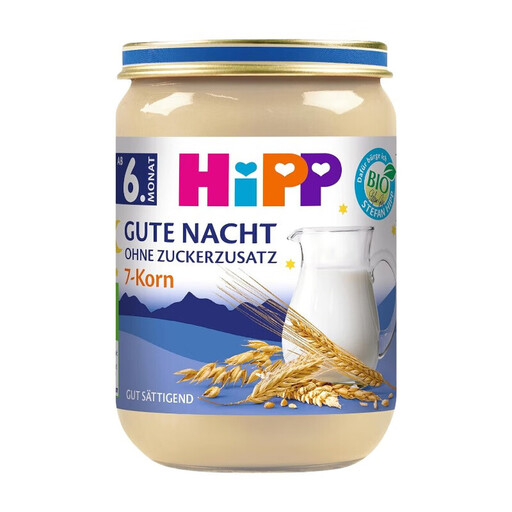
Why this product suits this profile: The ready-made evening meal is intended for babies from 6 months and, according to the description, can be served warm or cold.
The recommended age and ingredients list make it clear that the product contains milk and several gluten-containing cereals. According to the description, the sugar comes from the ingredients.
6 jars of 190 grams each, plus stated quantities of vitamin A, vitamin D, vitamin B1 and calcium.
We have put together a complete, regularly updated list of products that fully meet these strict selection criteria and the safety regulations applicable in the EU.
From 5 months, finely puréed vegetable and rice meals or simple cereal porridges may be suitable, depending on when weaning begins. The recommended age on the packaging, an appropriate consistency and the ingredients list are all important. New foods should be introduced according to your baby’s individual needs; if you have questions about allergies or nutrition, seeking medical or qualified dietary advice may be helpful.
Baby milk porridge already contains milk ingredients and, depending on the product, is mixed with water. Baby cereal porridge usually consists of one or more types of cereal and may be prepared with water, milk or infant formula according to the pack instructions. For both varieties, check the gluten information, milk ingredients and sugar content.
For powdered porridge, dry, hygienic storage and a tightly sealed pouch are important. Many of the products mentioned recommend using them within three to four weeks of opening. Opened jars are generally refrigerated and consumed within the period stated on the packaging. The best-before date, manufacturer’s instructions and information on the original packaging always take precedence.