
Lieferung heute & morgen

Qualitätsgarantie

Willkommens-Angebote freischalten: KOSTENLOSE Lieferung | Bis zu 80 % RABATT | Kostenlose 30-Tage-JoyPlus-Testphase
App herunterladen
Choosing the right food for your baby can be a daunting task. With so many options available, parents want to make an informed decision based on quality and their child's specific needs. This article serves as a guide, outlining objective criteria for selecting organic baby food and presenting a curated selection of products for different age groups to simplify your shopping experience.
As your Joybuy Product Recommendation Officer, I have compiled information to help you make a clear and objective purchasing decision.
To find the right food for your child, a few objective criteria can be helpful. Pay attention to the age recommendation, the ingredient list, and everyday practicality.
A baby's nutritional needs and motor skills change rapidly. Baby food manufacturers therefore label their products with clear age recommendations.
A look at the label reveals a lot about its quality. You can identify high-quality organic baby food by the following features:
Packaging plays a role in storage and preparation. Classic glass baby jars are resealable and great for storing leftovers in the fridge. Plastic trays or squeeze pouches can be convenient for on-the-go. The portion size should match your child's age and appetite to prevent food waste.
Here is a selection of products tailored to different developmental stages.
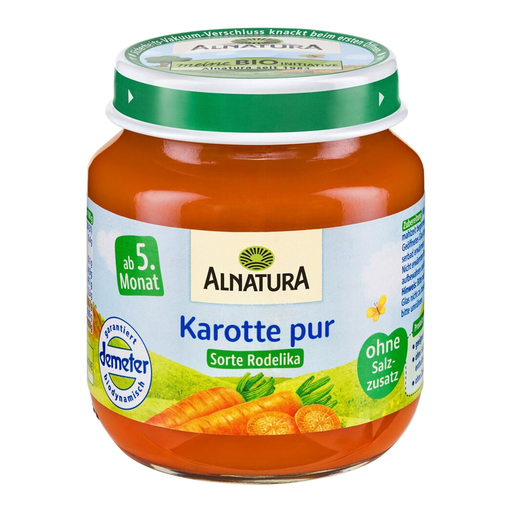
Why It Stands Out: According to the manufacturer, this product consists of just two ingredients: carrots from Demeter-certified biodynamic farms and water. The minimalist recipe makes it an excellent choice for starting solids.
Benefits:
Who It's For: Parents who are starting solids after the 4th month and are looking for a pure, mild vegetable jar with a very short ingredient list.
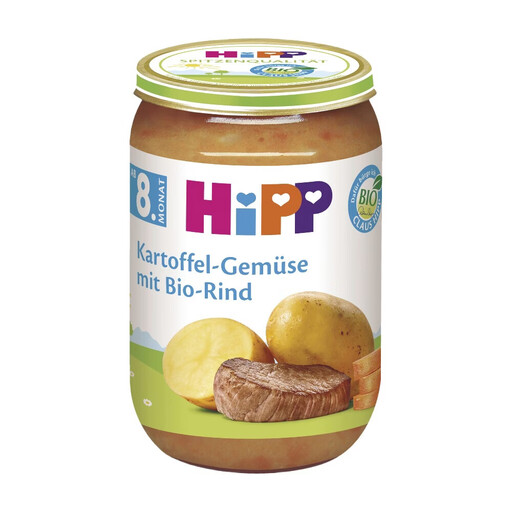
Why It Stands Out: This Hipp baby food menu is a complete meal tailored to the needs of babies from 8 months. It contains fine pieces to practice chewing and provides alpha-linolenic acid (an omega-3 fatty acid) from organic rapeseed oil.
Benefits:
Who It's For: Babies from 8 months who are already accustomed to purées and are transitioning to meals with more texture. It is suitable for parents looking for a balanced meat-and-vegetable meal.
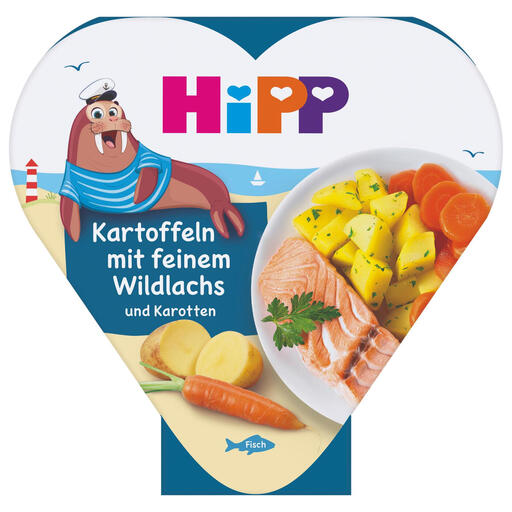
Why It Stands Out: This meal is specifically designed as a toddler meal. The heart-shaped tray makes independent eating easier, and the nutritional values are adapted to the needs of children between 1 and 3 years old.
Benefits:
Who It's For: Parents of toddlers looking for a convenient, quick-to-prepare, and balanced organic meal that promotes independent eating.
Carrots are a popular and well-tolerated ingredient in many baby food products. If you want to explore more variations or other carrot-based products, you can find a wider selection in our dedicated category.
? Discover more products in the Carrots category.
General recommendations suggest starting between the 5th and 7th month of life. More important than the exact age are your child's signs of readiness for solids: they can hold their head up on their own, show interest in their parents' food, and the tongue-thrust reflex, which pushes food out of the mouth, has diminished. It is recommended to coordinate the exact timing with your paediatrician or midwife.
Look for recognised organic seals (e.g., EU organic logo, Demeter, Bioland), an ingredient list that is as short and understandable as possible, and the absence of added sugar, salt, flavourings, and preservatives. The age recommendation on the product should match your child's developmental stage.
Yes, an infant's kidneys are not yet fully mature and can only process very small amounts of salt. Excessive salt intake can strain the kidneys. Therefore, baby food with no added salt is the standard for nutrition in the first year of life. The natural salt content of the ingredients is sufficient for the baby's system.