
Lieferung heute & morgen

Qualitätsgarantie

Willkommens-Angebote freischalten: KOSTENLOSE Lieferung | Bis zu 80 % RABATT | Kostenlose 30-Tage-JoyPlus-Testphase
App herunterladen
The range of organic baby food stretches from vegetable jars to milk porridge, fruit purées and baby snacks. It is precisely this vast choice that makes comparison difficult: an organic label does not automatically mean a product is free from added sugar, and the age recommendation is no substitute for checking the ingredients list. By shopping with a clear plan, you can avoid buying the wrong items and tailor your baby’s weaning foods to their developmental stage.
A product can be free from added household sugar yet still contain naturally occurring sugar. This is especially true for baby fruit purée, fruit purées for babies and products containing banana, apple or grape juice. What really matters, therefore, is the information in the ingredients list and the nutritional values, not just the front of the packet.
Labels such as baby food from 6 months, baby food from 8 months or “from 10 months” are intended as a guide. In addition, parents should check whether their child can sit upright, manage a spoon and the texture, and tolerate new foods. If you are unsure about weaning, it is a good idea to seek individual advice from your paediatrician or midwife.
Milk, wheat, spelt, oats and other gluten-containing cereals are among the most common relevant ingredients. Even an organic baby porridge can contain milk or gluten. With baby snacks, the texture also matters: crunchy sticks and pieces should only be offered under supervision and when the child is sitting upright. Squeeze pouches are convenient, but should not be left for the baby to suck on permanently.
For getting started, finely puréed single ingredients such as pumpkin are ideal. One example is Alnatura Organic Pumpkin from 4 months, with 95 % pumpkin and water. Later on, more complex combinations such as a baby cereal porridge, a baby milk porridge or fruit-and-cereal preparations can be introduced.
Products labelled from 8 or 10 months often contain coarser textures, cereal flakes or pieces of fruit. Check whether the consistency matches your baby’s current eating ability. A baby evening porridge should always be offered with a spoon and prepared according to the packet instructions, not automatically given in a bottle.
Look out for:
“Organic” refers to production and labelling in line with current regulations. The EU organic logo or a recognised German organic seal can help with classification. Demeter products also have additional association-specific requirements. The actual ingredients list, however, remains the deciding factor.
Always compare nutritional values using the same reference amount, usually per 100 g. With powdered porridges, it is also important to know whether the values refer to the dry powder or the prepared portion. Pack sizes of 100 to 190 g are suitable for individual meals, while 500 g packs can be more practical for regular use.
Once opened, jars and pots should be kept in the fridge according to the manufacturer’s instructions. Leftovers that have not been heated should usually be used up promptly; heated leftovers are often recommended for disposal on the product information. Always follow the label, the best-before date and the preparation instructions.
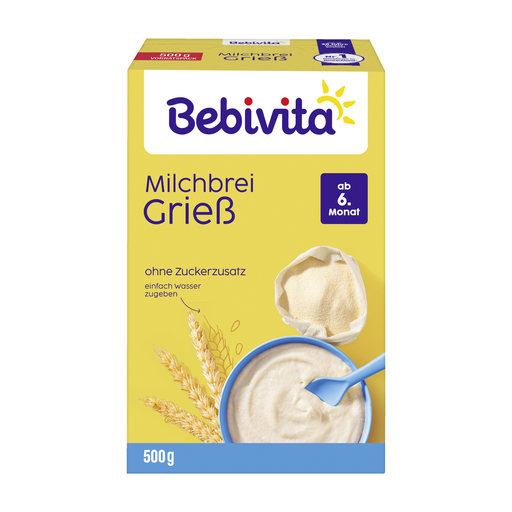
Why this product fits the profile: The 500 g pack is ideal for families who want to prepare a warm milk porridge regularly. The powder is mixed with water.
The product information states “no added sugar” while also highlighting naturally occurring sugars. Gluten and milk are clearly listed as ingredients.
Prepared with water, enriched with calcium, iron and vitamins A, C, D and B1. The pack contains 500 g.
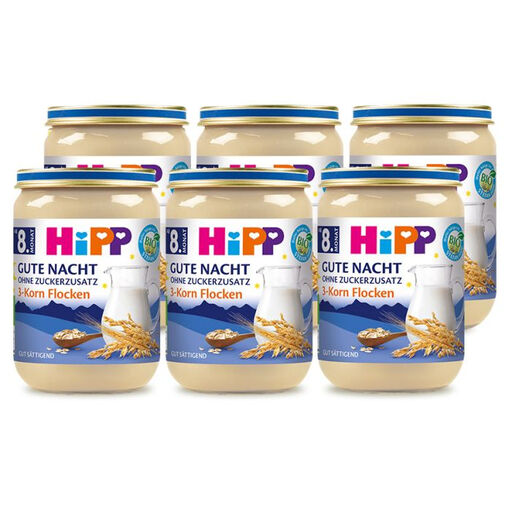
Why this product fits the profile: The ready-to-eat milk-and-cereal porridge comes in individual 190 g jars and can be served warm or cold.
The ingredients list states no added sugar. Milk, wheat and oats are declared as allergens.
Organic ingredients, three types of grain and declared amounts of vitamins A, B1, D and calcium. Total quantity: 1,140 g.
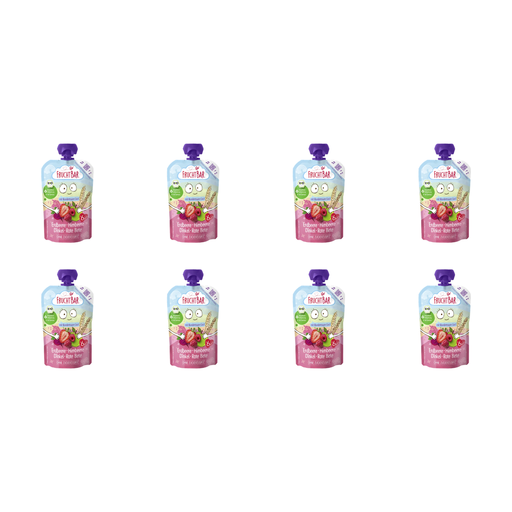
Why this product fits the profile: The resealable 100 g pouches are ideal for on-the-go when no preparation is needed.
The product is labelled “no added sugar”; the nutrition table still shows 9.5 g of sugar per 100 g, which comes from the ingredients.
800 g total quantity in eight portions, organic certification according to the product information and no special preparation required before serving.
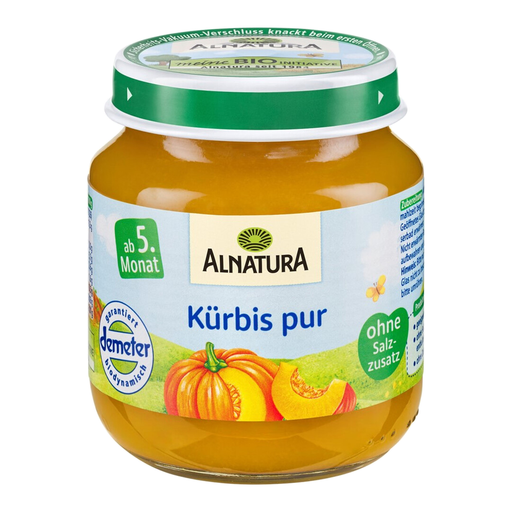
Why this product fits the profile: The short ingredients list with pumpkin and water supports a straightforward introduction to weaning.
It contains no complex spice or fruit mixture and, according to the product information, no added salt. This keeps ingredient checking simple.
95 % organic pumpkin in Demeter quality, finely puréed and gluten-free according to the product description.
We have put together a complete, regularly updated list of products that fully meet these strict selection criteria and the safety regulations in force in the EU.
For getting started, finely puréed products with few ingredients are often used, such as vegetables like pumpkin. The labelling “from 4 months” or “from 6 months” should be matched to your child’s individual development. New ingredients can be introduced gradually.
No. Fruit and milk naturally contain sugar. A baby fruit purée with no added sugar can therefore have a higher sugar value per 100 g than a plain vegetable purée. Compare the ingredients list and the nutrition table together.
This depends on the product type and the manufacturer’s instructions. Opened jars, pots and fruit purées are often stored in the fridge and used within a day or a few days. Dry powder should be kept dry, well sealed and used within the stated period. Before each meal, check the packaging, smell, texture and temperature.