
Lieferung heute & morgen

Qualitätsgarantie

Willkommens-Angebote freischalten: KOSTENLOSE Lieferung | Bis zu 80 % RABATT | Kostenlose 30-Tage-JoyPlus-Testphase
App herunterladen
Organic baby food is designed to make weaning easier, without parents having to compromise on ingredients, age recommendations or portion sizes. At the same time, many products advertise with terms like “natural”, “fruity” or “no added sugar”. However, these claims alone are not a sufficient basis for making a decision. What really matters are the ingredients list, the recommended age suitability and the right format.
As a Joybuy Product Recommendation Officer, I therefore organise the available information according to clear criteria: organic certification, composition, age suitability, allergens, pack size and usage instructions.
In baby food with no added sugar, the sugars present often come from fruit, fruit juice or cereals. A fruit purée can therefore contain a significant amount of natural sugar, despite the absence of added sugar. The nutritional table and the order of ingredients provide more insight here than the front of the packaging.
Organic baby food suitable from 6 months is not automatically appropriate for younger babies. Other products are specifically intended for babies from 8, 10 or 12 months onwards. This recommendation is linked to factors such as texture, ingredients and developmental stage. If you are unsure about introducing solid foods, you should consider individual advice from a paediatrician or a nutrition professional.
A resealable squeeze pouch is easy to take on the go. However, for dental care and learning to eat with a spoon, it is still a good idea to offer the purée from a bowl or spoon on a regular basis. Several manufacturers also advise against prolonged sucking on the pouch.
With organic baby porridge, baby jars and organic fruit purée for babies, it is worth looking at the first ingredients listed. If apple, banana or pumpkin appear first, they form the main component. If the product contains yoghurt, quark, oats, spelt or wheat, parents should check the relevant allergy information.
Examples from the selection:
For first weaning foods, products such as mild vegetable jars or finely puréed blends are suitable. Baby food from 6 months includes fruit and cereal purées and FruchtBar pouches. Products with yoghurt, quark or muesli in the selection are mostly intended for older babies.
For baby food from 10 months, options include:
Baby bars and snacks require particular attention. The HiPP muesli bar is suitable from 12 months according to the product information and should only be offered under supervision. The child should not be lying down or walking while eating it.
A multipack can be practical for regular use. However, with organic baby food in a multipack, parents should check whether all portions will be used within the recommended shelf life. Opened jars, pouches or pots must be refrigerated and consumed within a certain period, depending on the product.
The selection ranges from individual 80 g snacks to:
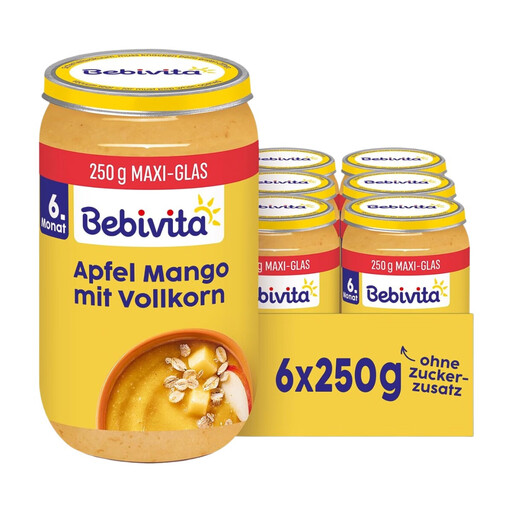
Why this product fits the profile: The 6-pack with 6 × 250 g is ideal for families who regularly need larger portions and are looking for fruity organic baby food from 6 months.
The age recommendation, ingredients and the “no added sugar” claim are clearly stated. The cereal content also makes it clear that wheat, oats and gluten are present.
EU organic-certified ingredients, wholegrain cereals and a 6-pack of 250 g jars.
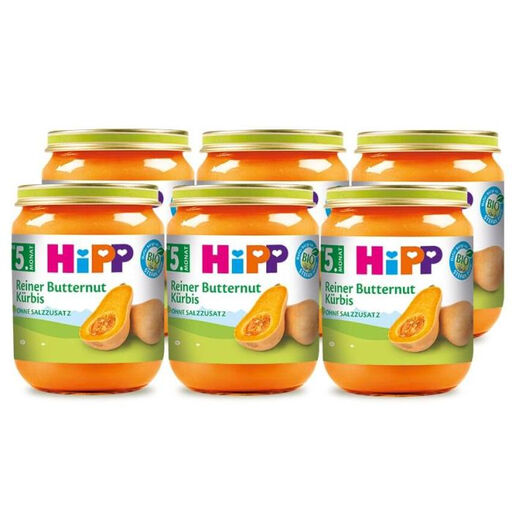
Why this product fits the profile: The ingredients list is short and clear. This makes the vegetable jar appealing to parents who value a simple composition for their baby’s first solid foods.
The product information states no added salt, no flavourings, preservatives or colourings. However, you should still check the current packaging before purchase.
90% butternut squash, water, 125 g jars and suitability from 5 months according to the product information.
Why this product fits the profile: The portioned pouches can be planned for trips, nursery days or as a stock at home. The combination of fruits, beetroot and spelt offers a change from plain fruit purée.
The product is labelled as suitable from 6 months and contains no added sugar. The advice about limiting sucking time and dental care remains important for use.
8 resealable 100 g pouches, organic certification ES-ECO-019-CT and 59 kcal per 100 g according to product data.
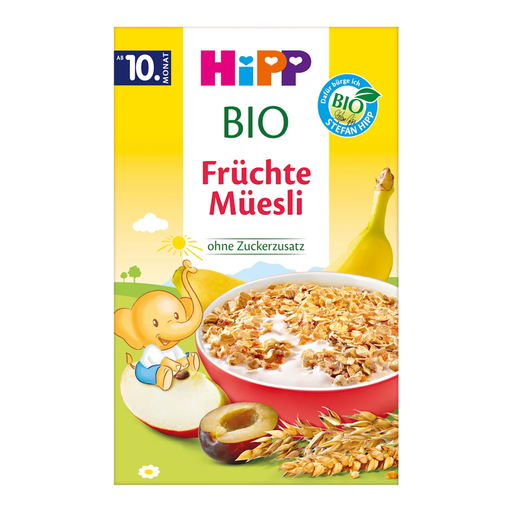
Why this product fits the profile: The muesli is aimed at children from 10 months and can be used for breakfast or as a snack. It contains various wholegrain cereals and fruit components.
The age suitability and preparation instructions are provided. As wheat, oats, barley, rye and spelt may be present, allergy information should be checked before serving.
200 g pack, wholegrain content according to the product description and no added sugar.
We have compiled a complete, regularly updated list of products that fully meet these strict selection criteria and the safety regulations in force in the EU.
Products labelled “from 6 months” in the selection include finely puréed fruit and cereal blends as well as organic fruit purée for babies. Parents should also check the ingredients list, texture and potential allergens. The individual introduction of new foods should match the child’s developmental stage.
This depends on the product type. Several Bebivita jars should be stored sealed in the fridge after opening and consumed within three days. For yoghurt or quark products, consumption by the next day is often recommended. FruchtBar pouches should be refrigerated after opening and used within two days. Always follow the instructions on the individual packaging.
No. “No added sugar” means that no sugar has been added as an ingredient. Fruit components, fruit juice concentrate or cereals can still contain natural sugars. For an informed choice, parents should compare the “of which sugars” value per 100 g as well as the portion size. For snacks such as bars or spelt sticks, you should also pay attention to the age recommendation, supervision and dental care advice.