
Lieferung heute & morgen

Qualitätsgarantie

Willkommens-Angebote freischalten: KOSTENLOSE Lieferung | Bis zu 80 % RABATT | Kostenlose 30-Tage-JoyPlus-Testphase
App herunterladen
Organic baby food is designed to make introducing solids easier, while also fitting your baby's age, the ingredients list and your family's daily routine. However, product names like "fruity", "natural" or "no added sugar" alone tell you very little about the actual composition. What really matters are the age recommendation, the ingredients, any potential allergens and the right packaging.
Fruit purée with no added sugar can still contain a relatively high amount of naturally occurring sugars. Apples, pears, bananas and grapes all bring their own natural sugar. That's why a glance at the nutritional table tells you more than the front of the packaging. For example, the Alnatura product "Pear with Blueberry" contains 9.8 g of sugar per 100 g according to the product information, even though no sugar has been added.
Baby porridge from 4 months is not automatically suitable for every baby at the same time. The manufacturer's recommendation is a guide; in addition, parents should consider their baby's individual development and, where appropriate, the advice of their paediatrician. Products containing grains, yoghurt or more complex combinations may have a different age recommendation than a simple fruit purée.
Pouches are handy on the go, but they don't replace feeding with a spoon altogether. Several products point out that frequent or prolonged sucking on fruit purée can put strain on your baby's teeth. For daily weaning meals at home, organic baby jars or bowls can therefore offer more controllable portions.
First, check the label: "from the 4th", "from the 5th", "from the 6th" or "from the 8th month". A finely puréed single-ingredient product like parsnip or pear can be very different for the first steps compared to an evening porridge with milk and grains. The consistency should match your baby's current developmental stage and should always be offered with a spoon, unless the product instructions say otherwise.
A short ingredients list makes it easier to assess. With a simple fruit purée, apples and pears might be the only ingredients. Grain-based products, on the other hand, often contain gluten from wheat, spelt or oats. Milk porridges and fruit-yoghurt products list milk as an allergen. If there are allergies in the family or any uncertainty, parents should check the full packaging labelling and seek medical advice.
Also look out for:
"No added sugar" does not mean the product contains no sugar. With grain porridges, you should also distinguish between naturally occurring sugar and added sweeteners.
A 190 g jar is better suited for one meal or several small portions, while 100 g pots and pouches are easier to portion for on the go. A multipack of baby porridge can be economical if your baby eats the product regularly. However, don't buy large stocks if your baby is just starting to explore new flavours.
After opening, follow the manufacturer's instructions. Depending on the product, leftovers must be refrigerated and used within 12 hours, by the next day, or within two to three days. Unopened jars and pouches should be checked for damaged seals, bulging lids and the best-before date.
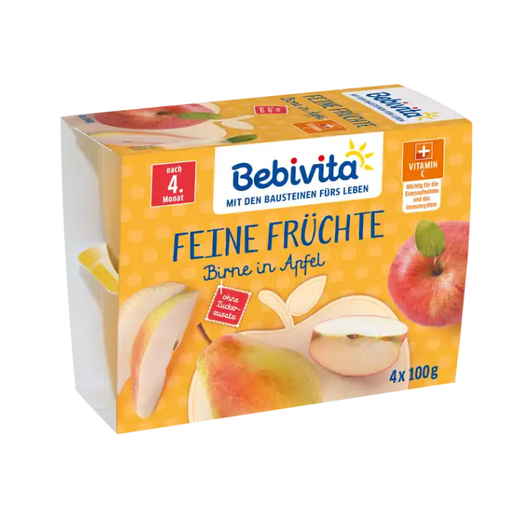
Why this product fits the profile: The small 100 g pots are practically portioned for first fruit servings and snacks from the 5th month.
The ingredients list states 100 % fruit from apple and pear; no added sugar, flavourings or colourings according to the product information.
Four individual portions, finely puréed consistency and an age recommendation from the 5th month.
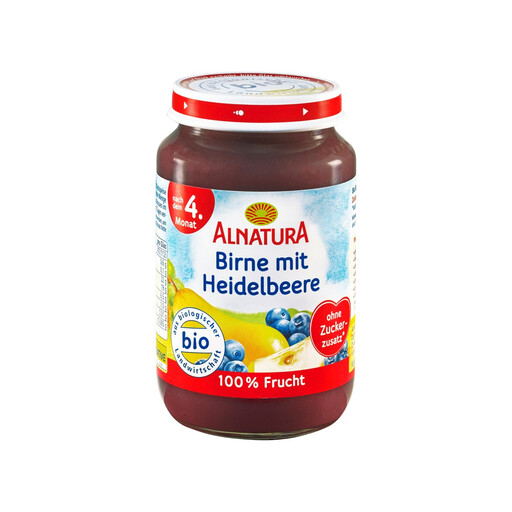
Why this product fits the profile: The jar combines a clearly labelled organic fruit mix with an age recommendation from the 4th month.
According to the product data, the recipe contains only 90 % organic pears and 10 % organic blueberries; gluten and added sugar are not listed.
190 g jar, finely puréed texture and a short ingredients list with two fruit components.
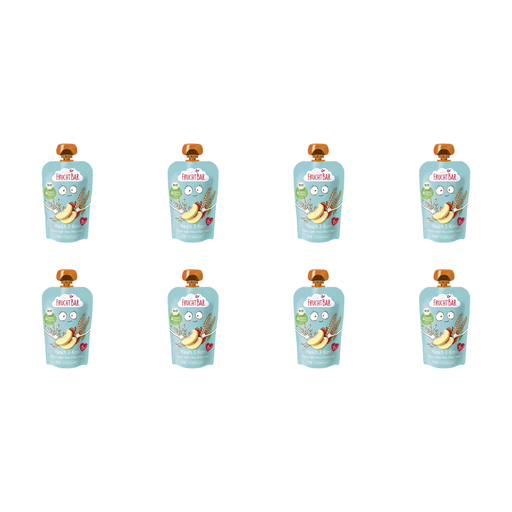
Why this product fits the profile: The multipack with eight resealable 100 g pouches is ideal for families who regularly need fruit purée for their babies.
The ingredients list shows apple, peach, apricot as well as oats, spelt and millet; no added sugar according to the product information.
Eight portions, resealable pouch and 3 % grains; suitable from the 6th month.
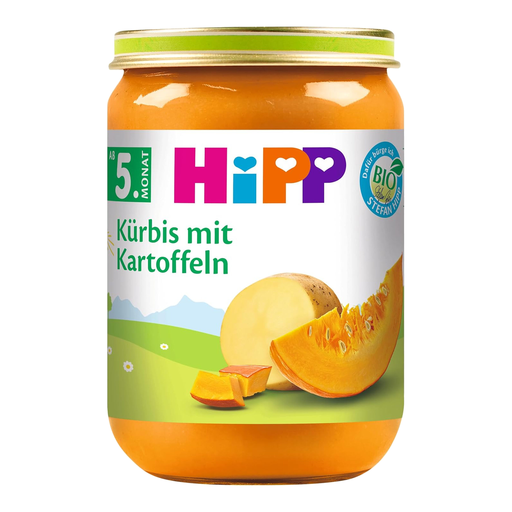
Why this product fits the profile: The savory organic baby porridge in a six-pack is ideal for families who want to offer vegetable purée for babies on a regular basis.
The recipe lists pumpkin, potatoes, water and rapeseed oil; according to the product information, no salt, flavourings, preservatives or colourings are added.
Six 190 g jars, gluten-free and lactose-free recipe according to product data, and suitability from the 5th month.
We've put together a full, regularly updated list of products that fully meet these strict selection criteria and the safety regulations in force in the EU.
Products with the appropriate labelling may be intended from the 4th month, such as finely puréed fruit purée. The information on the original packaging and your baby's individual development are decisive. New ingredients should be introduced gradually so that the composition remains clear.
That depends on the individual product. Some fruit purées should be refrigerated and used within 12 hours or two days, other jars within the following day or three days. Only use the manufacturer's storage instructions and take out portions with a clean spoon.
No. "No added sugar" means that no extra sugar has been added. However, fruit naturally contains sugar. So compare the ingredients list with the nutritional table and also pay attention to the recommended portion size.