
Lieferung heute & morgen

Qualitätsgarantie

Willkommens-Angebote freischalten: KOSTENLOSE Lieferung | Bis zu 80 % RABATT | Kostenlose 30-Tage-JoyPlus-Testphase
App herunterladen
Organic baby food should be easy to use in everyday life while being appropriate for your child's stage of development. However, fruit purées, baby porridge, fruit-and-cereal blends and squeezy pouches for children differ significantly in terms of ingredients, texture, allergens and storage. An organic label alone doesn't answer every important purchasing decision.
A product with no added sugar can still contain a considerable amount of naturally occurring sugars from fruit. The nutrition table shows this value under "of which sugars". For comparison: according to the product information, Alnatura Pear with Blueberry Fruit Purée contains 9.8 g of sugar per 100 g, even though no sugar is added.
That's why the ingredients list is crucial. Terms such as sugar, syrup, honey or concentrated fruit juices should be carefully considered. With baby porridge with no added sugar, the claim does not mean the product is sugar-free.
Baby food from 4 months, baby food from 6 months and products from 8, 10 or 12 months often differ in texture and composition. A finely puréed pear purée may be intended for starting weaning, whereas a muesli or a product containing oats requires a different chewing and eating experience.
The age stage on the packaging is therefore more important than flavour or pack size when making your choice. If you are unsure about introducing new foods, you should discuss your individual situation with your child's paediatrician or a nutrition professional.
A resealable squeezy pouch is handy on the go, but it doesn't automatically replace feeding with a spoon. According to the product warnings, frequent or prolonged contact of fruit purée with teeth can increase the risk of tooth decay. For better control of portion size and eating habits, you can squeeze the contents into a bowl or onto a spoon.
Look for the EU organic logo, the German organic seal or a specific inspection body number. The certification describes the origin and production method of the ingredients, but on its own it says nothing about sweetness, texture or suitability for a particular age group.
With an organic fruit purée, it's worth checking the percentage composition. A product made from 100 % fruit is different from a fruit-and-cereal porridge containing oats, spelt or rusk. For dairy products such as fruit yoghurt for babies or quark desserts, you also need to consider milk components in the ingredients and allergen list.
Multi-packs with six or eight portions can reduce the unit price and shopping frequency. However, they are only worthwhile if the portions are used within the stated period. Opened jars and pots usually need to be kept in the fridge. Depending on the product, the remainder should be used within 12 hours, one day, two days or three days.
For trips, 100 g pots or resealable pouches are convenient. At home, larger 190 g or 250 g jars can be more practical for several eaters or a single meal. The specific storage instructions on the label take priority.
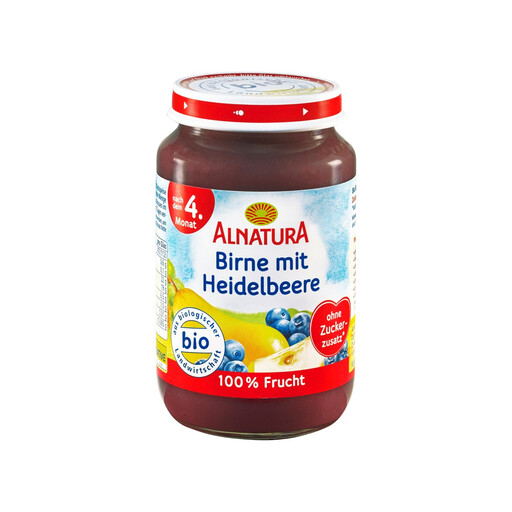
Why this product suits the profile: This finely puréed fruit purée is intended from 4 months and, according to the ingredients list, contains only pears and blueberries from organic farming.
The clear age indication and short ingredients list make comparison easy, without hidden grain or milk components.
100 % organic fruit according to the product description, gluten-free and with no added sugar; 190 g jar.
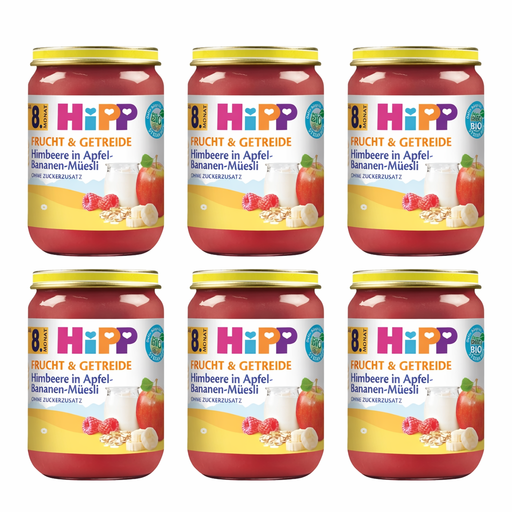
Why this product suits the profile: The combination of organic fruit, oat flakes and yoghurt is aimed at babies from 8 months, according to the product information.
The ingredients list explicitly mentions oats and milk, making it easy to check for allergens before purchase.
6-pack with 190 g portions, with no added sugar according to the product description and a fine oat texture.
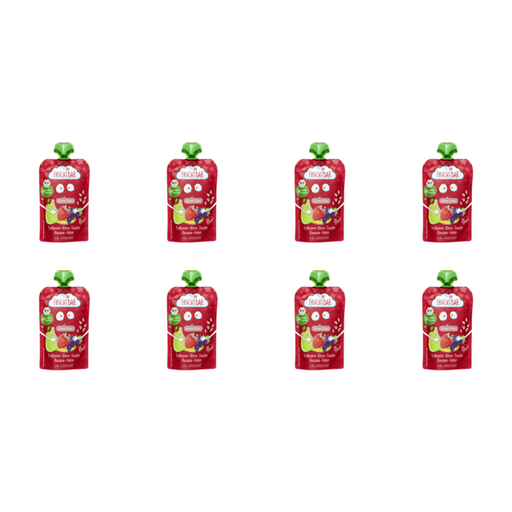
Why this product suits the profile: The 100 g pouches are resealable and, according to the product description, intended for babies from 6 months and for use on the go.
The portion size means you don't have to open a large jar for a short trip; the packaging is resealable according to the supplier.
8 x 100 g, organic fruit purée with 4 % oats and no added sugar according to the product information.
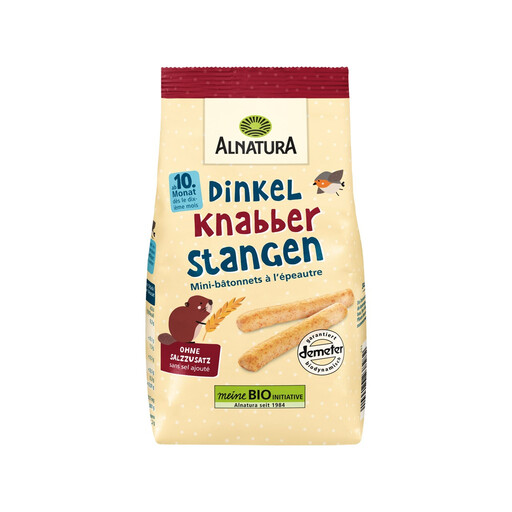
Why this product suits the profile: The spelt sticks are intended from 10 months according to the product information and make a handy snack when eaten under supervision.
The age indication and the explicit mention of gluten make the choice more transparent for families with allergy concerns.
Spelt flour as the main ingredient, with no added salt according to the product description; 80 g pack.
We've put together a complete, regularly updated list of products that fully meet these strict selection criteria and the safety regulations in force in the EU.
From 4 months, finely puréed products such as pear with blueberry are suitable, according to the respective product labelling. Your child's individual readiness for weaning and the recommendations of your healthcare professional should also be taken into account. Ingredients, texture and allergens should be checked before purchase.
This depends on the product. For the products mentioned, the guidance ranges from 12 hours to three days in the fridge. For squeezy pouches and fruit purées, the manufacturer's instructions apply. Leftovers should not be used if the smell, colour or packaging seems unusual.
A squeezy pouch can be a portioned snack on the go. However, for dental care and the development of healthy eating habits, it should not be sucked on continuously. It is better to offer the contents with a spoon where possible and to supervise your child while eating.