
Lieferung heute & morgen

Qualitätsgarantie

Willkommens-Angebote freischalten: KOSTENLOSE Lieferung | Bis zu 80 % RABATT | Kostenlose 30-Tage-JoyPlus-Testphase
App herunterladen
When it comes to organic baby food, the organic certification alone doesn't determine the right choice. For parents and carers, what really matters are the age recommendation, ingredient list, texture and pack size. A fruit purée for babies serves a different purpose to a vegetable purée for babies or a complete meal.
The label "no added sugar" means that no extra household sugar or similar sweetener has been added. However, fruit naturally contains sugar. An apple and banana purée can therefore have a higher natural sugar content than a vegetable purée, despite this labelling.
For everyday shopping, it's worth checking:
Baby food from 4 months, from 5 months, from 6 months or from 8 months often differs in texture and ingredient combinations. A finely puréed single-ingredient jar may be intended for starting weaning, whereas a chunkier meal from 8 months is designed to encourage chewing.
The age recommendation on the label is therefore not just a marketing gimmick. It should match your child's individual development and the advice of your healthcare professionals.
Squeeze pouches for babies are handy for on-the-go, but they don't automatically replace a varied meal. Because the baby sucks directly from the pouch, the purée can stay in contact with their teeth for longer. Many manufacturers therefore recommend spoon-feeding the contents and supervising your child while they eat.
For getting started, finely puréed products with just a few ingredients are often best. Examples include carrot or pumpkin as a single vegetable purée. As your baby grows, more complex combinations such as vegetables, grains and meat or plant-based protein sources become suitable.
Look out for terms like:
An EU organic logo or German organic seal indicates certified organic origin in line with current regulations. Demeter baby food additionally points to a corresponding Demeter certification, where this is stated on the product.
Even so, you should always check the ingredient list individually. Particularly important are:
"Gluten-free" or "lactose-free" should only be considered if this is stated on the specific product. If you know your child has allergies or you have any concerns, introducing new foods should be discussed with a medical or nutritional professional.
Jars of 125 g or 190 g are ideal when you're offering small amounts at first. Multipacks of 6 × 190 g or 8 × 100 g can be more practical for regular use. Pouches are lightweight and resealable, but shouldn't be sucked from directly for extended periods.
Once opened, storage instructions vary by product. Leftovers usually need to be refrigerated and used within 1 to 2 days. Some small fruit portions may have a shorter time frame. Always follow the label on the individual product.
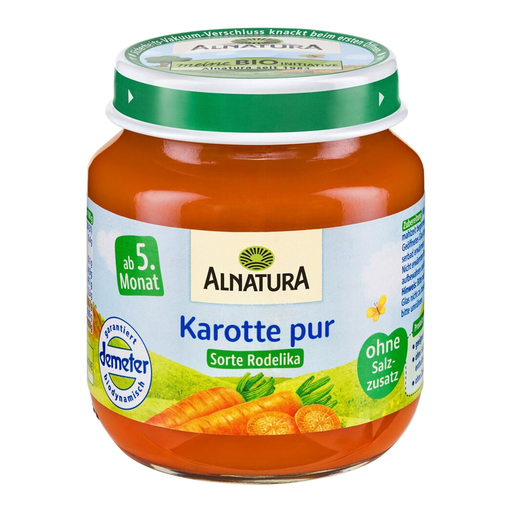
Why this product fits the profile: The 125 g jar contains 78% carrots and water, and is intended for starting weaning from 5 months. The straightforward ingredient list makes that first choice easier.
No complex fruit mix and no added salt according to the product description. This keeps ingredient checking simple when you're just starting out.
Demeter-certified organic carrots according to product information, finely puréed texture and a small portion size.
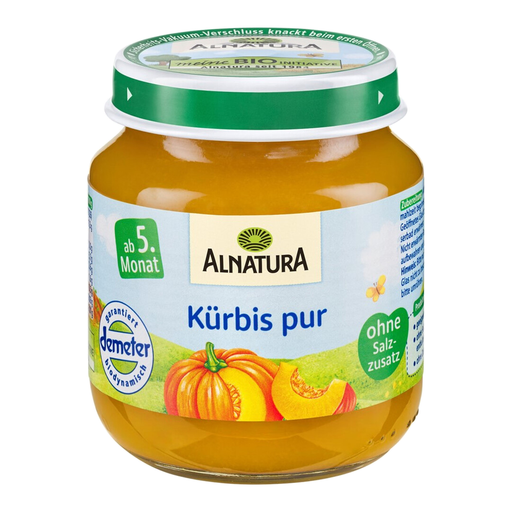
Why this product fits the profile: This finely puréed pumpkin product is suitable from 4 months and, according to the ingredient list, consists of 95% organic pumpkin in Demeter quality.
The single-ingredient recipe reduces the number of new foods introduced at once. According to the product description, no salt is added.
Gluten-free recipe according to product data, 125 g portion and no additional spices in the listed ingredients.
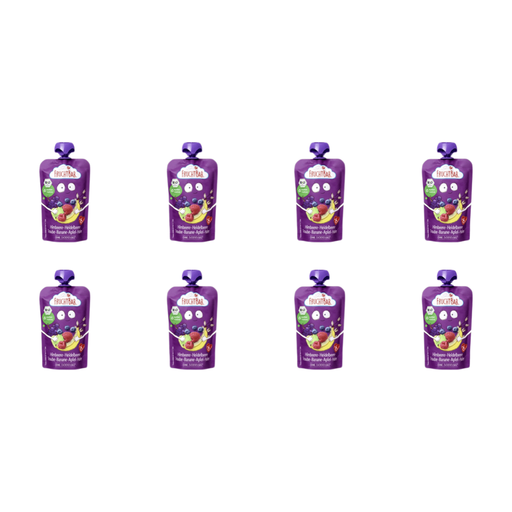
Why this product fits the profile: The resealable 100 g pouches are designed for trips out and regular use. The product is suitable from 6 months according to the label and contains oats.
The age suitability, the oat content and the warning against prolonged sucking are clearly stated. This means the practical pouch isn't mistaken for a format that's suitable for all occasions.
8 × 100 g, certified organic ingredients according to product information and no added sugar.
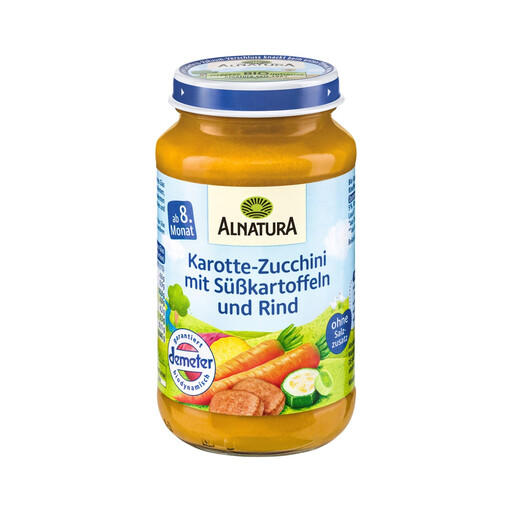
Why this product fits the profile: The 220 g jar combines vegetables, beef, maize flour and rapeseed oil. The finely chopped texture is designed for children from 8 months according to the product description.
The age suitability and the visible texture are stated before purchase. This makes it easier to match the meal to your child's current eating skills.
220 g portion, 88% ingredients from Demeter farming according to product information and no added salt.
We've put together a full, regularly updated list of products that fully meet these strict selection criteria and the safety regulations in force in the EU.
For getting started, finely puréed products with just a few ingredients are often chosen, such as carrot or pumpkin from the age stated on the label. What matters most is your child's individual development, the information on the product and a sensible approach to introducing new foods.
This depends on the product and packaging. Opened jars and pouches usually need to be refrigerated and consumed within 1 to 2 days. Smaller fruit portions may have a shorter time frame. Leftovers should not be offered again if your child has eaten directly from the container.
No. "No added sugar" doesn't mean there's no natural sugar present. Fruit purées often contain natural sugars from apples, pears, bananas or grapes. Vegetable meals usually contain different amounts depending on the recipe. The nutritional information table allows you to compare directly.