
Lieferung heute & morgen

Qualitätsgarantie

Willkommens-Angebote freischalten: KOSTENLOSE Lieferung | Bis zu 80 % RABATT | Kostenlose 30-Tage-JoyPlus-Testphase
App herunterladen
Organic baby food should suit your child’s age, nutritional needs and your family’s daily routine. On the shelf, labels like “no added sugar”, “organic” or “handy for on the go” may seem straightforward at first glance. What really matters, however, is what’s actually in the ingredients list and how the product is intended to be used.
Fruit purées, baby porridge and pouches naturally contain sugar from apples, bananas, grapes or berries. The claim “no added sugar” therefore means that no extra household sugar or sweetening syrup has been added. It does not mean the product is sugar-free.
Checking the nutrition table helps you compare: with fruit purées, the carbohydrate and sugar values can vary significantly depending on the fruit blend. Juice or juice concentrate also alters the composition, even if no sugar has been added.
“From the 4th month”, “from 6 months” and “from 1 year” are not interchangeable recommendations. They refer to the specific product recipe and texture. A baby porridge labelled from 4 months is not automatically suitable for every child at that age. Introducing solid foods should match your baby’s individual development and be cross-checked with the information on the packaging.
The packaging is convenient, but it does not fundamentally replace feeding with a spoon. Several products explicitly recommend giving the purée from a spoon and avoiding prolonged sucking. Frequent and extended contact of fruit purée with teeth can increase the risk of tooth decay. Pouches are practical for on the go, but should not be used as a permanent distraction.
Pay attention to the specific labelling:
A fine fruit purée is not the same as a filling milk or cereal porridge. For the evening, for example, products with milk and cereal are suitable, whereas fruit purée is better offered as a dessert or snack.
Check whether milk, yoghurt, wheat, oats, spelt or other ingredients that must be declared are included. A product with biscuit or rusk may contain wheat and milk components. Even with organic baby porridge, the organic label describes the agricultural origin of certain ingredients, not automatically the absence of allergens.
With a product like fruit purée without added sugar, you should also note the fruit content and the use of juice or juice concentrate. A short ingredients list makes assessment easier, but is no substitute for the full labelling on the packaging.
Jars are practical for home, while squeeze pouches or unbreakable pots have advantages when travelling. Once opened, different time limits apply depending on the product:
For practical baby food for on the go, single portions are easy to manage. Even so, your child should be supervised while eating.
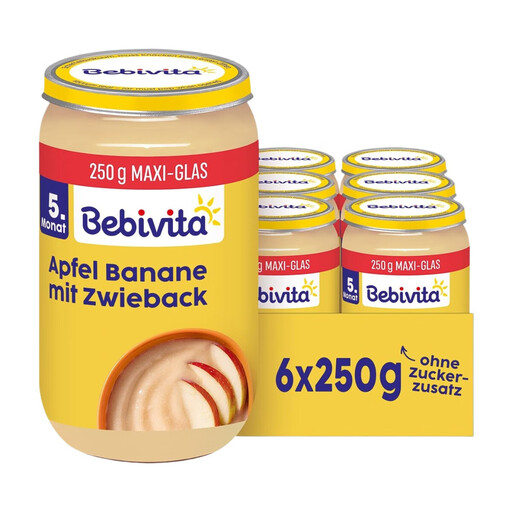
Why this product suits the profile: The 6 jars of 250 g each are ideal for families who want to stock up on several portions. According to the label, the product is suitable from the 5th month.
The labelling clearly states “no added sugar”. At the same time, the ingredients list indicates wheat and gluten, so allergens can be checked before purchase.
Organic-certified ingredients, finely puréed texture and ready-to-use portions.
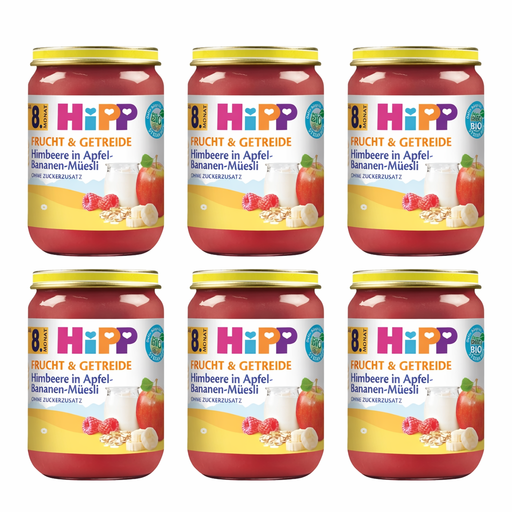
Why this product suits the profile: The recipe combines fruit with oats and yoghurt and is labelled as suitable from 8 months.
The age stage and contained allergens such as milk and oats are clearly to be considered; this means the choice is not made solely on the basis of the organic label.
No added sugar, organic ingredients and 6 individual jars of 190 g each.
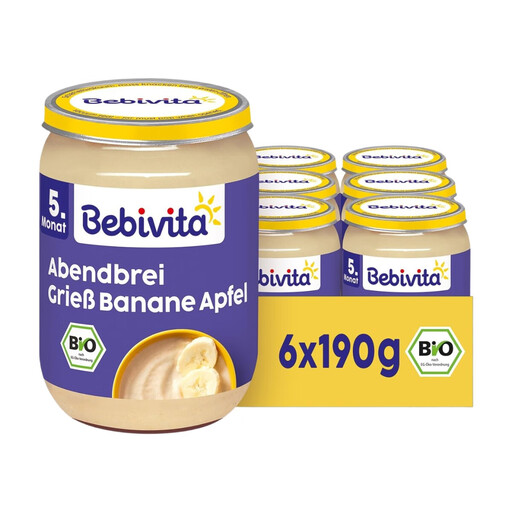
Why this product suits the profile: The ready-made evening porridge is ideal for families looking for a quickly served meal with milk, wheat semolina and fruit.
The product label lists milk and wheat as contained allergens. This prevents a ready-made evening porridge from being mistakenly categorised as a dairy-free or gluten-free option.
EU organic certified, no added sugar and available as a 6-pack for regular evening meals.
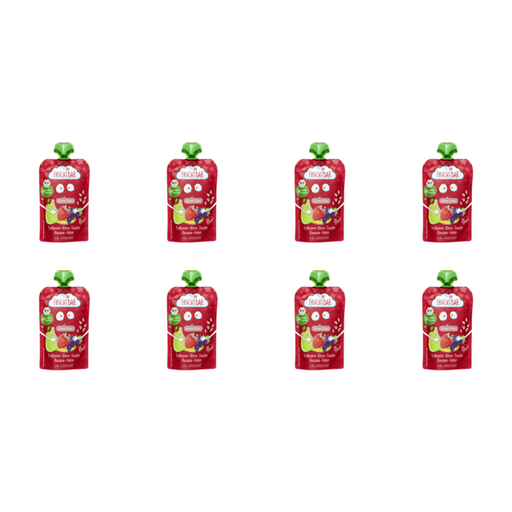
Why this product suits the profile: The resealable 100 g pouches are labelled as suitable from 6 months and can be taken in your bag in individual portions.
The packaging is designed for portioning, but should not be used for prolonged sucking. After opening, the stated storage and consumption instructions apply.
Organic fruit purée with 4% oats, no added sugar and in resealable pouches.
We have put together a full, regularly updated list of products that fully meet these strict selection criteria and the safety regulations in force in the EU.
No. Fruit, fruit juice and cereals naturally contain sugar. “No added sugar” means that no extra sugar has been added. The nutrition table and ingredients list show which sources of sugar are included.
Check the age recommendation, ingredients, allergens and storage instructions. The pouch should be supervised during the meal and, where possible, used with a spoon. After opening, the stated consumption period must be followed.
That depends on the recipe and packaging. Many fruit purées and jars must be refrigerated and used within one to three days. The specific manufacturer’s instructions on the label take priority. Reheated or already opened leftovers should not be fed again.