
Lieferung heute & morgen

Qualitätsgarantie

Willkommens-Angebote freischalten: KOSTENLOSE Lieferung | Bis zu 80 % RABATT | Kostenlose 30-Tage-JoyPlus-Testphase
App herunterladen
Organic baby food should suit your baby’s stage of development, your daily routine and their individual needs. On the shelf and in online shops, many products look similar: organic seals, fruit combinations, “no added sugar” claims and practical multipacks speak for themselves. However, what really matters is what is actually listed in the ingredients and how the product is intended to be used.
A baby porridge with no added sugar can still contain naturally occurring sugars from fruit, milk or cereals. This is an important distinction. Fruit purée often has a higher sugar content than a savoury vegetable purée because apples, bananas, pears and mangoes are naturally sweet.
So don’t just look at the front of the packaging. Also check:
“Organic baby porridge from 4 months”, “baby porridge from 6 months” and products from the 10th month differ in their ingredients, consistency and composition. The age recommendation on the label is therefore a key selection criterion.
A product from 6 months is not automatically suitable for a younger baby. The introduction of new foods should also fit in with your baby’s individual weaning plan. If you have questions about nutrition or allergy risks, advice from a paediatrician or qualified nutrition professional may be helpful.
Baby food multipacks can make shopping easier. However, with jars and opened pots, you need to consider how quickly the contents can be used. Many fruit-and-cereal products should be refrigerated after opening and consumed within three days. Some pouch products need to be used within one day.
Before buying, check:
For starting weaning, finely puréed products are often preferred. A fruit purée for babies or a finely puréed fruit-and-cereal purée may be suitable from the 4th, 5th or 6th month, depending on the product. Always follow the labelling for the individual item.
As your baby gets older, cereal ingredients, wholegrain and a thicker consistency may become more important. With cereal porridge for babies, you should also check whether it contains gluten. Wheat, spelt, oats, barley and rye are all gluten-containing cereals.
The ingredients list shows which components make up the largest proportions. For example, in a fruit purée containing 75 per cent fruit, it is understandable that natural fruit sugar accounts for a significant proportion of the carbohydrates.
Pay particular attention to the following in the ingredients list:
“No added sugar” does not mean that the product contains no sugar. For milk-based porridges, manufacturers generally point out the presence of naturally occurring sugars.
Ready-made baby food in a jar or pot can be served without any further preparation. Powdered porridge, on the other hand, must be freshly mixed. For Bebivita milk porridge, for example, water is cooled to around 50 °C and then mixed with the powder. The temperature should be checked before feeding.
Please also note:
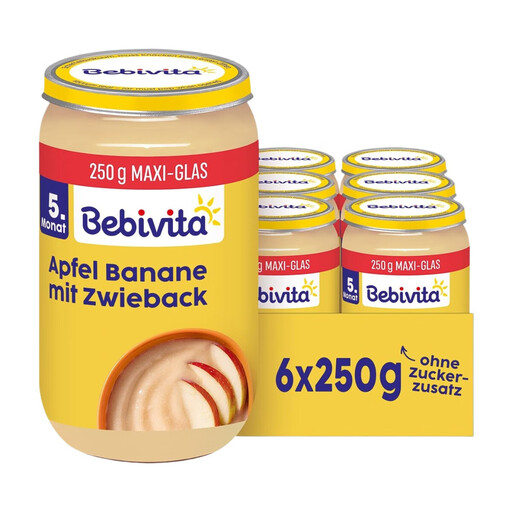
Why this product suits this profile: The ready-to-serve 250-g jars are ideal for families who want to build up a supply without any mixing. The stated age recommendation is from 5 months.
The “no added sugar” labelling is supported by a clear ingredients list. The product contains wheat and gluten, among other ingredients, which must be taken into account before buying.
Organic fruit-and-cereal combination, ready to serve and available as a pack of 6.
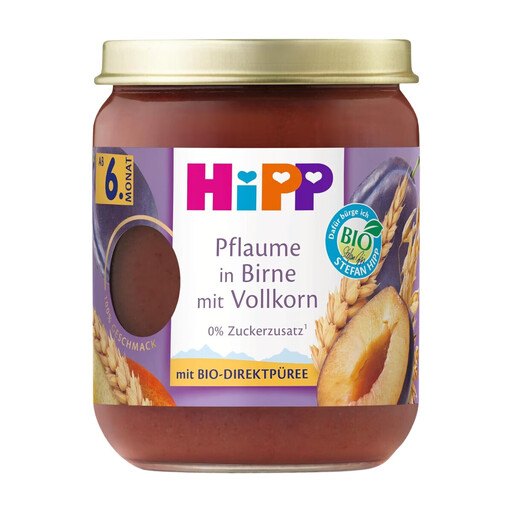
Why this product suits this profile: The combination of 75 per cent fruit, wholegrain wheat and wholegrain oats is aimed at parents who compare ingredient proportions and organic certification particularly carefully.
The fruit content and the types of cereal included are clearly listed. According to the product information, this product is intended from 6 months and contains no added sugar.
EU organic certified, with 160-g portions in a pack of 6 and no added sugar.
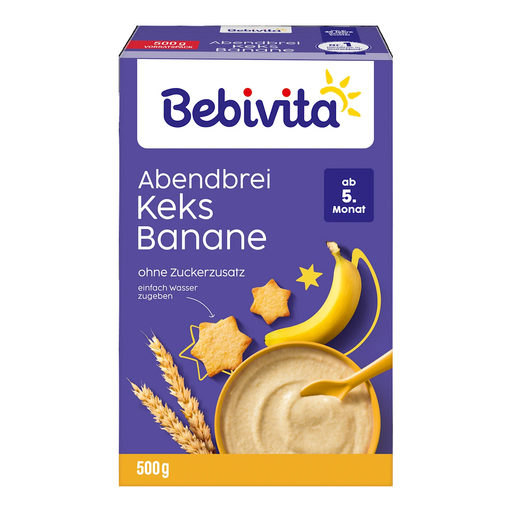
Why this product suits this profile: This milk-and-cereal porridge is intended as a warm evening meal from the 5th month onwards and is freshly prepared in individual portions with water.
The preparation instructions are provided on the product; the powder is freshly mixed and is not used in a bottle. Allergens such as milk and wheat are clearly stated.
500-g value pack, with no added sugar and stated quantities of calcium, iron and vitamin D.
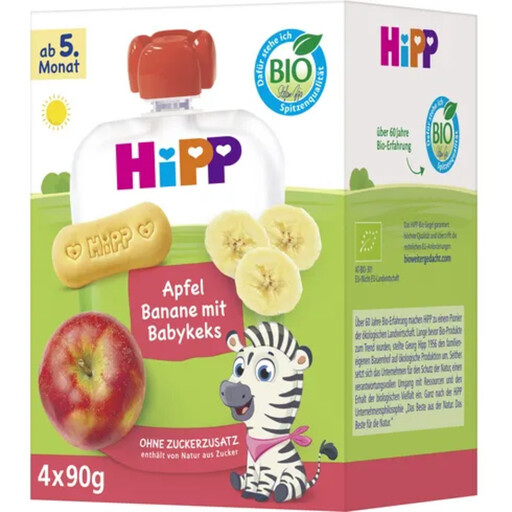
Why this product suits this profile: According to the product information, this pouch is suitable from the 4th month onwards and comes with a spoon attachment. The format is practical for days out and quick snacks between meals.
The manufacturer’s guidance warns against frequent or prolonged sucking directly from the pouch. Feeding with the recommended spoon reduces this usage risk; possible traces of egg and tree nuts should be taken into account.
95 per cent fruit according to the product information, a smooth purée consistency and compact individual portions.
We have put together a complete, regularly updated list of products that fully meet these strict selection criteria and the safety regulations applicable in the EU.
Only products whose packaging explicitly states that they are suitable from the 4th month onwards should be used. The Hipp Squeeze Pouch Apple-Banana & Baby Biscuit and the Bebivita fruit-and-cereal purée with rusk are intended for this early weaning stage according to the available product information. Always check the current product labelling and your baby’s individual tolerance before feeding.
This depends on the type of product. With the Hipp pouch, the opened contents should be refrigerated and consumed within one day. Many jars and pots can be stored in the fridge for up to three days. Powdered porridges should be kept dry, cool and tightly sealed, and used within the stated period. The information on the packaging takes precedence.
No. Fruit purée and fruit-and-cereal purée contain the natural sugar found in fruit. It is therefore worth checking the nutritional table. Milk- and cereal-based porridges may also contain naturally occurring sugars. What matters is whether additional sugar, sweeteners or sweetening juice concentrates have been added.