
Lieferung heute & morgen

Qualitätsgarantie

Willkommens-Angebote freischalten: KOSTENLOSE Lieferung | Bis zu 80 % RABATT | Kostenlose 30-Tage-JoyPlus-Testphase
App herunterladen
Organic baby food multipacks can make shopping easier and provide supplies for several days. At the same time, large packs, fruity varieties and terms such as “organic” or “no added sugar” can easily encourage rushed decisions. What matters is not just the brand name and pack size, but the age recommendation, ingredients list, allergens, storage instructions and portion format.
Baby porridge with no added sugar may still contain naturally occurring sugar. Fruits such as apples, bananas and mangoes provide natural sugars. It is therefore worth checking two details:
Pure fruit purée for babies often contains more sugar than fruit and cereal porridge, even though no household sugar has been added. The information on the packaging is decisive.
Organic fruit purée is not automatically suitable for every age. A product for baby porridge from 5 months may differ considerably in consistency and ingredients from baby porridge from 8 months or baby porridge from 10 months. Cereals, yoghurt, quark and certain allergens should be considered in line with the individual introduction of complementary foods.
The age recommendation on the label is therefore an important selection criterion. If parents are unsure about introducing new foods, they can consult a midwife, paediatrician’s practice or nutrition adviser.
A six-pack may seem practical at first glance. However, with 160-gram or 190-gram jars, as well as 250-gram maxi jars, portion size, consumption and storage space requirements differ. After opening, many products must be refrigerated and used within one to three days. A large jar is therefore not automatically suitable for several feeds.
Check whether the manufacturer recommends the product from the 5th, 6th, 8th or 10th month. Fruit purées are often finely sieved, while fruit and cereal porridge may also contain wheat, oats, spelt or other cereal ingredients. Products with finer cereal flakes or yoghurt may be intended for older babies.
The ingredients list shows the proportion of fruit, cereals, dairy products and other components. HiPP organic baby porridge, for example, may contain wheat, oats, milk or spelt. Bebivita baby food with wholegrain may also contain gluten and carry warnings about possible traces of other allergens.
Particularly important:
The EU organic logo or an equivalent certification notice makes the organic certification transparent. For the products listed here, the product details state their organic quality. However, this does not indicate whether a product is suitable for a particular age group or how high its natural sugar content is.
Squeezy pouches for children are handy when you are out and about. For babies, the contents should ideally be eaten from a spoon so that the child does not suck directly from the pouch for extended periods. For supplies at home, jars in a six-pack may take up less space and be easier to portion.
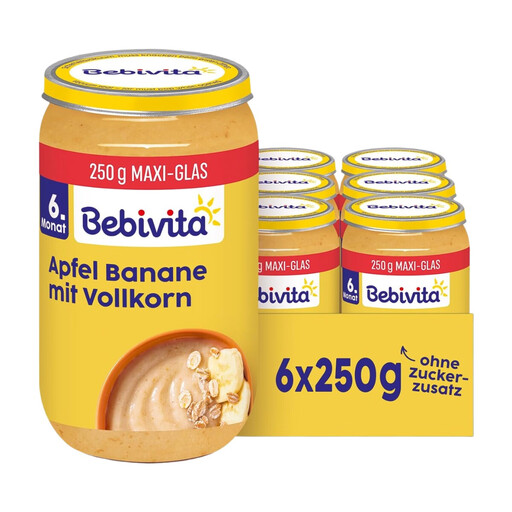
Why this product suits the profile: The multipack contains six 250-g jars with apple, banana and wholegrain cereals and, according to the product details, is intended for babies from 6 months.
The product details state “no added sugar” and list wheat and oats as allergens. This makes it possible to check the choice carefully before buying.
Six large jars, wholegrain ingredients and a clear age recommendation from 6 months.
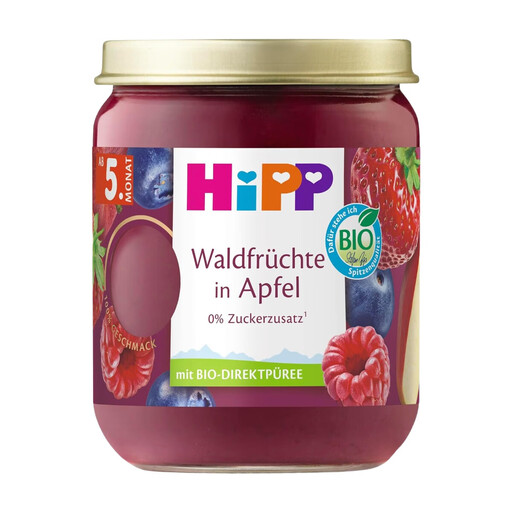
Why this product suits the profile: According to the product details, the fruit purée is suitable from 5 months, contains 99.7% fruit and is certified as an EU organic product with no added sugar.
The ingredients list specifies apple, strawberry, blueberry and raspberry. The age group and information about naturally occurring sugars are stated separately.
Six 160-g portions, a high fruit content and, according to the product details, no traces of the 14 major EU allergens.
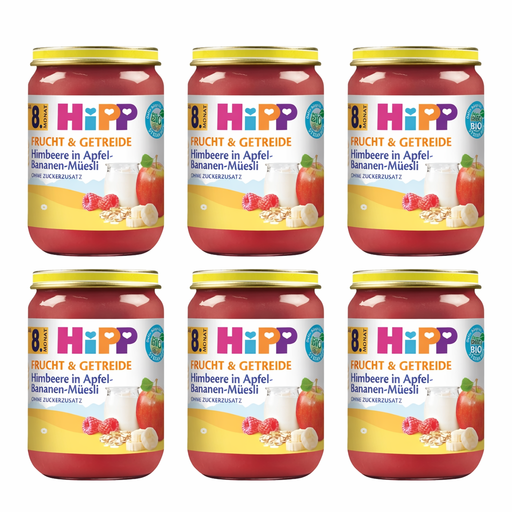
Why this product suits the profile: According to the product details, this product is intended for babies from 8 months and combines fruit, oat flakes and yoghurt in a finer cereal preparation.
The ingredients list explicitly names oats and milk. This allows carers to compare the recipe with the individual complementary feeding plan and any known allergies.
Six 190-g jars, a fruit and cereal combination and a stated age recommendation from 8 months.
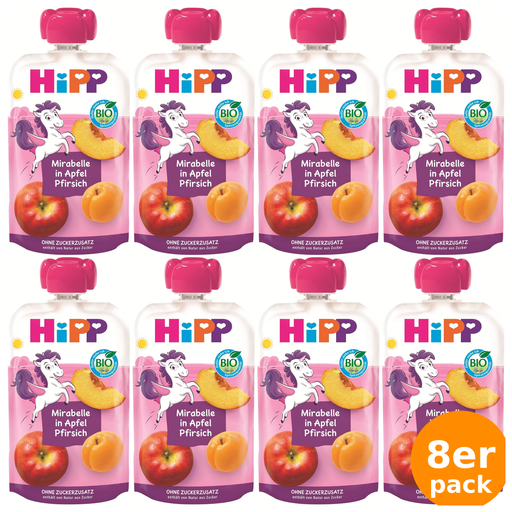
Why this product suits the profile: According to the product details, the 100-g squeezy pouches are intended for children from one year and can be packed for outings or quick snacks between meals.
The age limit and recommended daily amount of one to two pouches are listed in the product details. This prevents use outside the intended age range.
Eight individually portioned 100-g pouches and 100% fruit from organic farming, according to the product description.
Unopened jars are generally stored at room temperature in a dry place, depending on the product. Direct sunlight and excessive heat should be avoided. After opening, put any leftovers in a sealed container or refrigerate them in the closed jar. The specific storage period varies: several of the products listed state three days, while yoghurt or quark varieties often need to be used within one day.
Do not reuse leftovers that have been heated in advance. First remove only the amount needed and use a clean spoon. Before every feed, check the condition of the packaging, the best-before date, ingredients and temperature.
Fruit purée, baby porridge and baby multipacks should also be kept clearly separate from confectionery. Products such as Kinder Chocolate, Kinder Bueno White and gummy sweets are not baby food. The same applies to adult snacks and Asian snacks containing chilli, gelatine, colourings or complex allergen information. You can find suitable offers for these products in the children’s snack bundles category.
We have put together a complete, regularly updated list of products that fully meet these strict selection criteria and the safety regulations applicable in the EU.
This depends on the recipe and packaging. The fruit and cereal porridges listed are often stated to keep for up to three days in the fridge. Products containing yoghurt or quark sometimes need to be used within one day. The manufacturer’s information on the label takes precedence.
No. “No added sugar” means that no additional sugar has been added. Fruit naturally contains sugar. Checking the nutritional table per 100 grams shows the actual value for the individual product.
A multipack can reduce the price per item and the number of shopping trips if the variety is eaten regularly. Before buying, however, compare the portion size, consumption, best-before date and storage space required. When trying a new flavour, a smaller format is more sensible before buying a whole stock.