
Lieferung heute & morgen

Qualitätsgarantie

Willkommens-Angebote freischalten: KOSTENLOSE Lieferung | Bis zu 80 % RABATT | Kostenlose 30-Tage-JoyPlus-Testphase
App herunterladen
Organic baby food without added sugar can be a practical solution for complementary feeding – at home, while travelling or as a small snack when you’re out and about. However, the choice available in shops can be confusing: terms such as “no added sugar”, “organic” or “natural flavour” alone do not tell you whether a product is suitable for your child’s age, diet and everyday routine.
A product with no added sugar can still contain naturally occurring sugar. Fruit purée, fruit juice or banana, for example, contain natural sugars. That’s why it’s worth checking the nutritional information. In particular, look at:
A fruit purée with a high proportion of banana or juice may contain more sugar than a mixture of apple, berries and cereals. That does not automatically mean the product is unsuitable – but its ingredients should match how you intend to use it.
Baby food from 5 months is not automatically suitable for every child from that age onwards. Your child’s individual readiness for complementary feeding and the recommendations of their healthcare professionals should be taken into account. You should also check the packaging to see whether the product is intended from the 5th or 6th month, or only from 1 year.
A baby porridge from 6 months and a fruit purée for children from 1 year therefore belong in different shopping categories. According to the product information, Bebivita Garden Fruits Fruit Purée is intended for children from 12 months, while several FruchtBar products are available from 6 months.
Squeeze pouches for babies are easy to transport and come in convenient portions. However, to help care for your child’s teeth, it is important to avoid prolonged or repeated sucking directly from the pouch. Many products recommend feeding with a spoon and supervising your child while they eat.
There are also clear storage time limits after opening. Depending on the product, the pouch should be refrigerated and used within one or two days. A swollen or damaged pouch should not be served.
For organic baby food, the specific organic inspection body should be stated on the packaging. The product information may include codes such as DE-ÖKO-006, ES-ECO-019-CT or HR-EKO-07. The origin “EU/non-EU” describes the agricultural origin, but does not mean that the product comes entirely from Europe.
Read the ingredients list in full. An organic fruit purée may also contain cereals, juice or lemon juice concentrate. For a fruit and cereal porridge, the types of cereal used, such as oats, millet or spelt, are relevant. Spelt and wheat contain gluten. If you are looking for a gluten-free baby porridge, look for clear labelling and check the ingredients list.
The statement “no added sugar” describes the recipe, not the total sugar content. The values per 100 grams can be used as a guide. In the product information available, the FruchtBar fruit blends contain around 9.4 to 12 grams of sugar per 100 grams, depending on the variety. Bebivita Garden Fruits Purée contains 10.7 grams, while the banana, blueberry and rice blend reaches 15 grams.
For cereal porridges, you should also consider how the product is prepared and the portion size. Porridge is usually mixed with water and fed fresh with a spoon. The instructions on the packaging are decisive, particularly regarding temperature, quantities and storage.
100-gram pouches are suitable for a clearly defined portion and are easy to carry in a bag. A resealable pouch can be practical if your child does not finish the entire portion, but it does not replace the stated refrigeration requirements or use-by period.
At home, 500-gram packs of cereal porridge are often easier to plan for. However, you will need clean, fresh water, a bowl and a spoon. Also check how long the manufacturer says the opened pouch of powder can be used.
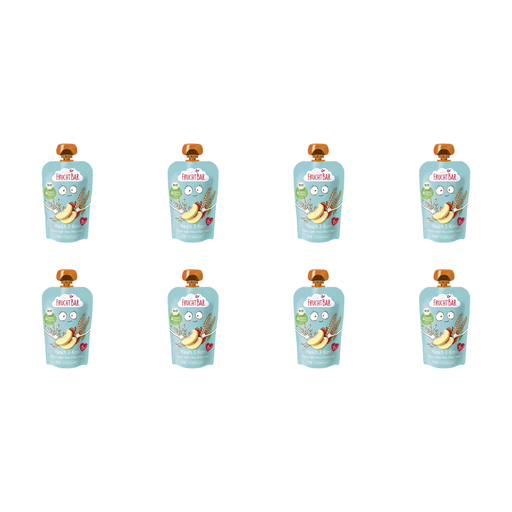
Why this product suits this profile: The 8 pouches, each containing 100 grams, combine apple, peach and apricot with oats, spelt and millet. It is recommended from 6 months.
The ingredients list clearly states the proportions of fruit and cereal. No sugar is added; the sugar comes from the fruit used.
Organic-certified ingredients, 3% cereal and a resealable 100-gram pouch.
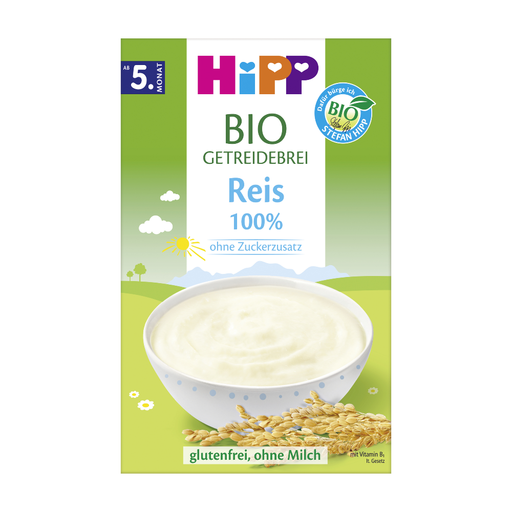
Why this product suits this profile: According to the ingredients information, this cereal porridge from 5 months consists of 100% organic rice flour and vitamin B1. It is listed as a gluten-free option.
Using a single type of cereal makes the ingredients easier to assess. The product contains no added sugar or added flavourings.
7 packs of 200 grams each, a gluten-free recipe according to the product information, and flexible preparation with water or milk.
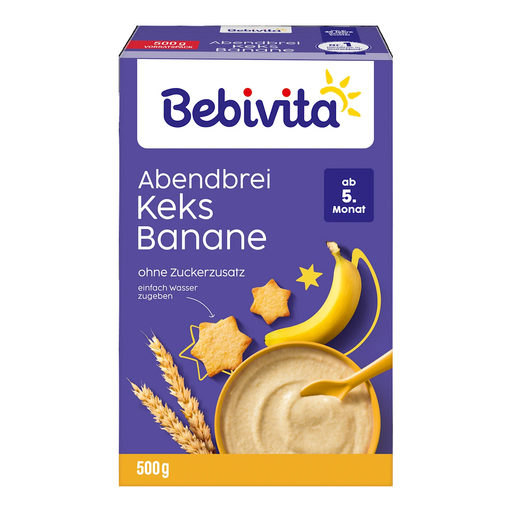
Why this product suits this profile: The 500-gram pack is suitable for families who want to prepare warm milk and cereal porridge regularly from 5 months.
The preparation method, temperature and storage time are clearly stated. The powder is freshly mixed with water and fed with a spoon.
No added sugar or sweetening juice concentrates; with wheat, milk ingredients, and added vitamins and minerals.
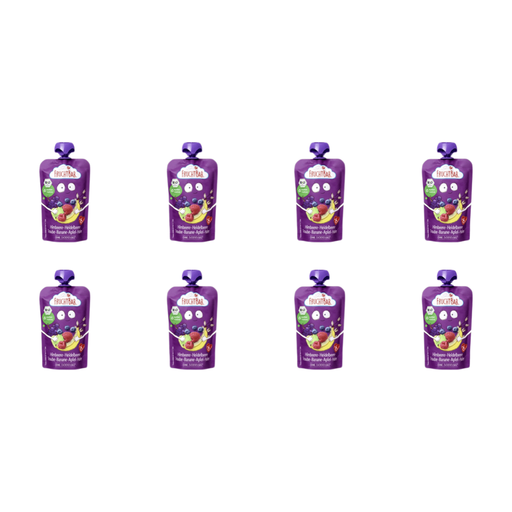
Why this product suits this profile: The resealable 100-gram pouches are portioned and ready to eat without any preparation. The recipe contains five fruits and 4% oats.
The ingredients list makes the high proportion of apple and the fruit and juice ingredients clear. This helps you assess the naturally occurring sugar content.
Organic-certified ingredients, 8 portions and resealable pouches that are recyclable according to the product information.
We’ve put together a complete, regularly updated list of products that fully meet these strict selection criteria and the safety regulations applicable in the EU.
No. “No added sugar” means that no sugar or sweetening ingredient has been added to the recipe. Fruit, cereals and milk ingredients can contain naturally occurring sugar. The nutritional information shows the actual value per 100 grams.
Rice is naturally gluten-free. According to the product information, HiPP Organic Rice Cereal consists of 100% rice flour and is suitable for babies from 5 months. If your child has intolerances or specific dietary needs, check the ingredients lists carefully and follow medical or nutritional advice.
This depends on the information provided for the individual product. For the FruchtBar products mentioned, the opened pouch should be refrigerated and used within two days. For Bebivita Garden Fruits Purée, use within one day is stated. Always follow the packaging instructions, maintain the cold chain and check the condition of the pouch.