
Lieferung heute & morgen

Qualitätsgarantie

Willkommens-Angebote freischalten: KOSTENLOSE Lieferung | Bis zu 80 % RABATT | Kostenlose 30-Tage-JoyPlus-Testphase
App herunterladen
Organic baby food is designed to make the transition to solid foods easier while matching a child’s age, development and individual needs. However, baby purées, baby jars, fruit purée for babies and milk cereal for babies can differ considerably in their ingredients, consistency, allergens, portion sizes and storage requirements.
Parents who focus solely on the organic label or claims such as “no added sugar” may overlook important details. The following criteria help families in Germany assess marketing claims objectively and choose suitable products more deliberately.
“No added sugar” does not mean that a product contains no sugar. Fruit purées naturally contain sugar from apples, pears, bananas or berries. When comparing products, it is therefore worth checking the nutrition table per 100 grams.
For example, a banana fruit purée may contain more natural sugar than a jar containing only vegetables. This is simply a factual product characteristic, but it should be taken into account when making daily choices. Products with a short, easy-to-understand ingredients list are particularly practical.
Baby food from 4 months is often finely puréed and suitable as a gentle introduction to solid foods. From 6 or 8 months, coarser textures and combined meals may become more appropriate. Products from 12 months onwards may already contain chunkier ingredients or feature a recipe designed more specifically for toddlers.
The age recommendation on the packaging is therefore only a starting point. Parents should also check whether their child can already manage the relevant consistency and can sit upright while eating. Children should always be supervised during meals.
The EU organic logo or German organic seal indicates the relevant certification, but it does not replace checking the allergens and recipe. Organic baby food can also contain milk, wheat, oats, spelt or other ingredients that must be declared.
When introducing new ingredients, it is advisable to keep the process clear and structured. This makes it easier to identify which products the child already tolerates. For specific dietary questions or uncertainties, parents can consult their paediatrician or a qualified nutrition professional.
First, match the product to its intended use:
A vegetable purée with meat belongs to a different product category than fruit purée for babies. For meal planning, it can be useful to combine several types of meals rather than stocking up exclusively on sweet fruit products.
Ingredients are listed in descending order by quantity. Products with only a few ingredients are especially easy to assess. Pay particular attention to information such as:
An organic porridge with no added sugar may still contain natural sugars from fruit or milk. Similarly, “gluten-free” and “lactose-free” are specific product characteristics and should not automatically be applied to an entire brand.
Jars, cups, powdered packaging and pouches each have different advantages and disadvantages. Jars are suitable for stocking up and can be stored in the refrigerator after opening. Pouches are lightweight and convenient when travelling, but young children should ideally not suck on them continuously. Instead, the contents can be served with a spoon.
Check the manufacturer’s specific instructions regarding shelf life after opening. For the products listed here, the stated periods range from within 12 hours to the following day or three days, depending on the recipe. Unopened packaging should be protected from direct sunlight, and damaged containers should not be used.
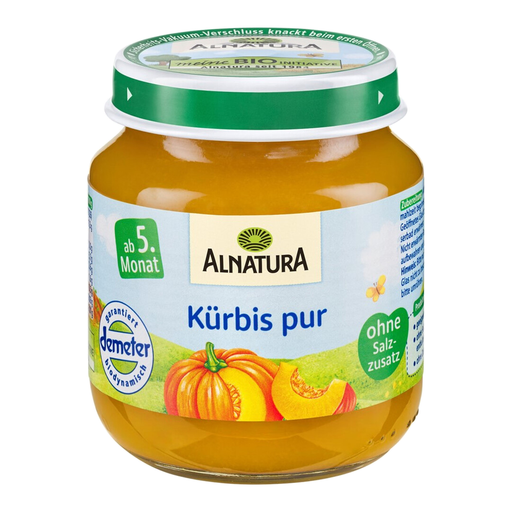
Why it’s a good fit: A single-vegetable purée is ideal for families who want to begin the transition to solid foods with a clear, manageable ingredients list.
The recipe contains 95% organic pumpkin and water; according to the product information, no added salt is included.
Demeter organic quality, finely puréed, gluten-free and intended from the 4th month onwards.
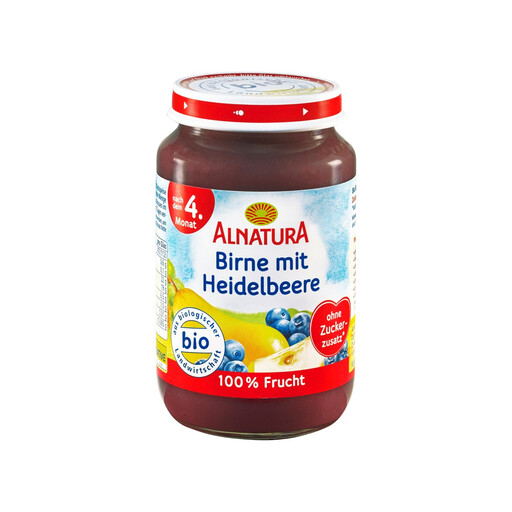
Why it’s a good fit: This combination is aimed at parents looking for a finely puréed fruit jar with clearly stated fruit content.
The “no added sugar” claim is supported by the nutrition table: according to the ingredients, the sugar comes from pears and blueberries.
90% organic pears, 10% organic blueberries, gluten-free and free from added sugar.
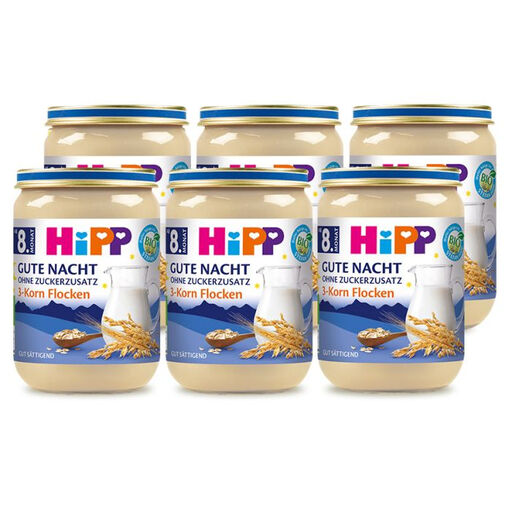
Why it’s a good fit: This multipack is designed for families who regularly need a ready-to-serve milk-and-cereal porridge from the 8th month onwards.
The allergens are clearly listed: milk, wheat and oats, or gluten.
Six individual portions, no added sugar and, according to the product information, fortified with vitamins A, B1 and D as well as calcium.
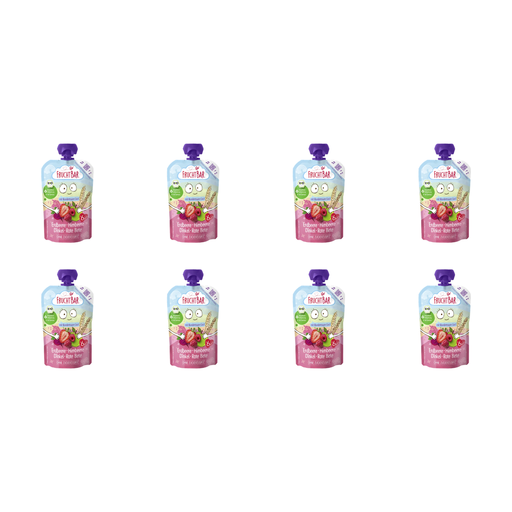
Why it’s a good fit: The resealable pouch and individual portions are practical for day trips, nursery bags or keeping a supply at home.
The recipe contains wholegrain spelt flour, so the product should not be considered a gluten-free alternative.
Certified organic, intended from 6 months, no added sugar and available as an eight-pack with 100 g per pouch.
In the full category, you will find more ready-to-eat baby food in jars, organised by age group, recipe, portion size and packaging type.
For the start of weaning, single-vegetable jars such as pumpkin can provide a clear, manageable foundation. Depending on the product information, fruit jars containing pear or apple can be served as dessert or as part of a meal. From the 6th month onwards, cereal porridges and fruit-and-cereal combinations can be introduced.
From the 8th month, meals containing vegetables, potatoes and meat, as well as coarser cereal-and-fruit recipes, may be suitable. For children from 10 or 12 months, common options include breakfast porridges, pouches and chunkier meals. The child’s individual development remains more important than following a rigid timetable.
Products with an appropriate age recommendation and finely puréed consistency are intended for this stage. Examples from the selection include Alnatura Organic Pumpkin and Alnatura Pear with Blueberry. Packaging instructions should be checked before every use.
No. “No added sugar” means that no additional sugar has been added. Fruit, milk and cereal can still contain naturally occurring sugars. The ingredients list and nutrition table are essential for an objective assessment.
A multipack can simplify shopping and provide individual portions when a product is used regularly. Before buying, however, parents should check the shelf life, available storage space, portion size and whether the product is actually well tolerated. When trying a new product, buying a single item is often more sensible than purchasing a larger supply.