
Lieferung heute & morgen

Qualitätsgarantie

Willkommens-Angebote freischalten: KOSTENLOSE Lieferung | Bis zu 80 % RABATT | Kostenlose 30-Tage-JoyPlus-Testphase
App herunterladen
The selection of organic baby muesli on store shelves can be overwhelming for parents. Colourful packaging and advertising claims make it difficult to make an informed decision for your baby's breakfast. As a Joybuy Product Recommendation Officer, I'm here to help you navigate the information overload and understand the criteria that truly matter. This guide will show you how to avoid common purchasing traps and select a suitable children's muesli that meets your child's needs.
Many products seem healthy at first glance, but a closer look often reveals hidden downsides. Pay close attention to these two points to avoid making the wrong choice.
The "no added sugar" label is a common marketing tactic. However, this doesn't mean the product is low in sugar. Many manufacturers use highly concentrated fruit juices or fruit purées, which can significantly increase the total sugar content. An ideal baby muesli with no added sugar should derive its sweetness from whole fruits, not from concentrates. It's therefore essential to check the "of which sugars" line in the nutritional information table to assess the actual sugar content.
The muesli's texture is crucial for your child's safety and motor skill development. A muesli from 6 months should have a very fine, porridge-like consistency to make swallowing easier and eliminate any choking hazards. For a muesli from 1 year, on the other hand, small, soft pieces are desirable to encourage chewing. A product with pieces that are too coarse or hard can be unsuitable and even dangerous for younger babies, while a muesli that is too fine no longer presents a challenge for older toddlers.
To find the right product, you should focus on objective and verifiable features. The following three parameters provide a reliable basis for your purchasing decision.
A short and easy-to-understand ingredients list is often a good sign. Make sure that terms like glucose syrup, fructose, or juice concentrate are not listed. Ideally, the base should consist of whole grains. A high-quality baby fruit muesli contains dried fruit pieces instead of purée concentrates to provide a more natural sweetness and more fibre. The organic seal ensures that the ingredients come from certified organic farming.
The manufacturer's age recommendation is an important guideline.
Whole grains provide complex carbohydrates for sustained energy, as well as essential fibre for digestion. A high whole grain content is therefore a mark of quality. Some products, such as Hipp Baby Muesli, are also fortified with Vitamin B1, which, according to the manufacturer, is important for the function of the nervous system. Compare the fibre and protein content to ensure a nutrient-rich breakfast for babies.
Based on the criteria above, we have selected a few products from our range to suit different requirements.
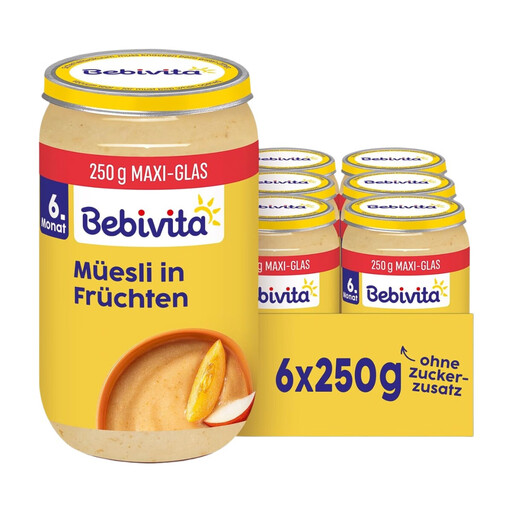
Why This Fits Their Persona: Ideal for parents who are starting to introduce solids and are looking for a safe, straightforward, and ready-to-eat option. The mild recipe is tailored to the needs of infants from 6 months.
The product is finely puréed, thus avoiding the trap of an unsuitable, overly coarse texture for babies just starting on solids.
Contains valuable whole grains and, according to the manufacturer, has no added sugar. The sweetness comes exclusively from the fruit.
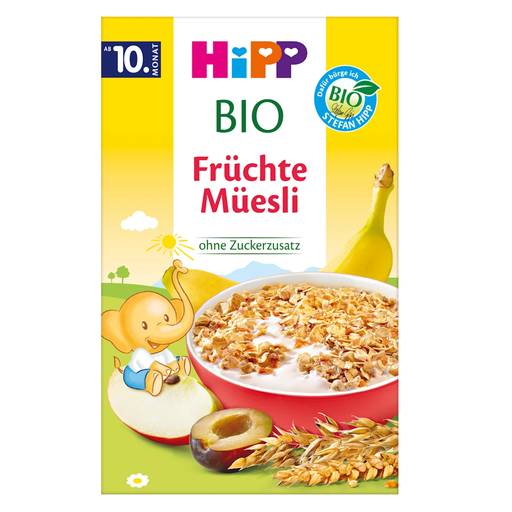
Why This Fits Their Persona: Suitable for parents whose children are ready for the next step. This mix-it-yourself blend encourages chewing with its fine pieces and offers flexibility in preparation.
The texture is specifically designed for the 10+ month stage, offering a gentle transition to more solid foods. It contains no added sugar.
The dry mix of whole grain flakes and fruit pieces can be prepared individually with milk or water. The high cereal content ensures it is very filling.
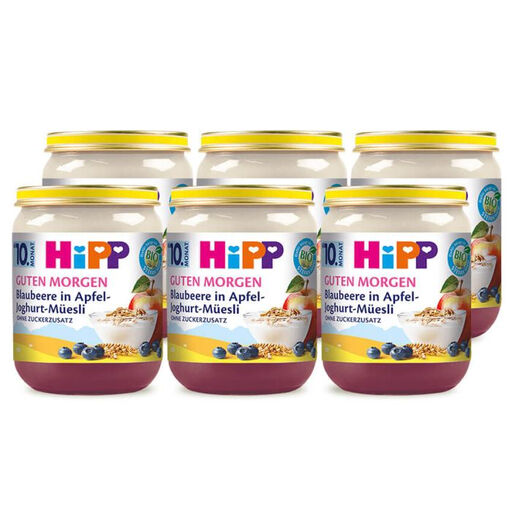
Why This Fits Their Persona: Perfect for busy parents and for when you're on the go. This ready-to-eat jar combines fruit, yoghurt, and cereal into a balanced meal that requires no preparation.
Despite the convenience of a ready-made product, the manufacturer states it is free from added sugar, flavourings, and preservatives.
The combination with yoghurt provides additional protein. The ingredients are from organic farming and offer a nutritious meal.
We have compiled a complete, up-to-date list of products that fully meet these strict selection criteria and all relevant regulations.
Dry muesli mixes are typically prepared with infant formula, whole milk (depending on the age recommendation), or water. Follow the manufacturer's instructions on quantities precisely to achieve the right consistency. Let the muesli soak for a short time. Do not heat the muesli in the microwave, as there is a risk of burns due to uneven heat distribution. Ready-to-eat muesli in a jar can be fed directly.
Muesli can be introduced as part of weaning from the 6th month. Start with very finely ground cereal porridges or special, puréed baby mueslis. As your baby gets older, typically from 8 to 10 months, you can transition to mueslis with fine pieces to encourage chewing.
You can identify a good product by its transparent ingredients list. Ensure it contains no form of added sugar (e.g., sucrose, glucose syrup) or sweetening juice concentrates. The sugar content in the nutritional information table should come exclusively from the natural sugars in the fruits and grains. A high whole grain content and the EU organic seal are other positive indicators.