
Lieferung heute & morgen

Qualitätsgarantie

Willkommens-Angebote freischalten: KOSTENLOSE Lieferung | Bis zu 80 % RABATT | Kostenlose 30-Tage-JoyPlus-Testphase
App herunterladen
Organic baby porridge should match your child’s developmental stage, contain understandable ingredients, and be straightforward to use in daily life. However, product names like “Good Night”, “Multigrain” or “Breakfast” don’t automatically lead to the right choice. What really matters are the age recommendation, the preparation method, the ingredients list, and the portion size.
The label no added sugar does not mean a product contains no sugar at all. Milk, grains and fruit can naturally provide sugar. That’s why it’s worth checking the nutritional information and the ingredients list. In a fruit purée, for example, bananas or berries can affect the sugar content, even if no household sugar has been added.
A baby porridge from 5 months is not automatically suitable for every baby at that exact age. You should consider your baby’s readiness for solid foods and the recommendations on the packaging. A baby porridge from 6 months or an evening porridge for older babies may have a different texture and combination of ingredients. If you’re unsure, discuss introducing new foods with your paediatrician or a qualified nutritionist.
Powdered porridges such as an organic grain porridge – for example oat, rice or multigrain – are usually prepared with water, milk or infant formula. A ready-made baby milk porridge in a jar, on the other hand, is already portioned and can be served warm or cold depending on the product. These differences affect storage, preparation time, and shelf life after opening.
First, sort by the planned meal:
The information on the packaging takes priority over general product descriptions online.
With organic baby oat porridge, you should check whether it contains only oats or a grain mix. Wheat, spelt, barley and rye contain gluten. A baby rice porridge made from 100% rice flour can be gluten-free according to the product information, but you should still check for any possible trace warnings.
Also check for:
Organic certification refers to the agricultural origin according to the stated standards. It does not replace checking the ingredients list.
A baby porridge multipack can simplify the unit price and your shopping planning. However, with ready-made jars, you should realistically assess how quickly your child will use up the portions. Once opened, any leftovers that haven’t been heated should be stored in the fridge according to the packaging instructions and are usually best used the next day. Powdered porridge needs a dry, hygienic, well-sealed storage container after opening.
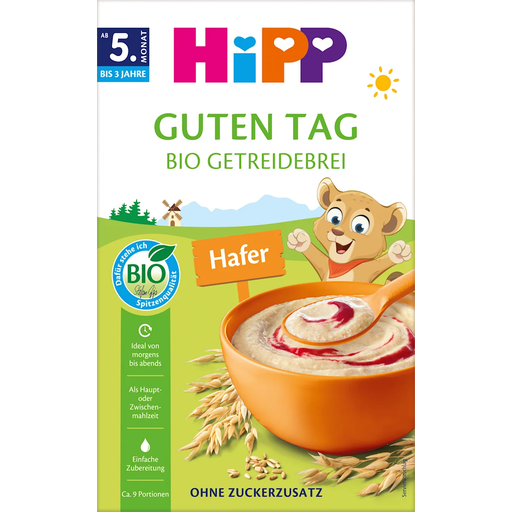
Why this product fits the profile: This powdered porridge can be prepared with water, milk or infant formula, and the seven 200g packs provide a manageable supply for the weaning phase from 5 months.
The ingredients list states 100% oat flour and vitamin B1; according to the product information, no sugar is added. This makes the grain base easy to understand.
100% organic oat flour, vitamin B1, no added sugar and flexible preparation.
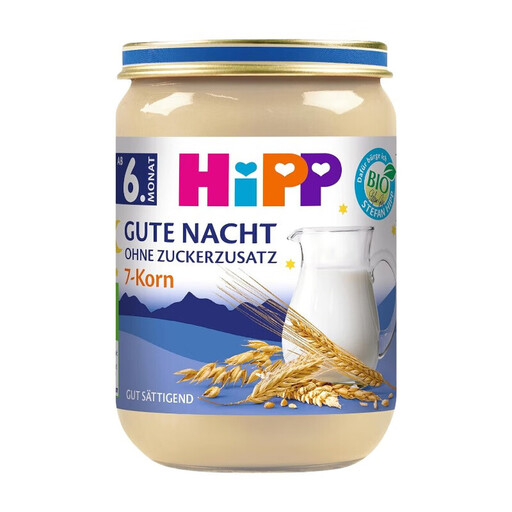
Why this product fits the profile: Ideal for families who prefer a ready-made evening porridge with several grain varieties. The jars are recommended from 6 months according to the product information and can be served warm or cold.
The age recommendation, the milk preparation and the seven grain types are clearly stated. The product description also lists vitamins A, B1, D and calcium.
Six 190g jars, seven organic grain varieties and, according to the supplier, no added sugar.
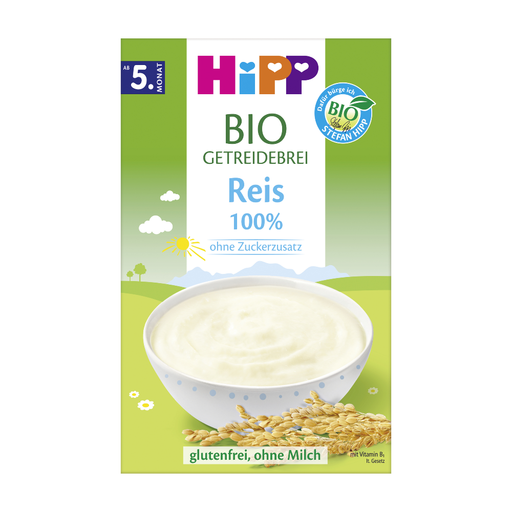
Why this product fits the profile: Suitable for households looking for a single grain ingredient and who want to mix the porridge with water, milk or infant formula as needed.
The product information states 100% rice flour, no added sugar and no added gluten. However, you should still check the allergen and trace warnings before buying.
100% organic rice flour, vitamin B1, seven 200g sachets and, according to the product information, gluten-free.
We’ve put together a complete, regularly updated list of products that fully meet these strict selection criteria and the safety regulations in force in the EU.
Always measure powdered porridge according to the instructions on the packaging. Use clean drinking water and allow the meal to cool to a suitable temperature before feeding. With jars, only take out the amount you need and serve it with a clean spoon. Leftovers that have been heated should not be offered again.
Also bear in mind:
That depends on your baby’s readiness for solid foods and the information on the individual product. A simple rice or oat porridge may be recommended from 5 months according to the product labelling. Introduction should be gradual, while carefully monitoring ingredients and potential allergens.
No. “No added sugar” means that no extra sugar has been added. Natural sugars from milk, grains or fruit may still be present. The nutritional information shows the actual sugar content per 100g.
For powdered porridge, the shelf life depends on the packaging instructions and dry, hygienic storage. Opened jars should be kept sealed in the fridge according to the product description and are usually best used the next day. Always follow the manufacturer’s specific instructions.