
Lieferung heute & morgen

Qualitätsgarantie

Willkommens-Angebote freischalten: KOSTENLOSE Lieferung | Bis zu 80 % RABATT | Kostenlose 30-Tage-JoyPlus-Testphase
App herunterladen
Organic baby porridge is one of the first weaning foods for many families. The choice ranges from simple cereal porridge to organic baby milk porridge and evening porridge from 6 months, Bircher muesli and multipacks. However, an organic label alone doesn't answer all the important questions. What really matters are the age recommendation, ingredients list, allergens, preparation method and the actual portion size.
Baby porridge without added sugar can naturally contain sugar, for example from milk or fruit purée. With a fruit and cereal porridge, the nutritional information table is therefore more revealing than the front of the pack. Compare the "of which sugars" value per 100 g and check at the same time whether sugar, syrup or other sweeteners have been added.
"From 5 months" or "from 6 months" describes the intended use according to the product information. Nevertheless, parents should read the ingredients and allergens before buying. An oat baby porridge can contain gluten, while a rice baby porridge made from 100% rice flour is gluten-free according to the product description. If there are family allergies or any uncertainty, individual advice from a paediatrician or nutritionist is advisable.
An organic porridge multipack can reduce the price per unit, but it ties up more money and needs enough dry storage space. Once opened, product information often states that pouches should be used within three to four weeks. With jars, unopened and already heated leftovers need to be handled differently. So choose a pack size that matches your actual usage.
For the start of weaning, single grain types are often chosen. A pure oat baby porridge has a simple ingredients list, whereas a 5-grain or 7-grain porridge combines several grains. This can be interesting for varied meals, but makes it harder to identify individual ingredients if a product doesn't agree with your baby.
Pay attention to the specific preparation method:
Wheat, oats, barley, rye and spelt contain gluten. A gluten-free baby porridge shouldn't just be advertised as "gluten-free"; check the ingredients list and any possible trace warnings. With HiPP baby porridge, depending on the variety, you'll find wheat, oats, barley, spelt or milk.
"May contain" is also relevant. HiPP Organic Milk Porridge Semolina lists milk and gluten as important warnings and also notes possible traces of mustard. A product made from pure rice may not contain these ingredients, but cross-contamination warnings can still appear on the packaging.
Baby cereals often contain added vitamin B1, also known as thiamine. According to the product information, HiPP Organic Cereal Porridge 100% Oats contains 1.2 mg of vitamin B1 per 100 g; HiPP Organic Rice Porridge contains 1.3 mg per 100 g. Such details help with comparison, but don't replace a balanced diet.
Also, don't just compare the total gram weight. A multipack with seven 200 g pouches differs in handling from six 190 g jars. With dry products, storage life, resealability and preparation effort matter just as much as the price.
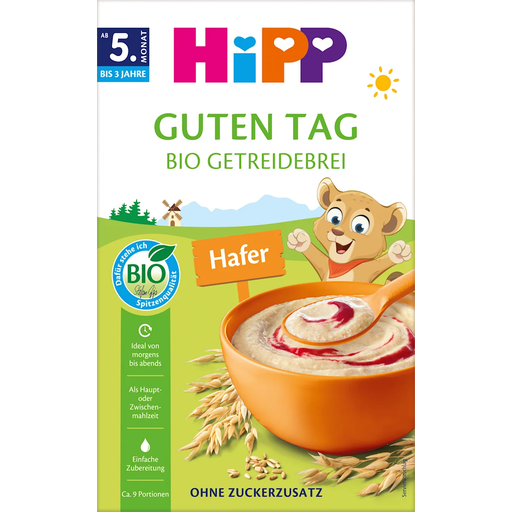
Why this product fits the profile: The single-grain recipe with 100% organic oats and seven packs provides a straightforward foundation for weaning from the stated age.
The ingredients list is short and states oat flour and vitamin B1. This makes the grain type and additive clearly identifiable.
100% oat flour from organic farming, no added sugar according to the product description, seven 200 g pouches.
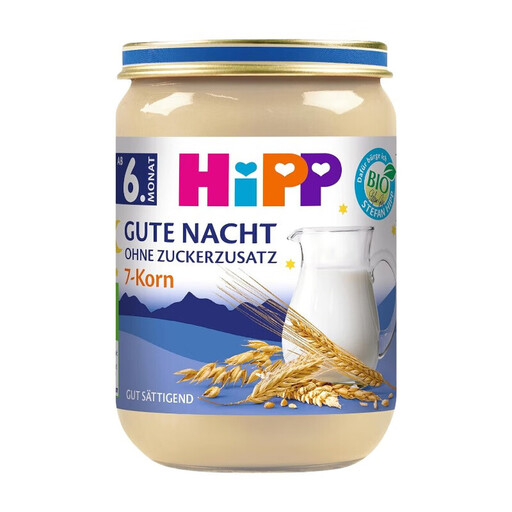
Why this product fits the profile: The ready-to-eat milk and cereal preparation with seven grains is designed for families who want a hassle-free evening meal from 6 months.
The age recommendation, milk components and grain types are clearly listed in the product information. Allergens such as milk and gluten therefore remain checkable.
Six 190 g jars, can be served warm or cold, no added sugar according to the product information, with vitamins A, B1, D and calcium.
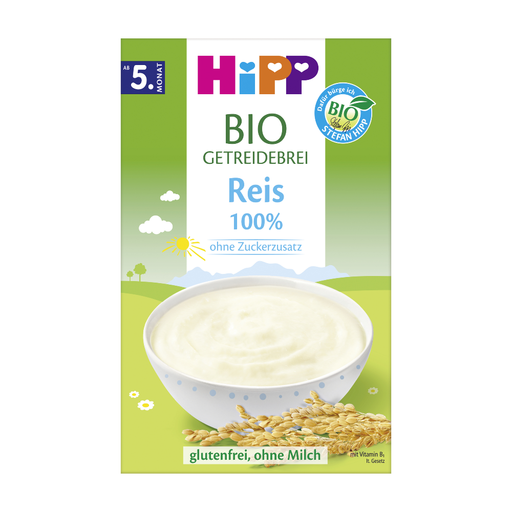
Why this product fits the profile: If you're looking for a gluten-free baby porridge based on rice, you get a single grain source in a seven-pack.
The ingredients list states 100% rice flour and vitamin B1. Milk, flavourings and added gluten are not used according to the product description.
Suitable from 5 months according to the product information, gluten-free based on rice and available as a 7 x 200 g pack.
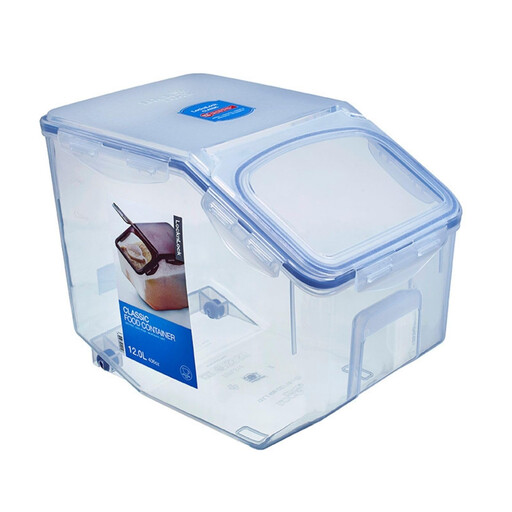
Why this product fits the profile: For households with larger supplies of muesli and cereal flakes, this storage container offers 12 l capacity and a measuring cup.
The transparent container makes the fill level visible. The silicone sealing ring and flip-top lid are designed for dry goods such as rice, muesli or pet food.
12 l volume, BPA-free plastic, dishwasher-safe container and freezer-safe down to -20 °C according to the product description.
We've put together a complete, regularly updated list of products that fully meet these strict selection criteria and the safety regulations in force in the EU.
Alongside the products featured, depending on your ingredient preferences, an organic baby milk porridge, a classic semolina porridge or a baby Bircher muesli could also be suitable. According to the product description, HiPP Organic Baby Bircher Muesli contains apple and banana purée, wholemeal wheat, rye, barley and oats, among other things. It is therefore not gluten-free and should be assigned to the corresponding labelled dietary requirements.
For adults and older children, products such as muesli and cereal flakes are also suitable. However, an Alnatura Crunchy made from spelt and oats is not a baby porridge. So always check the age suitability rather than using an ordinary breakfast product for your baby.
That depends on the individual product. In the product information you'll find varieties from 5 months, such as pure oat or rice porridge, as well as products from 6 or 8 months. The packaging information and the start of your baby's weaning journey are what matter.
Dry products should be stored tightly sealed, dry and hygienically at room temperature after opening. Several product information labels recommend using the contents within three to four weeks. For ready-to-eat porridge, follow the instructions on the label for refrigeration and leftover use.
Small pouches can be resealed in their original packaging. For larger quantities of rice, muesli and cereal flakes, a clean, completely dry, airtight container is practical. The LocknLock 12 l storage container should be cleaned before first use and dried thoroughly before filling.