
Lieferung heute & morgen

Qualitätsgarantie

Willkommens-Angebote freischalten: KOSTENLOSE Lieferung | Bis zu 80 % RABATT | Kostenlose 30-Tage-JoyPlus-Testphase
App herunterladen
Organic baby purées and fruit purées can make weaning easier: pre-portioned, quick to serve and easy to take on the go. At the same time, eye-catching packaging and terms like "fruity", "no added sugar" or "organic" don't automatically mean you're making the right choice. What really matters are the age recommendation, the ingredients list, allergens and correct usage.
A baby purée with no added sugar can still naturally contain sugar from apples, bananas, grapes or other fruit. That's why parents should check the nutritional information and ingredients list. For a fruit purée, the fruit content is also important: a product with 100% fruit is different from one made with juice concentrate, grains or other ingredients.
"From 6 months" or "from the 5th month" is a useful guide, but it doesn't replace the individual start of weaning. The texture, ingredients and potential allergens must match your baby's current stage of development. Products containing milk, wheat, spelt or oats, for example, are not automatically gluten-free or dairy-free.
A resealable pouch is handy when you're out and about. However, for dental health it's better to offer the contents from a spoon and avoid prolonged sucking. Once opened, follow the manufacturer's instructions for storage and use-by date. Damaged or bloated packaging should not be used.
For baby fruit purée from 6 months, choose products whose labelling clearly refers to this age group. A pure organic fruit purée can be used as a dessert or a snack. A grain-and-fruit purée, depending on the product description, can also be combined with a baby porridge.
For an evening meal, fruit purée and organic evening porridge are quite different: an evening porridge may contain milk and grains, and therefore different allergens. The label also tells you whether the product can be heated and how leftovers should be stored.
The term "organic" refers to production according to organic standards, not to a specific nutritional composition. Look out for:
A gluten-free baby porridge must be labelled as such. According to the product information, HiPP Organic Rice Cereal uses 100% rice flour and is described as gluten-free. A porridge made with wheat semolina, spelt or oats, on the other hand, is not gluten-free.
Jars of 190 g are suitable for meals at home. Pouches of 100 g are easier to portion and practical for trips. A baby food value pack can reduce the cost per unit, but should match your actual consumption. Once opened, leftovers must be refrigerated and used within two to three days, depending on the product. Unopened products should be stored in a cool, dry place as directed on the packaging.
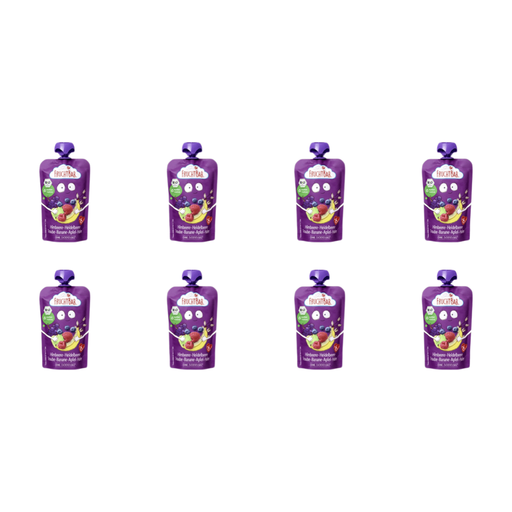
Why this product fits the profile: The pack of eight 100 g portions offers a predictable supply for families who want to try different fruits.
The labelling states "no added sugar", the minimum age of 6 months and the ingredients including oats. This means you can check the sugar and allergen information before buying.
8 pouches of 100 g each, organic certification ES-ECO-019-CT and resealable packaging for on the go.
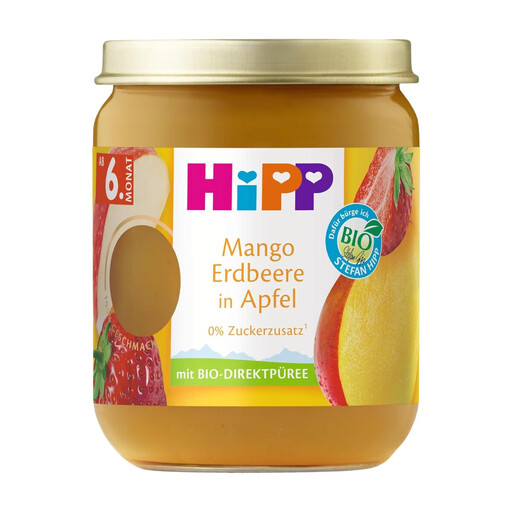
Why this product fits the profile: The ingredients list is short and states apple, mango and strawberry with a declared fruit content of 100%.
The product information states no added sugar and the absence of the 14 main EU allergens. Naturally occurring sugars are still present.
EU organic labelling, 6 jars of 160 g and can be used as a dessert or as an ingredient in baby porridge.
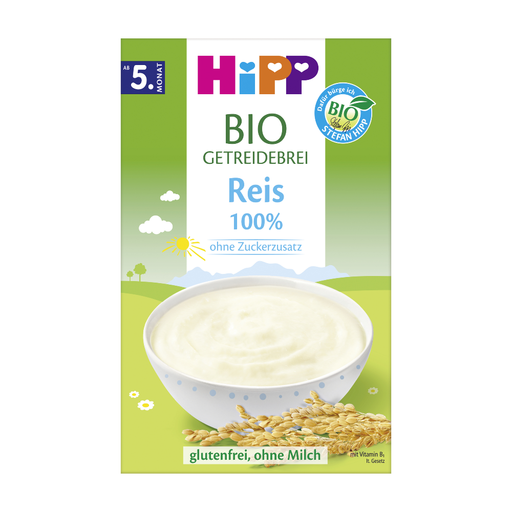
Why this product fits the profile: This grain porridge is aimed at families looking for a gluten-free base that can be combined with water, milk or fruit purée depending on how it's prepared.
The ingredients are clearly listed as 100% rice flour and vitamin B1. The labelling as gluten-free and with no added sugar clearly distinguishes it from wheat or spelt porridges.
7 sachets of 200 g each, gluten-free recipe according to the product information and several suggested preparation methods.
For a simple fruit component, products like fruit purée for babies with apple, pear, mango or berries are ideal. If you want to add grains, look for fruit purées with oats, rice, millet or spelt. For a complete evening meal, products such as HiPP Organic Evening Porridge or a similar milk-and-grain porridge are designed for this purpose. Milk and grain allergens need particular attention here.
The FruchtBar Organic Purée multipack is especially interesting for households that need several 100 g portions for trips, nursery days or holidays. For home use, larger jars can be more economical, as long as the opened amount is used up quickly.
We've put together a complete, regularly updated list of products that fully meet these strict selection criteria and the safety regulations in force in the EU.
No. Organic refers to the production and certification of the ingredients. Whether sugar has been added is stated separately in the ingredients list and on the product labelling. Fruit naturally contains sugar, even if no household sugar has been added.
This depends on the individual product. For the products mentioned, refrigerated storage and consumption within two to three days is recommended. The manufacturer's information on the label takes priority. Leftovers should be sealed cleanly and not offered repeatedly directly from the pouch or jar.
Check for the explicit "gluten-free" label as well as the ingredients list. Rice and maize are naturally gluten-free, while wheat, spelt, barley and oats can be relevant depending on how they are processed. If you have known allergies or are unsure, the introduction of new ingredients should be discussed with your paediatrician or a qualified nutritionist.