
Lieferung heute & morgen

Qualitätsgarantie

Willkommens-Angebote freischalten: KOSTENLOSE Lieferung | Bis zu 80 % RABATT | Kostenlose 30-Tage-JoyPlus-Testphase
App herunterladen
Anyone who bakes bread, rolls, or cakes at home often places a high value on the quality of their ingredients. The desire for natural, authentic flavours and foolproof results leads many home bakers to organic baking ingredients. However, the selection is vast, and choosing the right product can be a challenge. This guide introduces a selection of tried-and-true ingredients and offers practical guidance to ensure your baking projects are a complete success.
The right choice of ingredients is the foundation of any successful baked good. The following points will help you make an informed decision.
The leavening agent is crucial in determining the texture and volume of your baked goods. The three most common organic options have different properties:
Look for recognised organic seals such as the EU organic logo (the green leaf) or association seals like Bioland and Demeter. These guarantee that the raw materials come from certified organic farming and that no chemical-synthetic pesticides or fertilisers were used in processing. The country of origin can also be an indicator of quality standards and short supply chains.
Many ingredients for baking bread are naturally plant-based. However, those who strictly avoid animal products should check the ingredient list carefully. Vegan baking ingredients are often explicitly labelled as such. Cream of tartar baking powder and dry yeast are typically vegan. For more complex baking mixes or ready-made products, a close look at the ingredients is advisable to rule out traces of milk or egg.
Here you will find a collection of products that are well-suited for the home bakery due to their quality and ease of use.
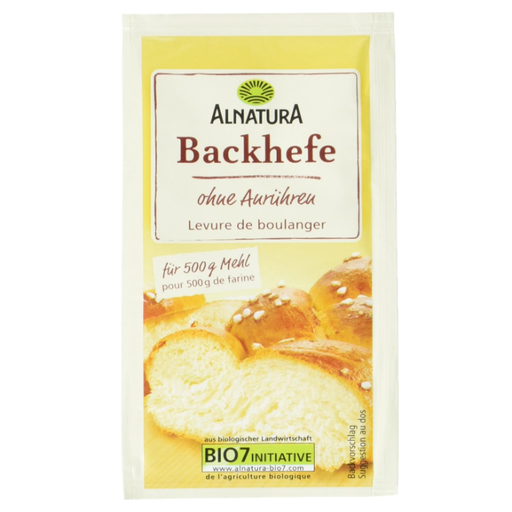
What makes it special: This organic yeast in dry form is a reliable partner for all yeast doughs. It provides powerful leavening action and a light, airy crumb. Its simple application makes it a practical ingredient for both baking novices and experienced bakers.
Advantages:
Who it's for: Ideal for home bakers who regularly bake bread, pizza, or sweet yeast doughs and are looking for a straightforward, reliable yeast in organic quality.
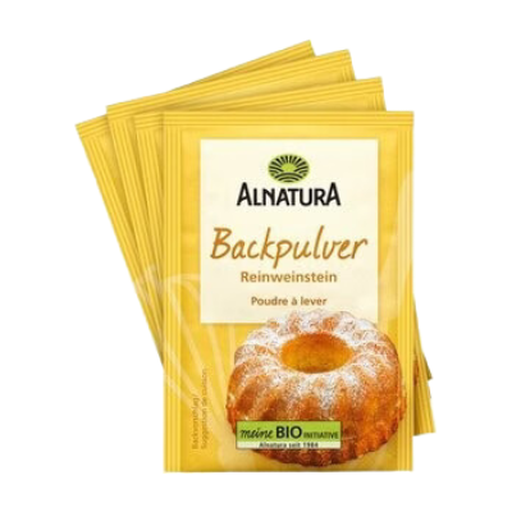
What makes it special: The cream of tartar baking powder from Alnatura is a phosphate-free alternative to conventional baking powder. It reliably leavens doughs and is particularly suitable for fine baked goods. The formula is gluten-free and vegan.
Advantages:
Who it's for: A great choice for health-conscious bakers and families who wish to avoid phosphates. Also suitable for individuals with gluten intolerance and for the vegan bakery.
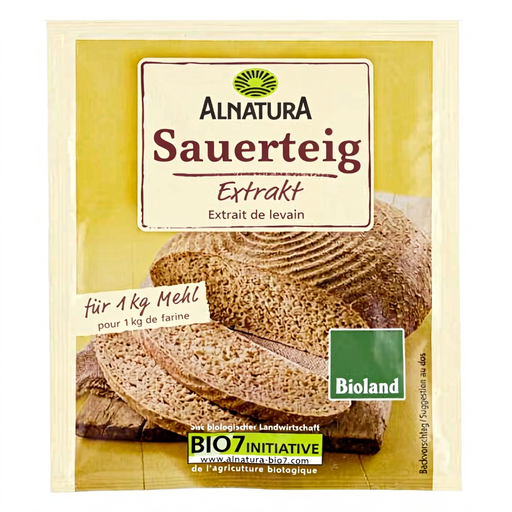
What makes it special: This sourdough extract allows you to bake aromatic bread without the time-consuming maintenance of a sourdough starter. It is derived from whole rye flour of Bioland quality and gives the bread a mildly tangy flavour and a moist texture.
Advantages:
Who it's for: Perfect for bread lovers who appreciate the characteristic taste of sourdough but prefer a time-saving and straightforward solution for their home bakery.
The world of Alnatura baking ingredients and other organic products is diverse. If you are looking for other specialty flours, grains, or sweeteners to refine your recipes, you will find additional inspiration in our broader selection.
Discover our entire range of Natural Food Ingredients here.
The main difference lies in the acidulant used. Conventional baking powder often uses phosphates (e.g., diphosphates), whereas cream of tartar baking powder contains natural cream of tartar (the salt of tartaric acid) as its acid component. Many people prefer cream of tartar baking powder as it is considered a more natural and flavour-neutral alternative. The leavening power is comparable for both.
Yes, this is possible. As a rule of thumb: one packet of dry yeast (usually 7 g) has the leavening power of about half a cube of fresh yeast (approx. 21 g). While dry yeast is mixed directly with the flour, fresh yeast must be dissolved in a lukewarm liquid (e.g., water or milk) with a little sugar before use.
Not necessarily. While many basic organic baking ingredients like flour, yeast, or pure baking powder are of plant origin, processed products or baking mixes can contain animal-derived components such as milk powder, egg powder, or honey. It is therefore always advisable to check the ingredient list and the labelling on the packaging if you are specifically looking for vegan baking ingredients.