Parents out and about with toddlers
For days out or while waiting, they may occasionally want a portable snack. When choosing a bar, check the age guidance for that specific variety, its ingredients and the portion size.


A protein bar made for adults isn’t an obvious choice for a toddler’s snack. The German Nutrition Society (DGE) sets its protein reference values for a person’s total daily intake, not for a single snack. If a bar is occasionally handy when you’re out and about, check the age guidance for that specific variety, along with its ingredients, allergens and sugar content. Even an organic children’s bar can be sweet.
For days out or while waiting, they may occasionally want a portable snack. When choosing a bar, check the age guidance for that specific variety, its ingredients and the portion size.
They want to choose organic products without assuming that fruit ingredients or an organic label mean a product is low in sugar. The German Consumer Advice Centre recommends checking the nutritional information.
They want to know whether a protein bar is necessary at snack time. The DGE’s protein reference values relate to a child’s diet over the whole day; they don’t set a target for a single bar.
A good choice if: You occasionally need a bar for when you’re out and about, and the specific variety is labelled as suitable for your child’s age.
Keep in mind: An organic label and age guidance alone don’t tell you how much sugar the bar contains.
In perspective: Protein content alone isn’t a reason to choose a bar as a toddler’s snack.
Keep in mind: A protein claim is no substitute for age guidance or checking the ingredients, allergens and portion size.
A good choice if: You’re planning a regular snack at home or nursery that doesn’t involve a packaged bar.
Keep in mind: Fresh fruit may need more preparation when you’re out and about. The DGE quality standard for nurseries lists fruit without added sugar or other sweeteners as an option.
| Criterion | What to check when buying | Who it matters to |
|---|---|---|
| Suitable for your child’s age | Check the age guidance for the specific variety, as well as its ingredients, allergens and portion size. Don’t mistake a protein claim for age guidance. | When I pack a bar for my toddler, I want to know whether that particular variety is labelled as suitable for their age. For around 42% of consumers, this is the main consideration. |
| Sugar and ingredients | Check the ‘of which sugars’ figure in the nutritional information and read the full ingredients list, including when the bar contains fruit. | I don’t want to assume a sweet-tasting bar is low in sugar just because it’s labelled organic or contains fruit. Sweetness is the main buying consideration for around 33% of consumers. |
| Organic labelling for everyday use | Look for the EU organic logo and the organic control body code on the specific pack, then choose a suitable portion size. | For days out, I want to choose a handy bar and check its organic labelling on the pack. Both are priorities for around 25% of consumers. |
An organic label doesn’t tell you how much sugar a bar contains or what age the variety is intended for.
As well as checking the organic label, look at the age guidance, ingredients list and nutritional information for the variety you’ve chosen.
The DGE’s protein reference values for children relate to their daily diet. They don’t set a protein target for a single bar.
If you’re choosing a bar as an occasional snack, start by checking the age guidance, then check the ingredients, allergens and portion size.
Fruit or juice ingredients can also contribute to a bar’s sugar content. The German Consumer Advice Centre recommends checking the nutritional information to assess the actual sugar content.
Read the ‘of which sugars’ figure alongside the ingredients list rather than comparing only the front of the pack.
Children’s bars can have different age guidance, even within the same range. For example, Freche Freunde labels its Apple & Carrot bar as ‘from 3 years’.
Always follow the age guidance on the pack of the specific variety you’re buying.
The dm range includes dmBio fruit and cereal bars with age guidance, including a 25-g variety for children from 1 year.
The dm range lists HiPP organic fruit and fruit-and-cereal bars with different age guidance.
The brand makes organic children’s bars containing fruit, vegetables and cereals.
This selection features an organic muesli bar with age guidance for an occasional snack when you’re out and about. It doesn’t replace checking the specific pack.
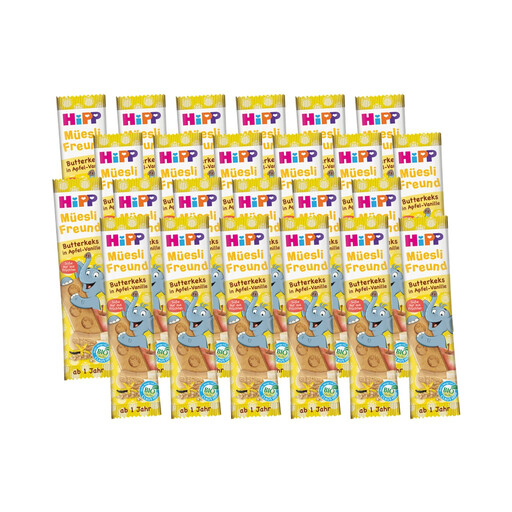 Image unavailable
For an occasional snack when you’re out and about, provided the age guidance of 12 months and over is suitable for your child.
Each bar weighs 20 g. Check the ingredients, allergens, nutritional information and organic labelling on the specific pack.
Look for the EU organic logo and the organic control body code on the specific pack. As the German Consumer Advice Centre explains, an organic label alone doesn’t tell you whether a bar is suitable for your child’s age or how much sugar it contains.
The German Nutrition Society’s reference values don’t set a protein target for a single snack. For children aged 1 to under 4, the DGE gives a value of 1.0 g of protein per kg of body weight per day; this applies to their total daily diet.
Treat a sweet bar as an occasional snack, not as a substitute for a varied diet. kindergesundheit-info.de suggests having something sweet as a dessert at the end of a meal or as a snack.
Start with the age guidance for the specific variety, then check the ingredients, allergens and the ‘of which sugars’ figure in the nutritional information. Fruit or juice concentrates can add sweetness; the wording on the front of the pack isn’t a substitute for checking these details.