When choosing an organic snack mix for breakfast or between meals, how much you actually eat, the nutritional values and the ingredients matter more than the organic label alone. The German Nutrition Society defines energy density as energy per unit of weight, so it’s worth checking your planned portion, particularly with nut mixes. Check the organic certification separately, and compare sugar or salt levels too if you’re considering sweetened or salted varieties.
Which snack format suits you?
Organic shoppers keeping an eye on portions
You’d like to use an organic nut or seed mix as a breakfast topping or snack, and portion out the amount you eat. As well as organic certification, you’ll want to consider the energy per 100 g and the size of your portion.
Fans of sweet breakfast snacks
You’re looking for a nut and fruit mix or an individually wrapped nut bar to take with you. Honey, dried fruit and the stated sugar content per 100 g and per portion can help you compare recipes.
Fans of savoury snacks who don’t require organic
You’re mainly looking for a crunchy, savoury snack and are also considering crisps. Check the organic certification, ingredients and salt content of each specific product, rather than assuming that this type of snack is equivalent to an organic nut mix.
What to look for when buying
First decide how much you’d like to eat and whether a loose mix or an individual portion suits the occasion. Then compare the nutritional information, ingredients and organic certification on the specific packs.
| Criterion |
What to check |
Who it matters to |
| Energy and portion size |
Compare the kcal per 100 g and calculate how much that means for the amount you actually want to eat. If necessary, portion out some of a larger bag before eating. |
When I sprinkle nuts over breakfast or snack on them, I want to keep track of how much I’m eating. Around 50% of consumers put portion size and energy content first when making this choice. |
| Organic certification, ingredients and allergens |
Check the EU organic logo and the organic control body, as well as the ingredients list and allergen information. For sweet varieties, check the sugar content per 100 g too. |
What matters to me is whether the mix meets my organic requirements and which nuts, fruit or sweetening ingredients it contains. Around 30% of consumers prioritise ingredients and labelling. |
| Format and shopping |
Compare bags and individual portions for the occasion. If the range changes, check the information on the current pack. |
When I’m out and about, I want to be able to take a portion with me, while at home I prefer to portion it myself. The right format is the priority for around 20% of consumers when buying. |
Common misconceptions
-
Assuming organic means low in energy
Organic certification relates to how a product is produced, not its energy content. REWE states that its organic roasted & salted nut mix contains 639 kcal per 100 g.
Use the organic logo to check how the product was produced, then compare the kcal per 100 g and the amount you’ll eat to plan your portion.
-
Treating sweet mixes and nut bars like unsweetened nuts
The recipe makes a difference: EDEKA’s organic crunchy nut mix bar contains honey and raisins, among other ingredients. EDEKA states that it contains 26.7 g of sugar per 100 g. A bar is also a different kind of snack from a loose nut and fruit mix.
Compare the ingredients and sugar content per 100 g for each variety. For a bar, you can also check the figures for the portion you actually eat.
-
Choosing roasted and seasoned varieties without comparing salt
Salt levels vary between specific products: REWE states that its organic roasted & salted nut mix contains 0.96 g per 100 g, while Lorenz states that NicNac's Original contains 1.8 g per 100 g. The two products also differ in type and organic certification.
If salt content matters to you, compare the information on each pack and check whether an unsalted variety would suit you better.
-
Relying on old product information without checking it
ALDI SÜD notes that there may be differences between suppliers of its GUT BIO organic crunchy nut mix bar. This means the information on a product page you looked at previously may differ from what’s on the pack you buy.
Before buying, read the ingredients, allergen information and nutritional values on the specific pack.
Brands and ranges to help you choose
These examples show different types of products. Information about a specific product doesn’t necessarily apply to a brand’s entire range.
REWE Bio
REWE stocks organic nut mixes, including a roasted and salted mix from its own-brand range.
- For its REWE Bio roasted & salted nut mix, REWE lists the ingredients and nutritional values: 639 kcal and 55 g of fat per 100 g.
- The salt content of 0.96 g per 100 g is also worth comparing for this variety; organic certification doesn’t replace portion planning.
EDEKA Bio
EDEKA Bio offers its crunchy nut mix bar as an individually portioned alternative to a loose snack mix.
- EDEKA lists peanuts, almonds, raisins, pumpkin seeds and honey as ingredients in the bar.
- With 26.7 g of sugar per 100 g, the sweet recipe should be assessed separately from unsweetened nut mixes.
GUT BIO / ALDI SÜD
The GUT BIO organic crunchy nut mix bar is another example of an individually portioned nut bar.
- ALDI SÜD states that this bar contains 539 kcal, 20 g of sugar and 20.3 g of protein per 100 g.
- As ALDI SÜD notes that it uses different suppliers, the nutritional information on the specific pack is the one to check.
Alesto / Lidl
Lidl describes Alesto as a range of natural and prepared nuts, nut mixes and dried fruit.
- The different product formats let you compare plain nuts, mixes and dried fruit using the information on each pack.
- The range description doesn’t confirm that every Alesto product is organic; check the certification on the pack you’re interested in.
funny-frisch
Protein Chips Sweet & Spicy Curry Style are a savoury crisp alternative, not a nut or seed mix.
- funny-frisch states that this product contains 21 g of protein and 443 kcal per 100 g.
- The manufacturer also lists 1.7 g of salt per 100 g. If organic certification is a requirement for you, check the labelling on this product separately.
Lorenz
Lorenz NicNac's Original is a seasoned peanut snack and is included here only for comparison with a different type of snack.
- Lorenz states that NicNac's Original contains 533 kcal and 36 g of fat per 100 g.
- According to Lorenz, the product contains peanuts and wheat, among other ingredients. It also contains 1.8 g of salt per 100 g. If you’re buying organic, check the certification on the specific pack.
Breakfast ingredients at Joybuy
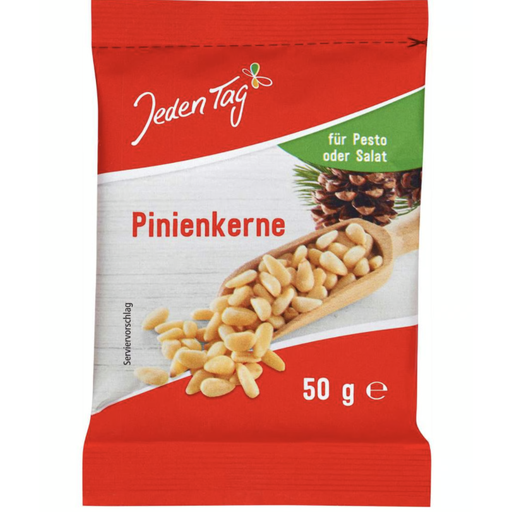
Pine nuts can be used as a breakfast ingredient that you portion yourself, but they aren’t a ready-made snack mix. Check the organic certification and nutritional information on the pack for this product.
 No image available
Jeden Tag Organic Pine Nuts, 50 g
Suitable as a measured breakfast topping if you’re not looking for a ready-made mix. The pack contains 50 g of pine nuts. Before buying, check the EU organic logo, organic control body, nutritional information and allergen details on the specific pack.
View at Joybuy
Frequently asked questions
How can I tell if a snack mix is organic?
Check the EU organic logo and the stated organic control body on the packaging. According to the Verbraucherzentrale (German consumer advice centre), pre-packed organic food produced within the EU carries the EU organic logo. Organic certification alone doesn’t tell you anything about sugar, salt or energy content.
Is an organic nut mix automatically low in energy?
No. Organic describes how a product is produced, not its energy content. The German Nutrition Society defines energy density as energy per unit of weight, so compare the kcal per 100 g in a nut mix with the amount you plan to eat.
What’s the difference between a nut bar and a loose nut mix?
A bar provides a set portion, but its ingredients may differ from those in a loose mix. For example, EDEKA’s organic crunchy nut mix bar contains honey and raisins. EDEKA states that it contains 26.7 g of sugar per 100 g. Compare the ingredients and nutritional values of the specific products rather than assuming the format tells you what’s in the recipe.
What should I look out for with allergens?
For every snack mix, read the ingredients list and allergen information on the specific pack. The Verbraucherzentrale identifies allergens as an important part of food labelling; which ingredients or precautionary allergen statements are relevant depends on the product.


