What to look for when buying
Check the organic certification separately from whether the portion size and ingredients suit your ride. You’ll need to know the weight of one bar to work out the actual portion from the nutritional values per 100 g.
| Criterion |
What to check when buying |
Who it matters most to |
| Organic certification |
Look for the EU organic logo and the organic control body code. The European Commission and the Verbraucherzentrale explain this labelling for foods with the relevant certification. |
If verified organic production is particularly important to me, I don’t want to rely on the word ‘natural’ alone. Around 31% of consumers put verifiable organic certification first. |
| Carbohydrates per bar |
Compare the carbohydrate content per 100 g with the weight of one bar, and take any other food you’re bringing into account. |
For a longer or more intense ride, I want to know how much is in each bar before packing my food. For around 31% of consumers, this predictable carbohydrate content takes priority. |
| Ingredients and allergens |
Read the ingredients list, highlighted allergens and may-contain information for the specific variety. |
If I need to avoid certain ingredients, I can’t rely on ‘organic’ or ‘vegan’ alone. The right ingredients and allergen information is the main consideration for around 25% of consumers. |
| Portion and portability |
Compare the bar’s weight and packaging with the space you have; check the storage instructions. |
I want to take a portion in my cycling jersey pocket that’s easy to handle on the go. For around 13% of consumers, this practical portion size is the most important criterion. |
Brands to consider
The examples below show different bar formats and product information. Always check the ingredients, nutritional values and labelling for the variety you’re planning to buy.
Alnatura
The Strawberry Oat Bar is an example of a larger organic oat bar: Alnatura gives its weight as 60 g per bar.
- For this variety, Alnatura lists 55% wholegrain oat flakes and the control body code DE-ÖKO-001.
- For the Strawberry Oat Bar, Alnatura lists possible traces of egg, soya, milk, nuts and sesame, among other allergens. This information doesn’t automatically apply to other varieties.
dmBio
At 35 g, the Oat and Cocoa Cereal Bar is a smaller portion. You can use the nutritional information to work out its carbohydrate content per bar.
- For this variety, dm-drogerie markt lists 57 g of carbohydrates per 100 g and the control body code DE-ÖKO-001.
- According to dm-drogerie markt, the Oat and Cocoa Cereal Bar contains hazelnuts and wheat. The product information also lists possible traces of other allergens.
ALDI BIO
ALDI Nord describes its organic crunchy bars as coming in packs of three, with a choice of varieties. Crunchy bars aren’t necessarily the same as every type of cereal bar.
- ALDI Nord describes this product range as made using certified organic production methods, with different varieties available.
- Compare the ingredients and nutritional information for the specific variety on the packaging, especially if you want to plan carbohydrates per bar or avoid certain ingredients.
Cereal bars and oat bars at Joybuy
These Alnatura bars are options to take on a cycling trip: a pack of smaller cereal bars and two oat flapjacks weighing 60 g each. Before buying, check the packaging to confirm whether the specific product is certified organic and what ingredients and nutritional values it lists.
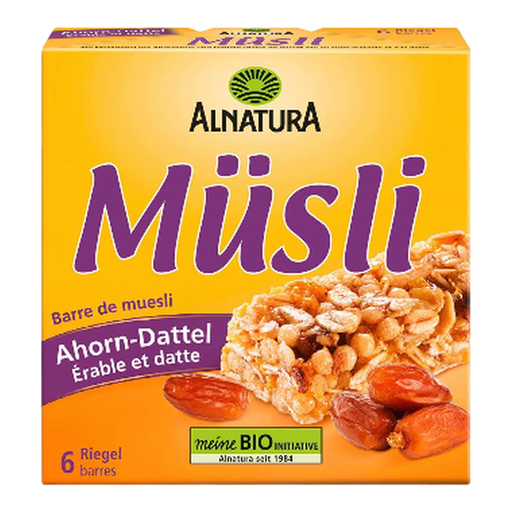 Image unavailable
Alnatura Maple and Date Cereal Bars, 6 × 25 g
If you want to portion out smaller bars for your ride, this pack contains six bars weighing 25 g each, according to the product name. Check the packaging for the EU organic logo, control body code, carbohydrates per bar and ingredients.
View at Joybuy
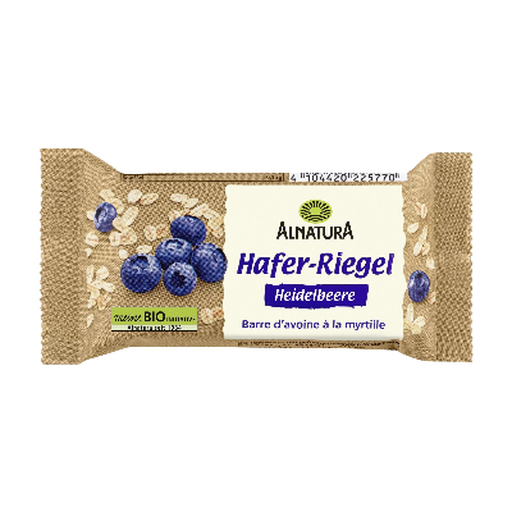 Image unavailable
Alnatura Blueberry Oat Flapjack, 60 g
If you’re planning a larger oat flapjack for a break, the product name describes this blueberry variety as a 60 g bar. Compare the carbohydrates per bar with your fuelling plan, and check the organic certification and ingredients on the packaging.
View at Joybuy
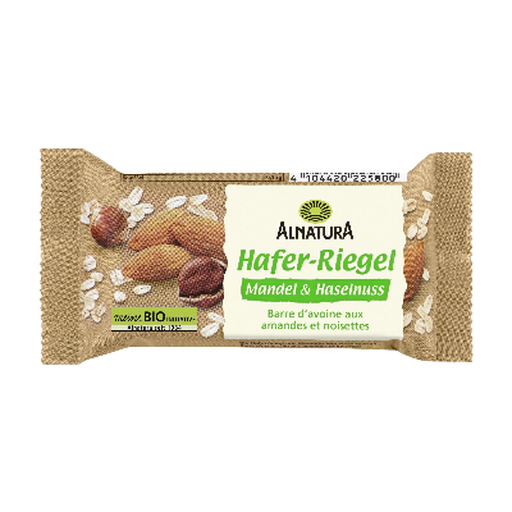 Image unavailable
Alnatura Almond and Hazelnut Oat Flapjack, 60 g
If you’re looking for a 60 g oat flapjack to have during a break on your ride, this is the variety named Almond and Hazelnut. Given the variety name, take particular care to read the ingredients and allergen information. Also check the organic certification and carbohydrates per portion.
View at Joybuy
Frequently asked questions
How can I tell if a cereal bar is certified organic?
Look for the EU organic logo, the organic control body code and the country of origin of the agricultural raw materials. The EU organic logo is generally required on prepacked foods produced in the EU and sold as organic; the European Commission and the Verbraucherzentrale explain this. The word ‘natural’ alone isn’t proof of organic certification.
Is one organic cereal bar enough for a longer cycling trip?
One bar won’t necessarily provide all the fuel you need. A review published in Nederlands Tijdschrift voor Geneeskunde in 2015 recommends 30–60 g of carbohydrates per hour for 1 to 2.5 hours of exercise. The amount in your bar depends on its nutritional information and weight. Plan separately for drinks and other food.
Can I eat a firm bar while riding?
Yes, as long as you can eat and tolerate it comfortably on the go. The Australian Institute of Sport describes sports and energy bars as a compact source of carbohydrates; that doesn’t mean every cereal bar has the same composition. Try a new bar and work out the right time to eat it on a training ride first.
What does ‘May contain traces of nuts’ mean?
This warning refers to the possibility of unintended traces getting into the product during manufacturing, not nuts being deliberately included as an ingredient. According to the German Federal Institute for Risk Assessment, such trace warnings are voluntary. So check both the ingredients list and the may-contain information for the specific variety.
How should I store bars on a warm cycling trip?
Follow the storage instructions on the packaging. Alnatura’s oat bars described here and dmBio’s cereal bar should be stored in a dry place, protected from heat. Don’t leave bars like these in direct sunlight for longer than necessary.


