Families planning organic snacks for several days of the holidays
You want to choose bars for days out or to keep in the cupboard, and look for clear organic credentials on the product itself rather than packaging that simply looks natural.


For the holidays and school trips, an organic bar is only suitable if its organic credentials are clear and its ingredients and allergens are right for the children. Then compare the sugar per 100 g and the size of each bar: organic doesn’t necessarily mean low in sugar, and a bar containing nuts or sesame won’t be suitable for every group.
You want to choose bars for days out or to keep in the cupboard, and look for clear organic credentials on the product itself rather than packaging that simply looks natural.
You’re looking for a sweet snack to take out and about, but don’t assume that organic means low in sugar. Instead, compare the nutritional information and the size of each bar.
For a day out or a holiday club, you need to take account of allergens and possible traces for each child, as well as being aware of the group’s rules.
If allergies or group rules are a concern, check these first. Then check the organic labelling and compare the sugar content and portion size on the current packaging.
| Criterion | What to check | Who it matters most to |
|---|---|---|
| Organic labelling | Look for clear organic credentials for the specific bar on the packaging or the current product page. | For several days of the holidays, I want to pack bars with clear organic labelling rather than rely on the packaging design; around 39% of consumers put this proof first. |
| Sugar and ingredients | Compare the sugar per 100 g and the size of each bar. Read the ingredients list too: according to the German Food Federation, ingredients are listed in descending order by weight. | When choosing a sweet snack to take out and about, I want to assess the sugar content independently of the organic credentials; around 38% of consumers prioritise comparing sugar and ingredients. |
| Allergens and group rules | Check the ingredients, highlighted allergens and possible traces on the current packaging. For group outings, also check the rules on bringing food. | For a holiday group, I need to consider which ingredients must be avoided for each child; checking allergens and group rules comes first for around 23% of consumers. |
Organic credentials don’t tell you how much sugar a product contains. EDEKA lists 35.5 g of sugar per 100 g for its organic sesame crisp bar; the consumer advice centre points to the nutritional information for the actual sugar content.
Compare the sugar per 100 g and take the size of each bar into account. Read the ingredients list too, rather than basing your decision on the organic labelling alone.
EDEKA describes its organic sesame crisp bar as gluten-free and lactose-free. However, it contains sesame and may contain traces of peanuts and tree nuts.
Check the relevant ingredients and trace warnings on the current packaging for each child. A single ‘free from’ claim isn’t a substitute for checking.
EDEKA notes that packaging information may differ from online product information. The crisp bars mentioned may also not be available at every store.
Before buying, check the packaging for organic credentials, ingredients, allergens, bar size and best-before date. It’s a good idea to have a suitable alternative for a planned day out.
EDEKA sells organic crisp bars in sesame and nut mix varieties, each in a pack of 3 × 25 g.
REWE’s online range includes organic oat and chocolate bars, as well as other types of organic bars.
REWE lists organic fruit and children’s bars from Freche Freunde.
MadeGood is listed in REWE’s organic range with granola and oat bars in a variety of flavours.
This selection includes organic cereal bars and organic oat flapjacks in different pack sizes. As well as the format, check the ingredients and allergen warnings for each product when choosing a holiday snack.
 No image available
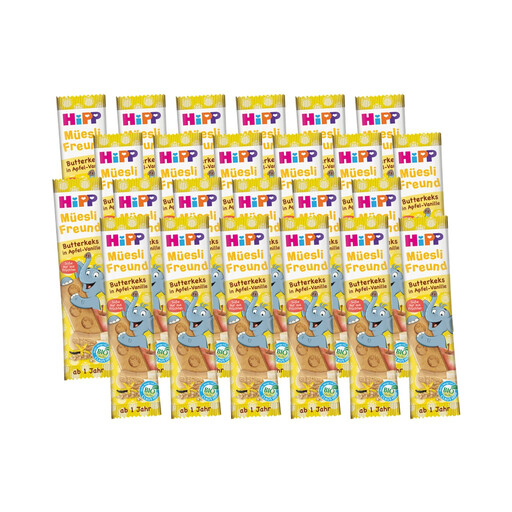
The pack of 24 bars, each weighing 20 g, is worth considering for snacks over several days of the holidays. The product name states that it’s suitable from 12 months; supervise younger children while they eat, and don’t give them the bar while they’re lying down or walking. Check the sugar content and allergens on the packaging.
 No image available
An oat flapjack with blueberry, if you’re looking for this type of bar for a day out. Each bar weighs 60 g, so check whether the size is right for the child. For younger children, check the age suitability as well as the ingredients and allergens on the packaging.
 No image available
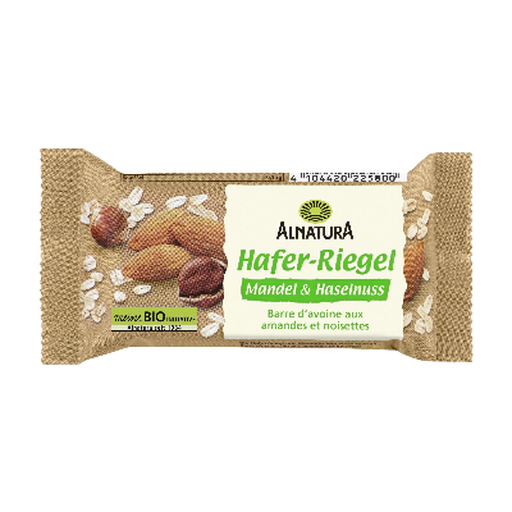
An oat flapjack with almond and hazelnut, for children who can eat these ingredients. The bar weighs 60 g. If allergies are a concern, check the ingredients and trace warnings on the current packaging; also check its age suitability for younger children.
No, you can’t tell the sugar content from the organic credentials. Compare the nutritional information per 100 g and the size of the bar: EDEKA lists 35.5 g of sugar per 100 g for its organic sesame crisp bar and 26.7 g per 100 g for its organic nut mix crisp bar. This doesn’t mean either bar is suitable for every child.
Not without checking individual allergies and the group’s rules. EDEKA’s organic nut mix contains peanuts and almonds; its organic sesame bar contains sesame and may contain traces of peanuts and tree nuts. Always follow the current packaging and the school or childcare provider’s guidance.
Read the ingredients list and check for warnings about possible traces too. The German Food Federation explains how allergens are labelled in the ingredients list; if a specific allergy is involved, check the ingredients and trace warnings on the current packaging.
Follow the storage instructions and check the best-before date on the packaging. According to the German Food Federation, the best-before date refers to the qualities of unopened food stored appropriately; it isn’t a use-by date.