Runners planning their carbohydrate fuelling
You’re planning longer or more intense runs and want to count a bar’s carbohydrates alongside drinks and other fuel, rather than relying on its organic label.


When choosing a cereal bar for marathon training, don’t rely on its organic label alone. Check the packaging and compare the carbohydrates in the portion you’ll actually eat with the rest of your running fuel. For longer exercise sessions, an article in the Journal of Sports Sciences gives 30–60 g of carbohydrates per hour as a guide. Whether a bar fits your plan also depends on its ingredients, allergens and how well you’ve tested it during training.
You’re planning longer or more intense runs and want to count a bar’s carbohydrates alongside drinks and other fuel, rather than relying on its organic label.
You’re looking for a bar to have on the way to training or as a snack between meals, and want to compare the organic labelling, ingredients and portion size on the packaging.
You may need to take nuts, peanuts, gluten, milk or soya into account. In that case, check the ingredients and allergen information on the specific packaging; the organic label alone isn’t enough.
Start by checking the organic labelling and portion size. If you’re planning to eat the bar on a longer run, factor its carbohydrates into your overall fuelling plan.
| Criterion | What to check | Who should pay particular attention? |
|---|---|---|
| Carbohydrates per portion | Check the portion weight and carbohydrates per bar; include drinks and other running fuel in your plan. | If I’m planning to eat a bar during a long run, its portion needs to fit with the rest of my fuel; around 31% of consumers put this carbohydrate planning first. |
| Organic labelling | Check the EU organic logo, control body code and country of origin on the packaging, rather than assuming that “natural” means certified organic. | I want to be able to tell whether the organic labelling is traceable when I shop; around 25% of consumers prioritise this. |
| Ingredients and tolerance | Read the current ingredients list and allergen information; try a new bar during training before an important run. | If a bar contains ingredients that don’t suit me, the right portion size won’t help; around 25% of consumers prioritise allergens or how well they tolerate a product. |
| Packaging and where you shop | Check the pack size and availability at your chosen retailer; if online information differs, refer to the current packaging. | For my training plan, I want to know what portion size I can actually buy; around 19% of consumers prioritise the pack size or where they shop. |
The EU organic logo relates to organic production and labelling. It doesn’t tell you how many carbohydrates a portion contains or how well you’ll tolerate the bar while running.
Check the organic labelling separately from the portion size, nutritional information and ingredients list.
EDEKA’s Bio Knusperriegel Nussmix contains 34.1 g of carbohydrates per 100 g. A 25 g bar therefore contains around 8.5 g, by calculation—well below the 30–60 g per hour suggested for longer exercise sessions in the Journal of Sports Sciences.
Think of the bar as one part of your planned fuel, and factor in drinks or other foods too.
A protein label tells you neither whether a product is certified organic nor how many carbohydrates a portion contains.
If you’re planning fuel for a long run, start by comparing carbohydrates per portion, ingredients and how well you tolerate the bar. A protein bar isn’t automatically a cereal bar.
EDEKA notes that packaging information for its Nussmix may differ from online details. ALDI SÜD says that the nutritional values of the GUT BIO Nussmix described may vary by supplier.
When you buy, read the ingredients, allergen and nutritional information on the current packaging.
Hafervoll offers organic oat bars under the name Organic Flapjacks, including Almond & Raisin.
REWE’s organic own-brand range includes oat bars and flapjacks.
One documented example from EDEKA’s own brand is the Bio Knusperriegel Nussmix, sold in a 3 × 25 g pack.
ALDI SÜD describes a GUT BIO Bio-Knusperriegel Nussmix in a 75 g pack.
This selection includes two oat flapjacks in 60 g portions and a cereal bar in a 6 × 25 g pack. Check the packaging of each product to see whether its organic labelling and ingredients meet your needs.
 No image available
If you’re looking for a single portion to include in your fuelling plan, the size given in the product name gives you a starting point for comparison.
Portion size according to the product name: 60 g. Check the carbohydrates per portion, ingredients, allergens and organic labelling on the current packaging; try a new bar during training before an important long run.
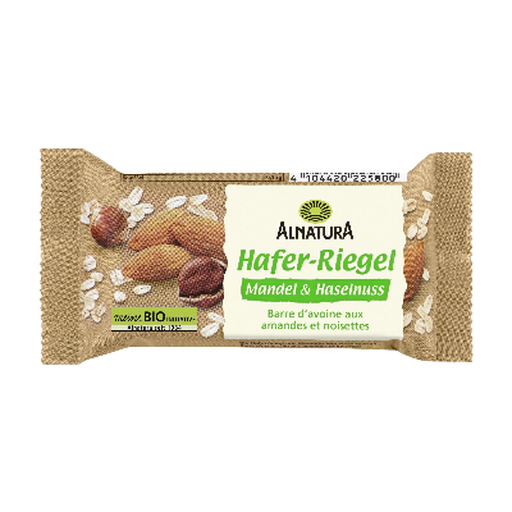 No image available
This option is only suitable if almonds and hazelnuts fit your dietary requirements.
Portion size according to the product name: 60 g. Before buying, read the full allergen information and check the carbohydrates per portion and organic labelling on the current packaging.
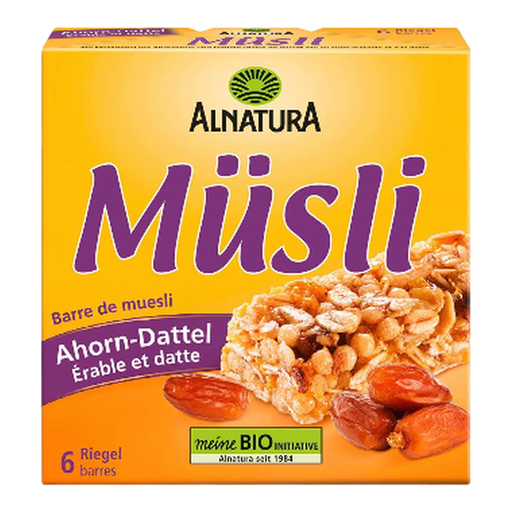 No image available
The smaller bar size makes it easy to plan as an individual portion; for a long run, though, your total fuel is what counts.
Pack size according to the product name: six bars of 25 g each. Compare the carbohydrates per bar and check the ingredients, allergens and organic labelling on the current packaging.
For a pre-packed organic bar, check the EU organic logo, control body code and country of origin on the packaging. According to the European Commission, the logo may only be used on suitably certified products whose ingredients are at least 95% organically produced.
One bar won’t automatically provide all the fuel you need for a run. An article in the Journal of Sports Sciences gives 30–60 g of carbohydrates per hour as a guide for longer exercise sessions. Compare this with the portion you’ll actually eat, and factor in drinks and other fuel.
The protein label alone doesn’t make a bar a better choice for fuelling a long run with carbohydrates. Compare the nutritional information per portion and distinguish a protein bar from a cereal bar before including it in your fuelling plan.
Yes. Organic labelling doesn’t mean a bar is free from allergens. EDEKA lists peanuts and almonds in its Bio Knusperriegel Nussmix; the Hafervoll Almond & Raisin described by REWE contains almonds and may contain traces of other allergens. Check the information on the current packaging for the flavour you choose.
Specialist sports bars aren’t essential. The Verbraucherzentrale considers such products unnecessary for recreational athletes; a bar can still be a convenient source of fuel if its portion, ingredients and intended use suit your training plan.