If you’re looking for protein
If you’re planning to have a bar as a snack after strength training, compare the protein listed per bar. The examples here also vary in weight, so check the ingredients and allergen information on nut bars, too.


When choosing an organic bar after training, it comes down to whether you want to compare protein or carbohydrates per portion. A small nut bar and a larger oat flapjack serve different needs. Also check the organic certification and ingredients on the specific pack, as ‘organic’ alone tells you nothing about the protein content, whether it is suitable for vegans or any allergens it may contain.
If you’re planning to have a bar as a snack after strength training, compare the protein listed per bar. The examples here also vary in weight, so check the ingredients and allergen information on nut bars, too.
After a longer or more intense session, the carbohydrate content per bar may matter more to you. The German Nutrition Society considers factors including the duration and intensity of exercise when assessing demands on carbohydrate stores. The REWE 60-g oat flapjack featured here contains 36 g of carbohydrates per bar.
If organic certification, suitability for vegans or avoiding certain ingredients is important to you, check the information on the specific pack. The EU organic logo does not replace the ingredients list or the allergen and nutritional information.
First, compare the nutritional values per bar, focusing on whichever matters most to you. Then check the organic certification, ingredients and allergen information for the exact variety you want to buy.
| What to check | How to compare | Who it matters to |
|---|---|---|
| Protein per bar | Compare the amount listed per bar and the weight of each bar. EDEKA states that its Bio Knusperriegel Nussmix contains 4.7 g of protein per 25-g bar; REWE states that its Bio Dattel-Erdnuss Riegel contains 4.2 g per 30-g bar. | After strength training, I want to know how much protein is in the bar I’m actually eating; for around 40% of consumers, this is the top priority. |
| Carbohydrates and portion size | Compare the carbohydrates and sugars per bar, as well as its weight. REWE lists 36 g of carbohydrates per bar for its 60-g Bio-Flapjack Apfel-Zimt. | After a longer or more intense session, I’m looking for a snack with a portion of carbohydrates that suits my needs; around 40% of consumers prioritise this. |
| Organic certification and ingredients | Check the EU organic logo, control body code and country-of-origin statement, as well as the ingredients and allergen information on the specific pack. | I want to choose a bar only if its labelling and ingredients meet my requirements; for around 20% of consumers, this is the main consideration. |
Organic certification relates to how a product is produced, not to a specific protein content or any effect after training.
Compare the protein listed per bar and consider whether you’re having it as a snack or planning to eat a meal afterwards as well.
A 25-g nut bar and a 60-g flapjack are different portion sizes. So even if they had the same nutritional value per 100 g, they would not provide the same amount per bar.
Use the portion information on the pack or work out the value per 100 g for the weight of the bar you’re eating.
According to EDEKA, its Bio Knusperriegel Nussmix contains peanuts and almonds. The REWE Bio Flapjack Apfel-Zimt lists hazelnuts and may contain traces of other allergens.
If you need to avoid certain ingredients or allergens, read the ingredients list and any precautionary allergen information on the specific pack.
ALDI SÜD notes that nutritional information for its NUR NUR NATUR Bio-Hafervollkorn-Riegel Saaten may vary depending on the supplier.
When you buy, check the information on the current pack against the values that matter for your choice.
The own-brand range includes date and peanut bars as well as oat flapjacks. For a post-training snack, it’s worth comparing the specific varieties and portion sizes.
The Bio Knusperriegel Nussmix is a 25-g nut bar, making it useful for comparing protein per bar.
ALDI SÜD’s Bio-Hafervollkorn-Riegel Saaten is labelled as suitable for vegans; the pack described contains three 35-g bars.
CORNY can be included in your cereal bar comparisons if organic certification isn’t essential to your choice.
These two 60-g oat flapjacks are a selection to help you compare larger bar portions after training. Check the labelling on each pack to see whether it meets your requirements for organic certification and ingredients.
 No image available
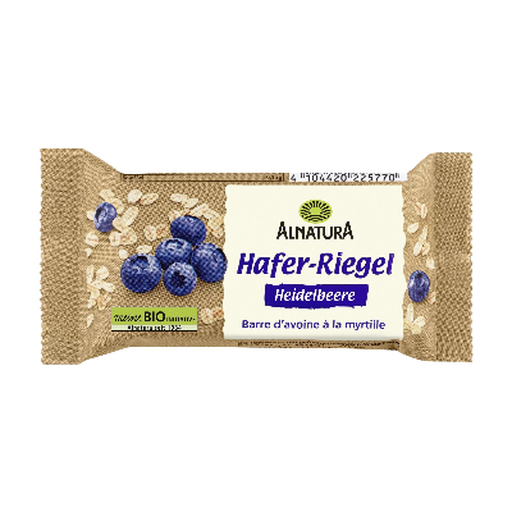
If you’re looking for a 60-g oat flapjack as a snack, compare the nutritional values per bar for this blueberry variety. Check the current pack for the EU organic logo, ingredients and allergen information.
 No image available
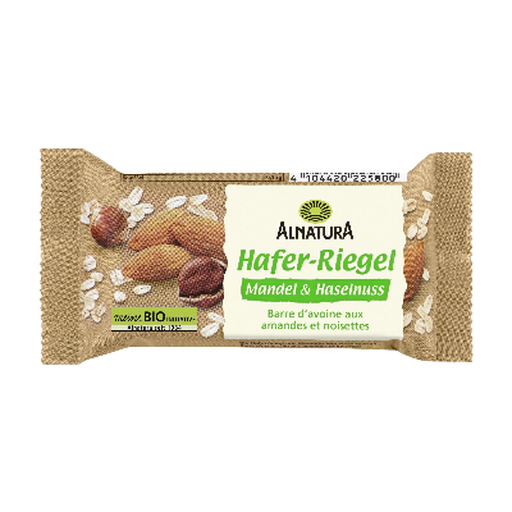
This almond and hazelnut variety is another option to consider if you’re comparing 60-g flapjack portions. Pay particular attention to the ingredients and allergen information on the current pack, and check its organic certification too.
The EU organic logo is a useful indicator: according to the European Commission, its use is restricted to products with organic certification. For a packaged bar, also check the control body code and country-of-origin statement. Green packaging or the word ‘natural’ alone is not proof.
A bar isn’t automatically right for every session or snacking need. When comparing carbohydrate content, factors including the duration and intensity of exercise and when you’ll next eat are relevant. The German Nutrition Society notes that the duration and intensity of exercise affect demands on carbohydrate stores.
No. Organic certification doesn’t mean a product is suitable for vegans or free from allergens. For example, according to EDEKA, its Bio Knusperriegel Nussmix contains honey, peanuts and almonds. Check each variety’s own ingredients list and labelling.
Yes. If a particular nutritional value or ingredient will determine your choice, check the current pack. ALDI SÜD explicitly notes that the nutritional information for its NUR NUR NATUR Bio-Hafervollkorn-Riegel Saaten may vary depending on the supplier.