Hotels with an organic buffet staple
You’re looking for a reliably certified organic standard muesli and want to make clear ingredient and allergen information available to guests for the products you serve.


For a hotel breakfast, a wholegrain muesli clearly labelled as organic can provide a good base, provided its ingredients and allergen information suit how you plan to serve it at the buffet. A gluten-free option also needs appropriate product labelling and separate handling, while a less sweet alternative should be clearly identified for guests. Organic, gluten-free and no added sugar describe different qualities.
You’re looking for a reliably certified organic standard muesli and want to make clear ingredient and allergen information available to guests for the products you serve.
You’re planning to offer organic cereals explicitly labelled gluten-free and can handle them separately from mixes containing gluten.
You want to offer an organic option with no added sugar or a noticeable fruit content alongside sweeter cereals, without assuming that this makes it gluten-free or suitable for guests with allergies.
When choosing organic cereals for a hotel breakfast buffet, first check the labelling on the specific product, then plan how you’ll provide allergen information and serve it. Only then can you decide which complementary options are right for your guests’ preferred flavours and needs.
| Priority | What to check | Who it matters to |
|---|---|---|
| Organic certification | Check the organic labelling, organic inspection body and specific product variant. | When buying organic cereals for my hotel, I need proof for the exact product that will be served at the buffet. Around 40% of consumers making this choice put organic certification first. |
| Allergens and separation | Match the pack’s allergen information to the relevant buffet container and make sure products are handled separately where necessary. | When serving mixes loose, I want to give guests reliable information about each food and avoid cross-contamination. This is a priority for around 30% of consumers. |
| Different guest preferences | Check organic and gluten-free labelling separately for each complementary option; assess less sweet variants using the ingredients and nutrition information. | If guests want a gluten-free or less sweet option, one standard mix isn’t enough for me. These clearly differentiated alternatives are a priority for around 20% of consumers. |
| Nutrition and sweetness | Compare sugar and fibre per 100 g, as well as the ingredients and serving size. | When choosing between organic products, I want to be able to assess how sweet a particular mix is and what it contains. This profile is the most important selection criterion for around 10% of consumers. |
Organic muesli can contain grains with gluten and nuts. A gluten-free option may also contain other allergens.
Check the organic status, gluten-free labelling, ingredients and allergen information separately for each product. Don’t use one general label for several buffet products.
A separate specialist option needs space, as well as its own containers and serving utensils.
Guests need to be able to see which information applies to each mix offered loose. Under section 4 of the German Food Information Implementing Regulation, relevant information must be provided for each food in a clearly visible, prominent and easily readable form.
Label the containers clearly and make allergen information for the products actually being served readily available.
A mix with no added sugar may still contain sugar from its ingredients. Organic labelling alone also tells you nothing about a product’s nutritional profile.
Before choosing an option as a less sweet alternative, compare the ‘of which sugars’ figure per 100 g and the ingredients list.
Recipes can change. When labelling the buffet, the information on the pack actually delivered is what matters.
When the delivery arrives, check the ingredients, allergens, organic labelling and best-before date on the specific product.
These product ranges show some of the options available for an organic buffet. The information for each specific variant and the way it’s handled in your hotel remain key.
The Bio Frühstücks Mischung #545 is an example of a wholegrain, fruit and nut base.
The Bio Früchte Müsli is an example of an organic wholegrain mix with fruit.
Müller Deutschland stocks gluten-free organic breakfast cereals and muesli from Alnavit as possible additions to a separate buffet station.
The Beeren-Dinkel-Müsli is an example of an organic option with no added sugar.
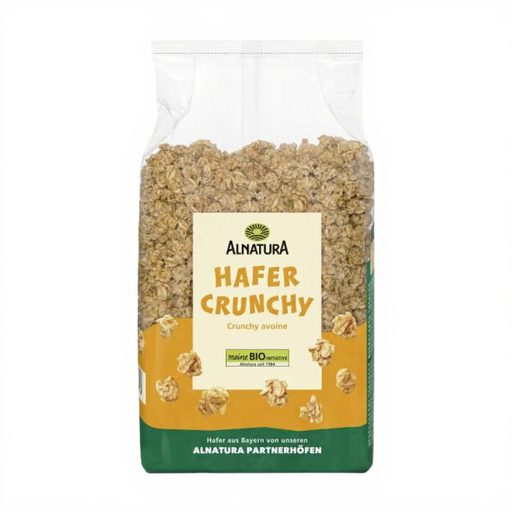
These Alnatura products are two different organic options for a breakfast buffet: an oat crunchy muesli and unsweetened cornflakes. Before serving, check the information on each pack delivered.
 No image available
A crunchy organic option for a buffet that also includes mixes containing gluten.
Pack size: 750 g. Check the ingredients and allergens on the product delivered before labelling it.
 No image available
An unsweetened organic cornflake option alongside the muesli mixes.
Pack size: 300 g. As the allergen information is inconsistent, check the actual pack before labelling and serving.
Check the organic labelling and organic inspection body on the specific pack. The product examples described carry EU organic labelling and an inspection body code; packaging that looks natural or a well-known brand name is no substitute for this information.
Yes. For non-prepacked food, you must provide relevant information about ingredients and processing aids that can cause allergies or intolerances. Under section 4 of the German Food Information Implementing Regulation, this information must be clearly visible, prominent and easily readable, and linked to the food in question.
No, organic muesli can contain grains with gluten. For example, Seitenbacher’s Bio Frühstücks Mischung #545 contains oats, wheat and barley. For a gluten-free buffet option, check the labelling on a suitable variant and make sure it’s handled separately.
No. Ingredients such as fruit can contain naturally occurring sugars. For the variant you’re considering, check the ingredients list and the ‘of which sugars’ figure per 100 g.
Use clearly labelled containers and make the information for each mix readily available. If an option needs to be kept separate, use separate serving utensils too. Follow the instructions on the specific pack for storage.