
Lieferung heute & morgen

Qualitätsgarantie

Willkommens-Angebote freischalten: KOSTENLOSE Lieferung | Bis zu 80 % RABATT | Kostenlose 30-Tage-JoyPlus-Testphase
App herunterladen
By: Joybuy Product Recommendation OfficerDate: 2026-07-05
The selection on the supermarket shelf can be overwhelming: Which organic cooking oil is right for salads, which for frying, and which for an Asian stir-fry? The labels are filled with terms like "cold-pressed," "extra virgin," or "high-heat resistant." This article serves as your guide. It explains the key differences between oil types and presents objective criteria to help you find the perfect cooking oil for your needs and make an informed decision when you buy cooking oil.
To assess an oil's quality and intended use, three factors are particularly important: the production method, the smoke point, and its certification.
The production method has a direct impact on the oil's flavour, nutritional content, and how it can be used.
The smoke point is the temperature at which an oil begins to smoke and break down. The choice of oil should therefore be based on the cooking method.
The EU organic logo guarantees that the raw materials come from organic farming, which avoids the use of synthetic chemical pesticides and fertilisers. Codes like "DE-?KO-006" refer to the responsible inspection body in Germany and create additional transparency. A look at the label also provides information about the origin of the raw materials.
Based on objective product features and versatile applications, we have curated a selection of Alnatura oils that covers a range of culinary needs.

Why it stands out: This organic coconut oil is cold-pressed from fresh coconut flesh. It is characterised by its high heat resistance and a subtle, exotic coconut flavour.
Benefits:
Who is it for? For anyone who enjoys preparing Asian dishes or appreciates a delicate coconut note in their baking. It is a great choice for cooking applications that require high heat stability.

Why it stands out: A classic extra virgin olive oil of the superior category. It is cold-extracted through a gentle, purely mechanical process and has a fruity aroma.
Benefits:
Who is it for? For lovers of Mediterranean cuisine who are looking for a high-quality organic olive oil for salads, antipasti, and for drizzling over warm dishes after cooking.
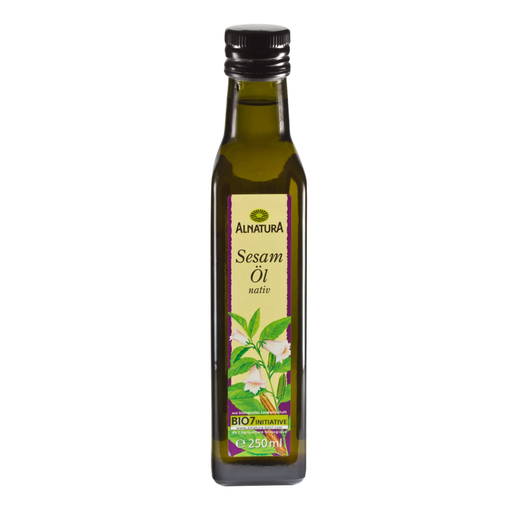
Why it stands out: This virgin, cold-pressed cooking oil from sesame seeds has a distinct, nutty-mild flavour that is typical of Asian cuisine.
Benefits:
Who is it for? Ideal as a finishing oil for anyone wanting to give their dishes an authentic Asian touch. It is a pure flavouring oil for dressings, marinades, and for drizzling over finished meals.
A well-stocked pantry thrives on variety. If you consistently prioritise organic quality in your food, our selection of organic vinegars could also be a fitting addition for your salad dressings and marinades.
Explore our selection of organic vinegars and find the ideal complement for your dishes.
"Extra virgin olive oil" is an official EU quality grade. It designates an olive oil of the highest quality, obtained directly from olives solely by mechanical means (cold pressing or cold extraction). It has a distinct fruity taste and an acidity level of no more than 0.8%.
For searing at high temperatures, oils with a high smoke point are required. From our selection, the Alnatura Organic Coconut Oil is well-suited for this purpose. Cold-pressed, delicate oils like the Alnatura Organic Sesame Oil or many virgin olive oils are unsuitable for high heat, as their valuable fatty acids and aromas would be destroyed.
The main difference lies in the cultivation of the raw materials. For organic cooking oil, the seeds, fruits, or nuts come from certified organic agriculture. This means no synthetic chemical pesticides, herbicides, or artificial fertilisers are used. Compliance with these standards is verified by independent inspection bodies and confirmed by the organic seal.