Shoppers who prioritise organic food
You’re looking for a corn snack with clear organic certification and a straightforward ingredients list. Whether it makes a high-protein meal on its own isn’t a deciding factor for you.


Organic corn snacks can make a handy nibble or breakfast base if organic certification and ingredients matter to you. But if you want the snack itself to provide plenty of protein, organic certification alone won’t help you decide. Compare protein and energy per 100 g, and take into account what you eat with it.
You’re looking for a corn snack with clear organic certification and a straightforward ingredients list. Whether it makes a high-protein meal on its own isn’t a deciding factor for you.
You plan how much protein your food provides, so you want to check the amount per 100 g and avoid assuming a corn snack is high in protein just because it’s organically certified.
You’d like to use unsweetened organic cornflakes as a corn-based breakfast option and decide what else to serve with them.
First decide whether you’re looking for a snack, a breakfast base or, above all, a source of protein. For organic corn products, check the certification, nutritional values and ingredients of the specific product. A snack made from pulses isn’t automatically an organic corn snack, either.
| What matters | What to check when buying | Who it matters to |
|---|---|---|
| Protein content | Compare protein and energy per 100 g; don’t take protein claims to mean the product contains a high amount of protein. | If I want my snack to contribute to the amount of protein I’m aiming for in my diet, I need to be able to assess how much it provides. This is the top priority for around 42% of consumers. |
| Organic certification and ingredients | Check the EU organic logo, the code of the organic control body and the ingredients list for the specific product. | Above all, I want to know whether the corn snack is organically certified and what else it contains. This is the main priority for around 33% of consumers. |
| How you’ll use it, salt and allergens | Choose between a snack and cornflakes according to how you’ll use them; check the salt per 100 g, as well as allergen and ‘may contain’ information. | The product needs to suit the way I plan to use it, whether for breakfast or as a snack. Salt and possible traces of allergens matter, too. Around 25% of consumers put these considerations first. |
These examples show how the same corn-based ingredient can lead to different choices. REWE lists 7.7 g of protein per 100 g for its organic corn flips, while EDEKA24 lists 7.5 g for EDEKA Bio Cornflakes and 6.7 g for Alnatura Bio Cornflakes. If you’re considering a different type of snack for its protein content, check its ingredients and organic certification separately. funny-frisch lists 21 g of protein per 100 g for its Protein Chips, made with lentil flour and pea protein. That doesn’t make them a corn product.
Organic certification doesn’t tell you how much protein a product contains. The protein content varies between REWE Bio corn flips and the organic cornflakes from EDEKA and Alnatura. Check the nutrition table to find out how much protein a product provides.
Check the organic certification and protein content separately. If you want the snack itself to provide plenty of protein, compare its energy per 100 g as well.
The image on the front won’t answer questions about ingredients, nutritional values or potential allergens. The Verbraucherzentrale recommends checking the food label for this information.
Read the ingredients list, nutritional information and allergen and ‘may contain’ details for the product you’re actually buying.
‘Unsweetened’ doesn’t tell you how much protein a meal provides. EDEKA24 lists 7.5 g of protein per 100 g for EDEKA’s unsweetened organic cornflakes, and 6.7 g for Alnatura’s.
Use cornflakes as a breakfast base, and take the other foods in your meal and their nutritional values into account if you’re aiming for a higher-protein breakfast.
The examples below cover specific corn products as well as a snack made from different ingredients for comparison. Information about one product range doesn’t necessarily apply to every product from the same brand.
REWE describes its organic corn flips as a product made with corn grits from certified organic farming.
These unsweetened organic cornflakes are a corn-based option for putting together your own breakfast.
Alnatura offers unsweetened organic cornflakes as a breakfast base.
In 2023, Lidl reported an overall ‘Very Good’ ÖKO-TEST rating for Snack Day Maissnack Bio in the 7/2023 issue.
The brand’s Protein Chips are an alternative to consider if you’re open to a snack made from pulses.
Choose from a corn and millet snack, unsweetened cornflakes as a breakfast base, and seasoned corn rolls. If you’re planning a high-protein breakfast, the other foods in your meal will make a difference too.
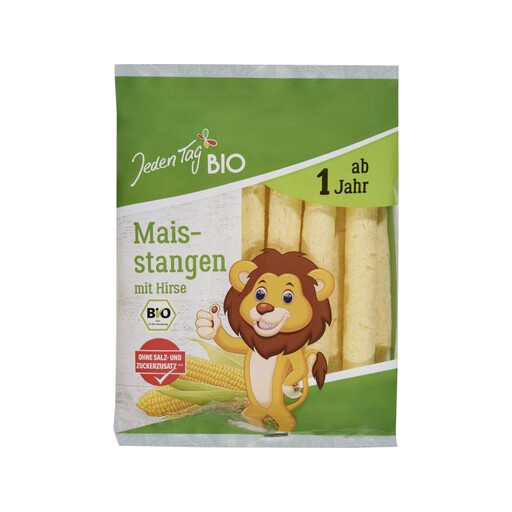 No image available
A good choice if you’re after a corn and millet snack and don’t expect this snack alone to provide all the protein in your diet.
The pack contains 50 g. Check the latest information on ingredients, organic certification and nutritional values before you decide. For children, follow the supervision advice in the product description because of the risk of choking.
 No image available
These unsweetened cornflakes make a handy corn-based option if you’re putting together your own breakfast and want to consider the protein content of the whole meal.
The pack contains 300 g. EDEKA24 lists 6.7 g of protein per 100 g for this product. If you have allergies, check the latest ‘may contain’ information on the pack.
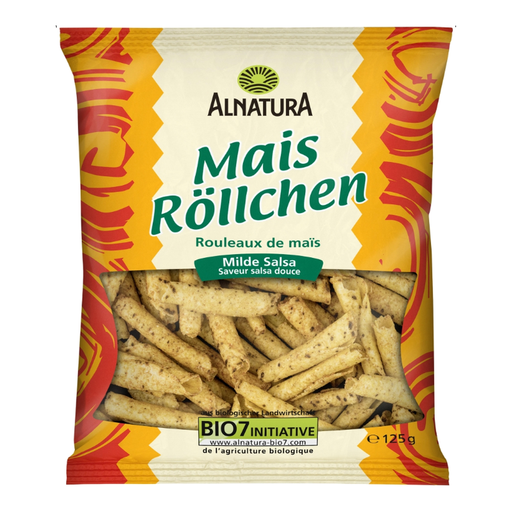 No image available
These seasoned corn rolls are an option if you’re after a snack rather than unsweetened breakfast cereal.
The pack contains 125 g. Before buying, compare the salt and protein per 100 g, as well as the ingredients and any ‘may contain’ information, with your requirements.
Look for the EU organic logo and the organic control body code. The Verbraucherzentrale explains the labelling rules for packaged organic foods produced within the EU. Also check the ingredients and nutritional values of the specific corn product: organic certification doesn’t tell you how much protein it contains.
No. Organic certification doesn’t mean a product is high in protein. REWE lists 7.7 g of protein per 100 g for its organic corn flips; EDEKA24 lists 7.5 g for EDEKA’s unsweetened organic cornflakes and 6.7 g for Alnatura’s, per 100 g. Compare protein and energy on the same basis rather than judging by the product name alone.
Use them as a corn-based option and assess the protein content of the whole meal. What else you add will depend on your diet and the ingredients and allergen information for each food.
Yes, especially if particular allergens matter to you. Alnatura Bio Cornflakes may contain traces of gluten, soya, milk, almonds, nuts and sesame. Always check the information on the current pack of the product you’re buying.