What should you look for when buying?
First, check that the organic certification and ingredients are right for your household. Then consider how much you’re likely to use and which nutritional values you want to compare.
| Criteria |
What to check when buying |
Who it matters most to |
| Organic certification |
For pre-packed organic products from the EU, check the EU organic logo, inspection body code and origin information on the pack. |
If organic is a must for our cupboard, I want to be able to verify the claim on the specific product; around 33 % of consumers put this check first. |
| Pack size and storage |
Compare the net weight in grams with how much you use; check how the pack is divided and follow the storage instructions. |
If an opened pack is likely to sit around for a while in our home, choosing the right quantity matters more than the words “family pack”; for around 27 % of consumers, everyday cupboard stocks are the priority. |
| Ingredients and allergens |
Check the types of grain, sesame, highlighted allergens and any precautionary statements about traces on the current pack. |
If I need to avoid certain ingredients, an organic claim isn’t enough; around 20 % of consumers put checking ingredients and allergens first. |
| Wholegrains and nutrition |
Compare wholegrain ingredients, fibre, salt, fat and energy per 100 g. |
If crispbread is a regular feature at our table, I want to compare recipes using the same nutritional basis; this is the main consideration for around 20 % of consumers. |
Brands and product ranges to consider
These examples show how recipes can differ. The information on the particular variety you buy matters more than the brand name alone.
REWE Bio
REWE describes an organic wholegrain crispbread with seeds in a 200-g pack.
- For the variety described, REWE lists 64 % wholemeal wheat flour, 12 % sunflower seeds, 6 % sesame and 6 % linseed.
- Wheat and sesame are listed ingredients in this variety. If you’re comparing it with rye crispbread, check the nutrition information too.
EDEKA Bio
An option for households looking for organic wholegrain rye crispbread with a short ingredients list.
- For the wholegrain rye variety described, EDEKA lists 94 % wholemeal rye flour, water and sea salt.
- Rye contains gluten. Check the specific pack for other allergen information and the net weight.
Naturata
The organic wholegrain Delikatess crispbread described is a rye variety in a 250-g pack.
- For this Naturata variety, REWE lists wholemeal rye flour and sea salt as ingredients, and 16 g of fibre per 100 g.
- This variety contains rye and, according to REWE, has 1.5 g of salt per 100 g.
Leksands
The organic wholegrain rye crispbread described is available in a 200-g pack.
- For this variety, REWE lists 19 g of fibre and 1.2 g of salt per 100 g.
- It contains rye. Whether 200 g is right for your family cupboard depends on how much you use and how you store it once opened.
Crispbread products at Joybuy
Here you’ll find crispbread with sesame, spelt or wholegrain rye, so you can compare recipes and pack sizes. If organic is a must for you, check the certification on the individual pack; the organic status of the Wasa product has not been confirmed.
 No image available
Alnatura organic sesame crispbread, 250 g
A sesame variety for households wanting to compare 250 g with how much they usually use. If you have allergies, check the current ingredients information; if you’re choosing an organic product, check the details on the pack.
View at Joybuy
 No image available
Alnatura organic spelt crispbread with seeds, 200 g
For households looking specifically for a spelt and seed variety in a 200-g pack. Spelt contains gluten. As allergen information can vary, check the current packaging carefully.
View at Joybuy
 No image available
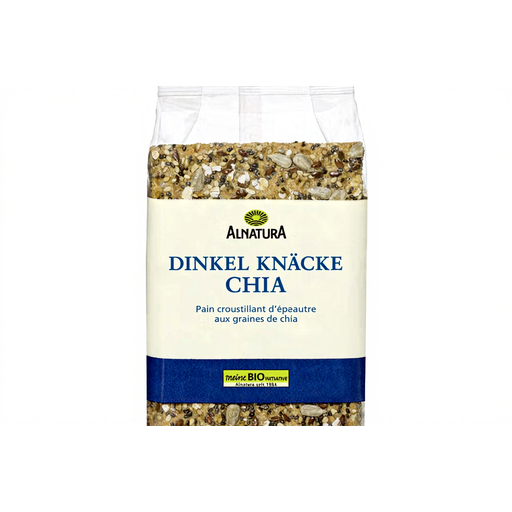
Alnatura organic spelt crispbread with chia seeds, 200 g
Another spelt variety, this one with chia seeds in a 200-g pack. Check the organic certification and, especially if you have allergies, the current ingredients and allergen information on the pack.
View at Joybuy
 No image available
Wasa wholegrain rye crispbread, 260 g
A wholegrain rye variety to compare with the other pack sizes; the stated weight is 260 g. If you specifically want to buy organic crispbread, check that the particular pack carries the relevant certification before choosing it.
View at Joybuy
Frequently asked questions
How can I identify organic crispbread on the pack?
The EU organic logo is compulsory on pre-packed organic food from the EU. The Federal Ministry of Agriculture, Food and Regional Identity states that the requirement to display it began on 1 July 2010. For the specific crispbread, also check the organic inspection body code and origin information. Ökolandbau.de explains that, in general, at least 95 % by weight of the ingredients of agricultural origin in processed foods must come from organic production for an unrestricted organic claim to be made.
Is “family pack” a reliable indication of size?
The net weight in grams is a more useful way to compare quantities than the words “family pack”. Choose a size to suit your household’s consumption and check whether the pack is divided into separate units or can be resealed.
Is organic crispbread automatically gluten-free?
No. Organic certification doesn’t mean that crispbread is gluten-free. Rye and spelt are examples of grains that contain gluten. Check the ingredients list, and any allergen or trace information relevant to you, for the specific variety.
How should I store crispbread once it’s opened?
Follow the storage instructions on the specific pack. The Naturata and Leksands varieties described should be stored in a dry place or somewhere cool, dark and dry; Naturata also recommends storing the crispbread separately from fresh bread.
Does the organic logo tell me about contaminants in a particular crispbread?
The organic logo isn’t a product-specific assessment of contaminants. In April 2026, ÖKO-TEST reported on acrylamide and multiple pesticide residues found in the products tested in a review of 21 wholegrain rye crispbreads, including nine organic products. Individual findings shouldn’t be applied to other varieties.


