For everyday organic crispbread, start by checking the organic certification, ingredients and allergens on the specific pack. A simple rye recipe may suit you if you prefer fewer ingredients; spelt offers a different type of grain, while seeds make for a more varied recipe. None of these varieties is gluten-free or suitable for every allergy just because of its name. If you’re searching for “medium sliced”, check the specific information about the slices and their texture rather than relying on the search term.
Who this choice matters to
Shoppers who check organic certification and ingredients
You want to check the organic certification on the pack and prefer an easy-to-understand ingredients list. For example, Pural lists wholemeal rye flour, water and sea salt as ingredients in its Knäcke Classic Demeter.
Shoppers focused on wholegrain and nutritional values
You’re comparing crispbread for breakfast, a snack or a light meal, and checking the wholegrain information as well as fibre and salt per 100 g.
Shoppers who need to check allergens
You want to choose between rye, spelt and seeds, so you need to check the grains used and the information about gluten, sesame and possible traces on the individual pack.
What to look for when buying
When choosing organic crispbread, start with the certification and ingredients list. Then compare the nutritional information, check for allergens if needed and choose a texture that suits how you plan to use it.
| Criteria |
What to check |
Who it matters to |
| Organic certification and ingredients |
Check the organic logo, control body code and ingredients list on the pack. |
If organic production and a clear recipe matter most to me, I check the specific certification rather than relying on the product name alone. Around 36% of shoppers may put this first. |
| Wholegrain and nutritional values |
Compare wholegrain ingredients, fibre and salt per 100 g. |
I want to compare wholegrain content and nutritional values across different packs of crispbread I eat regularly. This may be a priority for around 29% of shoppers. |
| Grains and allergens |
Read the grain ingredients, highlighted allergens and trace information. |
If I need to avoid certain grains or sesame, the ingredients and allergen information for each variety will determine my choice. Around 21% of shoppers may see this check as their top priority. |
| Texture and shape |
Check the descriptions of the slices and storage instructions against how you plan to use the crispbread. |
I want a crispbread texture that I enjoy with my usual toppings, rather than relying on “medium sliced” as a precise size description. Texture may be the main consideration for around 14% of shoppers. |
Common misconceptions
-
Assuming organic means gluten-free
Organic certification and gluten are two different things. Rye is a gluten-containing grain, and spelt is a type of wheat.
If you need to avoid gluten or wheat, check the ingredients and allergen information on the specific pack. Don’t treat rye or spelt crispbread as a gluten-free alternative.
-
Choosing seeded crispbread without checking allergens
A seeded recipe may contain additional allergens. For example, Naturata lists sesame and gluten-containing grains among the ingredients in its Vollkorn-Knäckebrot 5 Saaten.
If you have an allergy, read the ingredients list and trace information for every variety before choosing seeded crispbread.
-
Assuming the organic logo tells you about salt or acrylamide levels
The organic logo is no substitute for checking the nutritional information. The Verbraucherzentrale also notes that crispbread can contain acrylamide.
Compare the salt per 100 g on the packs. If acrylamide is a deciding factor for you, look for recent test results for the specific product.
-
Taking “medium sliced” to mean a specific slice size
You can’t use this search term to determine a particular slice thickness or texture for crispbread.
Look for specific descriptions of the slices and check that they suit your favourite toppings.
Brands to help guide your choice
Pural
Pural offers Demeter crispbread in rye, spelt and sesame varieties.
- Pural lists wholemeal rye flour, water and sea salt as the ingredients in its Knäcke Classic Demeter.
- The rye recipe contains gluten-containing grains; check the nutritional information and allergens for the variety you choose.
Naturata
Naturata offers crispbread made with wholegrain rye, spelt and seeds.
- According to Naturata, its Delikatess-Vollkorn-Knäckebrot is made with wholemeal rye flour and sea salt.
- The spelt variety contains spelt, a type of wheat; Naturata also lists sesame as an allergen in its Vollkorn-Knäckebrot 5 Saaten.
REWE Bio
REWE Bio is an organic own-label range. The REWE online shop also lists a Naturland crispbread with cheese and pumpkin seeds.
- The own-label range gives you a starting point for comparing organic certification across different recipes.
- Check the ingredients, allergens and certification for each individual crispbread product.
EDEKA Bio
EDEKA describes its organic own-label range as products from organic production.
- For a product in this range, you can check the organic certification and recipe directly on the pack.
- The brand name alone doesn’t tell you the ingredients, nutritional values or allergens in a particular crispbread.
Wasa
Wasa offers wholegrain rye crispbread as an option to compare if organic certification isn’t a requirement.
- In a report on crispbread test results from 2026, ZDFheute listed Wasa Vollkorn Roggen as a conventional product.
- This test result isn’t proof of organic certification. If you’re choosing an organic product, check the certification on the specific pack.
Crispbread options at Joybuy
These Alnatura varieties are worth comparing if you’re choosing between sesame crispbread and spelt crispbread with seeds. If organic certification or allergens are important to your decision, check the information on the relevant pack.
 Image unavailable
Alnatura sesame crispbread, 250 g
A 250-g option for shoppers who want to compare sesame crispbread with other recipes.
The product information lists gluten and sesame. Check the ingredients, allergens and organic certification on the pack.
View at Joybuy
 Image unavailable
Alnatura spelt crispbread with seeds, 200 g
A 200-g option if you’re looking for crispbread made with spelt and seeds.
The product information lists gluten-containing grains and sesame. Check the allergen information and organic certification against the pack.
View at Joybuy
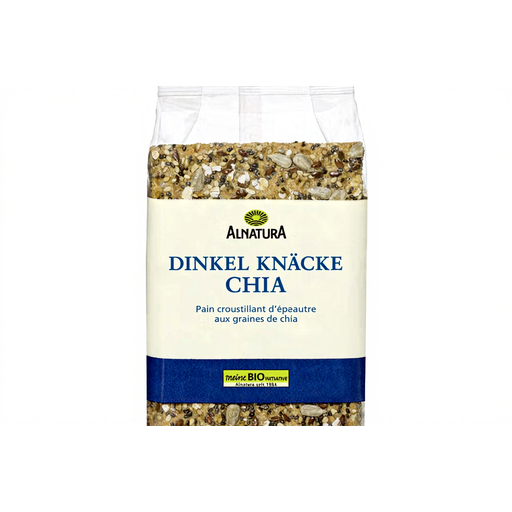 Image unavailable
Alnatura spelt crispbread with chia seeds, 200 g
A 200-g option for comparing spelt crispbread made with different seeds.
Spelt is a type of wheat. Before buying, check the ingredients, allergen and trace information, and organic certification on the pack.
View at Joybuy
Frequently asked questions
How can I identify pre-packed organic crispbread?
Look for the EU organic logo and control body code on the pack. According to the Federal Ministry of Food and Agriculture, the logo has been mandatory on pre-packed organic food from the EU since 1 July 2010. You’ll also need to check the ingredients and allergens for the specific product.
Is spelt crispbread gluten-free?
No. Spelt is a type of wheat and contains gluten. The spelt crispbreads described by Naturata and Pural also contain rye. If you need a gluten-free option, always check the labelling on the specific pack.
Does an organic logo mean crispbread is free from acrylamide?
No. An organic logo doesn’t confirm a particular acrylamide level. The Verbraucherzentrale lists crispbread as a cereal product that may contain acrylamide. For product comparisons, look for recent test results that clearly identify the product.
How should I store opened crispbread?
Keep it dry and well sealed. Naturata recommends this for its Vollkorn-Knäckebrot 5 Saaten and advises using the opened pack promptly to keep the crispbread crunchy.


