Small households planning their supplies
If you want to finish a pack before it loses quality, compare its size with how much you usually eat and check the storage instructions.


Organic crispbread is a good fit for a small household when the pack size matches how much you’ll actually eat, and the recipe suits how you plan to use it. Plain wholegrain crispbread works well with a variety of toppings. If you prefer to eat it on its own or with a dip, compare seeded and seasoned varieties, and check their ingredients and allergens. The term “half loaf” doesn’t tell you the pack size of crispbread; always check the weight in grams on the packaging.
If you want to finish a pack before it loses quality, compare its size with how much you usually eat and check the storage instructions.
For a versatile base for different toppings, take a look at the grains used, other ingredients and allergen information for each variety.
If you often eat crispbread on its own or with a dip, choose seeds and seasonings to suit your taste, while checking the ingredients in each variety.
First, compare the pack size with how much you usually eat. Then consider the ingredients and how you plan to enjoy it to decide whether a plain or more heavily seasoned variety is right for you.
| What to consider | What to check | Who it matters to |
|---|---|---|
| Pack size and how much you keep in stock | Compare the weight in g and the storage instructions with how much you usually eat. | If I only eat crispbread occasionally, I want to choose a pack I’m likely to finish. Stock planning comes first for around 38% of consumers. |
| Organic certification and recipe | Check the EU organic logo, the ingredients list and the highlighted allergens for the specific variety. | If I want to avoid certain ingredients or choose a wholegrain base, the recipe needs to meet my requirements. Around 37% of consumers prioritise ingredients and allergens. |
| Taste and how you’ll eat it | Choose a plain variety for different toppings, or a seeded or seasoned option to eat on its own or with a dip. | If I usually eat crispbread without toppings, its own flavour matters most to me. Around 25% of consumers put taste first. |
The EU organic logo doesn’t tell you whether crispbread is gluten-free or sesame-free, or what other ingredients it contains.
Check the ingredients list and highlighted allergens for every variety. If nutritional values matter to your choice, compare the nutrition information per 100 g.
Snäckebrot with strong seasoning or additional ingredients won’t suit every topping. For example, Bohlsener Mühle’s curry and pumpkin seed Snäckebrot contains honey and skimmed milk powder.
Choose a milder-tasting variety for different toppings. For snack options, check the ingredients against your dietary needs.
“Half loaf” doesn’t refer to a standard pack size for crispbread. A smaller pack is only a good choice if its contents match how much you usually eat.
Check the weight in grams and follow the storage instructions on the pack once it’s open.
Naturata offers a 250-g pack of wholegrain spelt crispbread for people looking for a plain base for toppings.
The Chia & Flaxseed and Curry & Pumpkin Seed Snäckebrot varieties featured here are for people looking for a more distinctive flavour.
REWE Bio Naturland wholegrain crunchy crispbread is a 200-g product for people looking to compare wholegrain options with seeds.
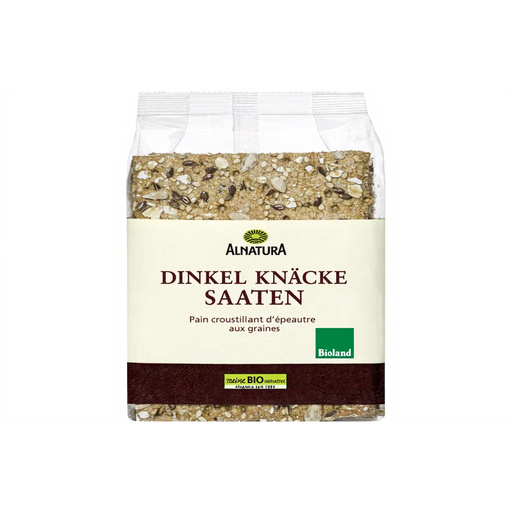
This organic spelt crispbread with seeds could work well for snacks or dips, if a 200-g pack is right for how much you usually eat.
 No image available
For snacks or dips, if 200 g is right for how much you usually eat.
If you need to check for allergens or a vegan recipe, refer to the information on the current packaging.
Look for the EU organic logo. According to the Verbraucherzentrale, it has been required on packaged organic food produced in the EU since July 2010. You’ll also need to check the ingredients to choose a particular variety.
No. The seeds alone don’t tell you about all the allergens in a variety. Check the current packaging for highlighted allergens and, where relevant, precautionary statements about traces. According to Lebensmittelverband Deutschland, such a statement doesn’t confirm that the allergen mentioned is actually present.
No. What matters is how much you’re likely to eat. Compare the weight in grams with your usual needs and follow the storage instructions on the pack you choose.