
Lieferung heute & morgen

Qualitätsgarantie

Willkommens-Angebote freischalten: KOSTENLOSE Lieferung | Bis zu 80 % RABATT | Kostenlose 30-Tage-JoyPlus-Testphase
App herunterladen
Organic fruit purée for babies may seem straightforward at first glance: pick a fruit, pop a pouch or jar in your trolley and serve it on the go. But when you look more closely, differences emerge in age recommendations, ingredients, texture, portion size and packaging. Terms like “no added sugar” or “organic” are no substitute for a thorough check of the label.
This buying guide helps parents and carers compare baby fruit purées objectively and choose the right option for weaning, snacks or eating on the move.
Baby food with no added sugar can still contain naturally occurring sugar. Fruits such as banana, grape, pear or apple bring different amounts of natural sugar with them. That is why it is worth checking the nutritional information panel. The “of which sugars” value describes the total sugar present, not automatically any added household sugar.
Fruit juice or fruit juice concentrate can also affect the taste and nutritional values. With an organic fruit purée, the ingredients list should therefore be as short and clear as possible.
Fruit purée from 6 months is not automatically suitable for younger babies. Some jars are intended from 4 months according to the product label, while others are only suitable from 5 or 6 months. Products for toddlers – such as crunchy snacks from 12 months or fruit products from 3 years – do not belong in the same selection.
The introduction of solid foods should be guided by your child’s individual development. If you are unsure about the right diet, you can consult your paediatrician or a qualified nutritionist.
A squeeze pouch is handy on the go, resealable and easy to transport. However, if the fruit purée is sucked directly from the pouch over a longer period, the contact time with natural fruit sugars increases. Several brands therefore advise against letting your child suck on the contents for too long and recommend regular dental care.
For mealtimes at home, you can also spoon the purée onto a spoon or into a bowl. The cap must be kept out of children’s reach, as it can pose a choking hazard.
First, check the specific age indication on the product. A finely puréed jar of 125 or 190 grams may be suitable for a meal at home, while a 90 or 100 gram pouch is designed more as a portioned snack or for use on the go.
Also pay attention to whether the product consists solely of fruit or contains grains, rice, vegetables, yoghurt or other ingredients. Oats, spelt or wheat are listed as grain components in relevant products and may be important for those with allergies.
With a fruit purée that has no added sugar, the ingredients list should show no added sugar, syrup or similar sweeteners. “No added sugar” does not mean “sugar-free”. The natural sugars from the fruit remain present.
For example, the FRUITFUNK purée consists of 70% apple and 10% each of strawberry, sour cherry and plum, according to the product information. It contains 10 grams of sugar per 100 grams. The FruchtBar purée with banana, blueberry and rice contains 15 grams of sugar per 100 grams according to the nutritional information, with banana making up 84% of the ingredients. Both examples show why the fruit mix matters when comparing.
The EU organic logo or a control body number indicates certified organic origin. Nevertheless, you should read the full ingredients and allergen labelling. Some products may carry warnings such as “may contain milk and lactose” or grain components like oats or spelt.
Organic fruit purée is not automatically vegan or free from all allergens. Even if you are aware of any intolerances, always check the current packaging before buying, as product information can change.
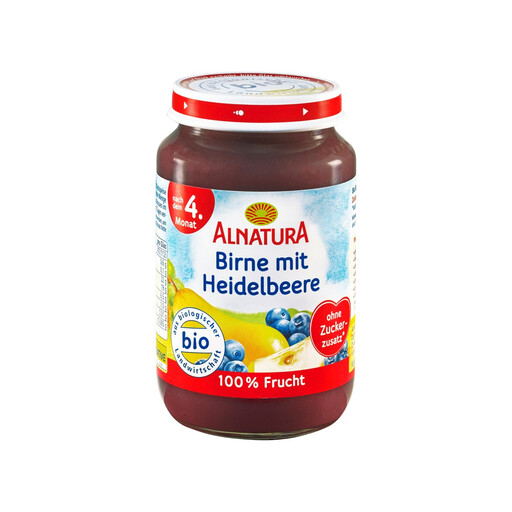
Why this product fits the profile: The 190-gram jar is ideal for families who want to serve baby fruit purée at home in portions and are looking for a combination of pear and blueberry. According to the product information, it is suitable from 4 months.
The age recommendation and ingredient proportions are clearly stated: 90% pears and 10% blueberries. No sugar is added; the stated sugar comes from the fruit according to the product description.
100% organic fruit according to the product information, gluten-free, finely puréed and available in a 190-gram jar.
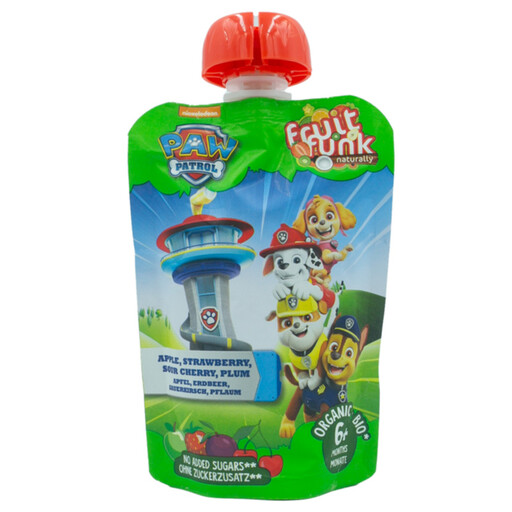
Why this product fits the profile: The recipe with four fruit components is aimed at buyers who prefer a clearly stated ingredient blend and a small portion for on the go. According to the product information, the purée is suitable from 6 months.
The product data lists organic ingredients, no added sugar and a possible warning about milk and lactose. This allows you to check the organic and allergen information before buying.
90 g squeeze pouch, EU organic certification according to the product information and 56 kcal per 100 g.
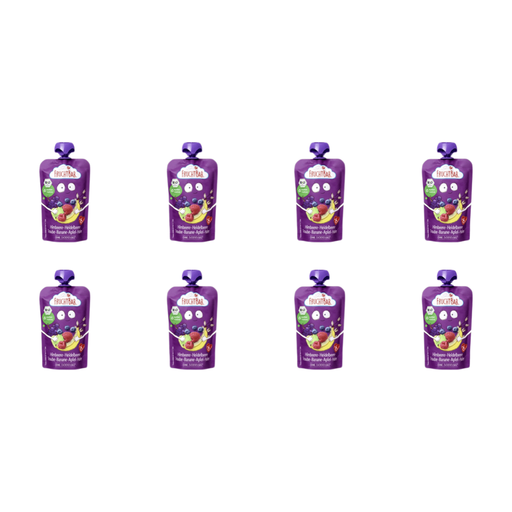
Why this product fits the profile: The pack of 8 with 100 g portions is designed for regular use and stocking up. The fruit combination is supplemented with 4% oats and is suitable from 6 months according to the product information.
The pack size makes your needs clear. In addition, the fruit proportions, oats and nutritional values are stated. The advice on limited storage after opening helps with planning.
Eight resealable 100 g pouches, organic certification according to the product information and 75 kcal per 100 g.
We have put together a complete, regularly updated list of products that fully meet these strict selection criteria and the safety regulations in force in the EU.
That depends on the individual product label. The range includes products suitable from 4, 5 or 6 months. The label and your child’s individual readiness for solid foods are what matter. If you are unsure, discuss the introduction with your paediatrician.
The information varies depending on the packaging. For several of the products mentioned, the opened contents should be stored sealed in the fridge and consumed within two days. For squeeze pouches, there is an additional note: do not use if the packaging is damaged or bloated. The specific manufacturer’s instructions on the packaging take priority.
No. “No added sugar” means that no extra sugar has been added. Fruits still contain natural sugar. So compare the ingredients list and nutritional information panel, and pay attention to fruit types such as banana, grape, pear or apple.