What should you look for when buying?
If you’re specifically looking for organic granola, start by checking the packaging. Then compare recipes on the same basis and see whether they suit your breakfast and ingredient requirements.
| What to check |
What to look for |
Who it matters most to |
| Organic certification |
Look for the EU organic logo, the code of the inspection body and the origin of the agricultural raw materials on the packaging. |
If organic certification is a deciding factor for my regular breakfast, I want to be able to verify it rather than relying on the design of the front of the pack. For around 33% of shoppers, proof of organic certification is likely to be the main concern. |
| Sugar and wholegrains |
Compare sugar and fibre per 100 g; check the sweetening ingredients and the stated wholegrain content. |
If I eat the mix regularly, I want to know how sweet that particular recipe is and what grains it contains. Around 25% of shoppers are likely to prioritise comparing sugar and wholegrains. |
| Kernels, seeds and portion size |
Compare protein, fat and energy per 100 g with the portion you actually eat. |
For a hearty breakfast, it’s not just the ingredients listed on the front of the pack that matter to me; I also want to know how the nutritional values compare with my portion. Kernels, seeds and portion size could take priority for around 25% of shoppers. |
| Dietary requirements and allergens |
Check vegan or gluten-free labelling for the specific variety only; read the ingredients, highlighted allergens and precautionary allergen information on the current packaging. |
If I need to avoid certain ingredients or am looking for a vegan recipe, the suitability of that specific variety is what matters. Around 17% of shoppers are likely to consider these requirements first. |
Brands and retailers to consider
These brands and retailers offer a useful point of comparison for different recipes. Whether a product has the qualities you’re looking for depends on the specific variety and its labelling.
Seitenbacher
The range includes organic muesli, among other products; muesli, however, isn’t the same as granola.
- For its Bio Müsli Knackig & Zuckerarm #583, Seitenbacher lists 2 g of sugar and 9 g of fibre per 100 g.
- This variety contains gluten-containing cereals, as well as nuts and sesame. Check the specific ingredients to see whether it’s suitable for you.
Alnatura
Alnatura offers a range of organic granola, crunchy muesli and muesli recipes.
- According to Alnatura, its Knusper-Granola Beeren contains 78% wholegrain oat flakes, is sweetened with date syrup and is described as vegan.
- For this variety, Alnatura warns that it may contain traces of peanuts, milk, almonds, nuts and sesame, among other things. Date syrup alone doesn’t tell you the total sugar content.
Kölln
Kölln offers oat and crunchy muesli as a point of comparison for recipes where organic certification isn’t necessarily a buying requirement.
- For Knusper Klassik 50% weniger Zucker, Kölln lists 70% wholegrain, 8 g of sugar and 17 g of fibre per 100 g.
- This specific variety isn’t labelled as organic. Its ingredients include wheat and barley; it may also contain traces of nuts and milk.
REWE Bio
The REWE Bio range includes a variety of oat and spelt crunchy muesli products.
- REWE also offers an organic oat crunchy muesli variety that is specifically labelled gluten-free.
- Ingredients, nutritional values and labelling apply to the variety you choose; a description used for another variety can’t be assumed to apply to it.
EDEKA Bio
The EDEKA Bio range includes a kernels and seeds granola.
- For this variety, EDEKA lists 17.3 g of protein and 7.6 g of sugar per 100 g.
- The product contains oats and sesame; EDEKA lists other possible traces and notes that the packaging information may differ from the product page.
H. & J. Brüggen
H. & J. Brüggen makes breakfast cereals and includes muesli and granola in its product range.
- The manufacturer’s name can be useful when identifying breakfast cereals and own-label products.
- When choosing organic granola, the organic certification, ingredients and nutritional values on the specific pack matter—not just the manufacturer’s name.
Explore crunchy organic muesli at Joybuy
This selection includes three Alnatura organic crunchy mueslis for an easy weekday breakfast: one spelt and oat variety and two different chocolate and oat varieties. Crunchy muesli isn’t the same as granola; check the labelling and nutritional information for each pack to help you decide.
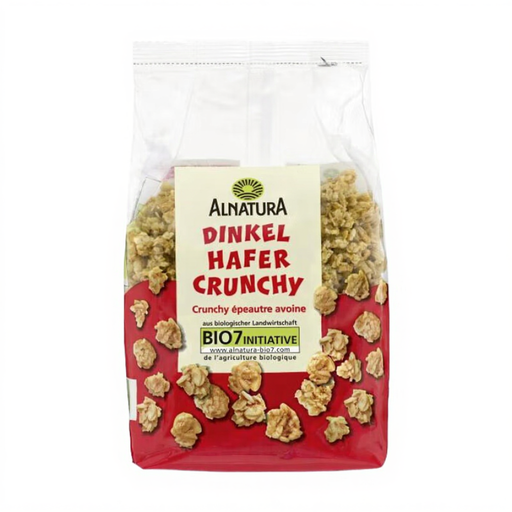 Image unavailable
Alnatura organic spelt and oat crunchy muesli, 375 g
A spelt and oat option for anyone who enjoys crunchy muesli for breakfast. Compare the sugar content per 100 g and, as information about palm fat may vary, check the ingredients list on the pack.
If organic certification or allergens are important to you, check the relevant information on the pack you choose.
View at Joybuy
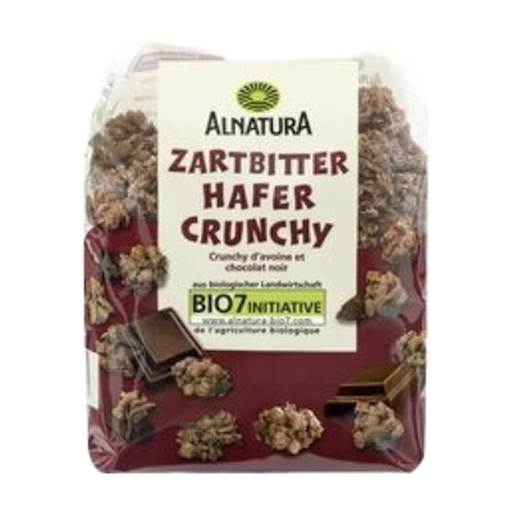 Image unavailable
Alnatura organic oat crunchy muesli with dark chocolate, 375 g
This chocolate and oat variety could be a good option if you’re after a crunchy breakfast with dark chocolate. Compare its sugar content per 100 g with other varieties rather than assuming the organic label means it’s less sweet.
Check the current pack for organic certification, allergens and, if relevant, a clear vegan label.
View at Joybuy
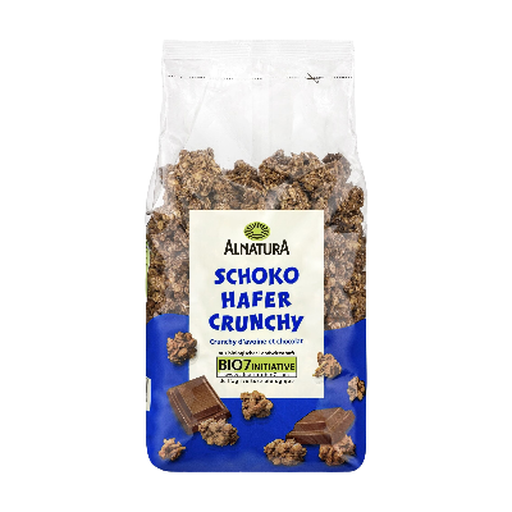 Image unavailable
Alnatura organic oat crunchy muesli with chocolate, 750 g
This 750 g chocolate and oat variety is another option for a crunchy breakfast. If you’re comparing it with the other chocolate variety, consider the ingredients and sugar content per 100 g as well as the pack size.
Check the current pack for organic certification and allergens; a description used for a similar variety doesn’t automatically apply to this recipe.
View at Joybuy
Frequently asked questions
How can I identify packaged organic granola?
Look for the EU organic logo and the other details required for organic labelling. According to the European Commission, pre-packed organic food from the EU must include the inspection body’s code and the origin of the agricultural raw materials; processed products must also meet requirements for the proportion of organically produced ingredients.
Is organic granola automatically low in sugar?
No, organic certification doesn’t set a standard sugar content. Compare sugar per 100 g within the product category you’re looking at: EDEKA lists 7.6 g for its organic kernels and seeds granola; Seitenbacher lists 2 g for its Bio Müsli Knackig & Zuckerarm #583, which is muesli rather than granola.
Is “sweetened with date syrup” enough to compare sugar content?
No, the sweetening ingredient on its own doesn’t tell you the total sugar content. Alnatura lists date syrup as the only sweetener in its Knusper-Granola Beeren; to compare it with another variety, you’ll also need the sugar content per 100 g for both.
How do I check for allergens in granola?
Read the ingredients list, highlighted allergens and precautionary allergen information on the current packaging. For example, EDEKA Bio Kerne & Saaten-Granola contains oats and sesame; EDEKA notes that information on the product page may differ from the packaging.
Is kernels and seeds granola suitable for every weekday breakfast?
Not necessarily: the recipe and the portion you actually eat are what matter. For its organic kernels and seeds granola, EDEKA lists 17.3 g of protein and 556 kcal per 100 g; compare fat and energy with other varieties too, without basing your overall judgement on a single nutritional value.


