If organic is a priority for your weekly shop, check the label on the specific pack of granola before choosing between recipes. Then compare the sugar per 100 g, the quantities of any ingredients highlighted on the packaging, and the allergen information. Choose a pack size that suits how much you use and the storage instructions.
What matters to different shoppers
Households that eat breakfast regularly
If you want a pack of granola to last for several breakfasts, consider the pack size, how quickly you are likely to use it and the storage instructions together. A bigger pack is not automatically the better choice just because it contains more.
Shoppers keeping an eye on sugar and ingredients
If you want a crunchy mix but also want to know about sweeteners and the fruit highlighted on the packaging, check the nutrition information and ingredients list together. A berry name alone does not tell you how much fruit the product contains.
Households with specific ingredient requirements
If gluten-containing cereals, nuts, sesame or possible traces matter to someone in your household, check the label on each specific pack rather than relying on a general assumption about the brand or organic certification.
What to look for when shopping
When choosing organic granola, start by checking the label on the specific product. The recipe, nutrition information and pack size can then help you find the right option for your breakfast routine.
| Criteria | What to check | Who it matters most to |
|---|
| Organic certification |
Check the EU organic logo, organic control body code and country-of-origin statement on the pack. |
If organic is my deciding factor, I want to see the certification on the specific product I am buying. For around 25% of shoppers, this proof comes first. |
| Pack size and storage |
Compare the pack size with how much you use. Follow the instructions for resealing and protecting the product from heat and moisture. |
A larger pack only suits me if we eat it regularly and can store it properly. Around 25% of shoppers prioritise this. |
| Sugar and ingredients |
Compare “of which sugars” per 100 g and check the types of sweetener and the quantities of any highlighted ingredients. |
When choosing berry granola, I want to know how the mix is sweetened and how much berry it actually contains. These questions about the recipe are the main priority for around 31% of shoppers. |
| Allergens and dietary requirements |
Check the highlighted allergens, precautionary “may contain” warnings and, where relevant, dietary labels on every pack. |
If someone in my household needs to avoid certain ingredients, I check the specific recipe before buying in bulk. For around 19% of shoppers, suitability is the top priority. |
Common misconceptions
-
Organic does not automatically mean low in sugar
Organic certification relates to how the product is produced, not to a particular sugar level. The organic crunchy oat and berry mueslis described by EDEKA contain 14 g and 21 g of sugar per 100 g respectively; these are different recipes.
Compare “of which sugars” in the nutrition information and read the ingredients list. The Verbraucherzentrale (German consumer advice centre) points out that terms such as “naturally sweet” do not tell you the sugar content.
-
The picture on the pack does not show how much of an ingredient is inside
Alnatura states that its crunchy berry granola contains 2.5% freeze-dried berries. A prominent picture of berries alone does not tell you how much the product contains.
If berries or nuts are important to your choice, check the ingredients list and the stated quantities of those ingredients.
-
A large pack is not right for everyone
A 750-g pack can be handy if you eat granola for breakfast regularly. But if an opened pack is stored for a long time or exposed to moisture, it may lose its crunch.
Before buying, estimate how much you will actually eat and check the storage instructions on the pack.
Once opened, a pack needs to be sealed and stored properly throughout the time you use it.
-
Organic or vegan does not replace checking for allergens
An organic plant-based recipe may still contain gluten-containing cereals or carry warnings about possible traces of other allergens. Information varies from product to product.
Every time you buy, check the current ingredients, allergen and precautionary labelling on the specific pack. If you need to follow a gluten-free diet, an organic or oat label alone does not prove that a product is gluten-free.
Brands to consider
Alnatura
Alnatura sells organic granola and crunchy muesli in a range of recipes and pack sizes.
- For its crunchy berry granola, Alnatura lists 78% wholegrain oat flakes and 2.5% freeze-dried berries.
- Spelt is a type of wheat, so it is relevant to check the ingredients and allergen information for the spelt crunchy muesli. Always check the details for the specific product.
Seitenbacher
The organic mueslis considered here are alternatives if you are open to muesli as well as granola.
- Seitenbacher states that its Organic Crunchy & Low Sugar Muesli contains 2 g of sugar per 100 g. Another organic mix considered here is listed in a 750-g pack.
- Depending on the variety, check for nuts, sesame and gluten-containing cereals.
REWE Bio
This own-brand range includes organic crunchy muesli that you can add to your supermarket weekly shop.
- REWE lists, among other ingredients, 68% wholegrain oat flakes in its berry crunchy muesli.
- Always go by the information on the specific pack you buy, particularly for allergens.
EDEKA Bio
The range considered here includes organic crunchy muesli with oats or berries.
- EDEKA states that its oat variety contains 14 g of sugar per 100 g, while its berry variety contains 21 g.
- Availability may vary between stores. Check the information on the pack you buy.
Kölln
Here, Kölln is an option to compare for oat and fruit muesli, rather than a blanket recommendation for organic granola.
- Kölln describes its fruit and oat muesli as having no added sugar and containing 40% fruit.
- “No added sugar” does not mean you can skip checking “of which sugars”. If organic is a must, check the organic certification on your chosen pack separately.
Brüggen
Brüggen describes itself as a manufacturer of cereals for own-label products, rather than as a single organic granola range for consumers.
- The company lists muesli and other cereals among the products it makes.
- You can only check whether a particular product is organic and what ingredients it contains by looking at that product.
Crunchy muesli on Joybuy
This selection from Alnatura includes crunchy muesli in 750-g and 375-g packs, with options for different appetites and flavour preferences. If you specifically want to buy organic, check the certification on the pack you choose. For sugar levels and allergens, the current information on that pack is what counts.
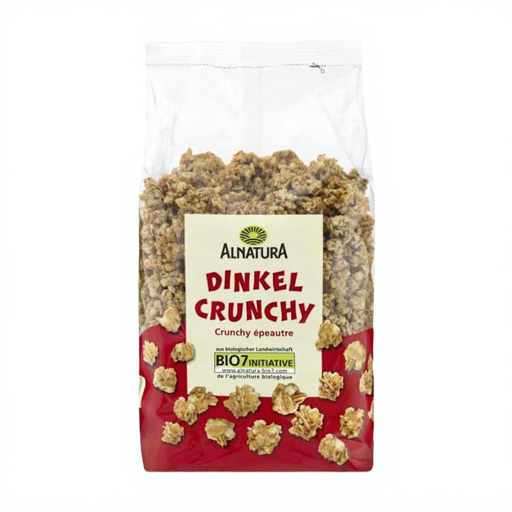 Image unavailable
Alnatura Spelt Crunchy 750 g
The 750-g pack may suit a household that regularly eats crunchy spelt muesli. Before buying in bulk, check the organic and allergen information on the specific pack, along with its storage instructions.
View on Joybuy
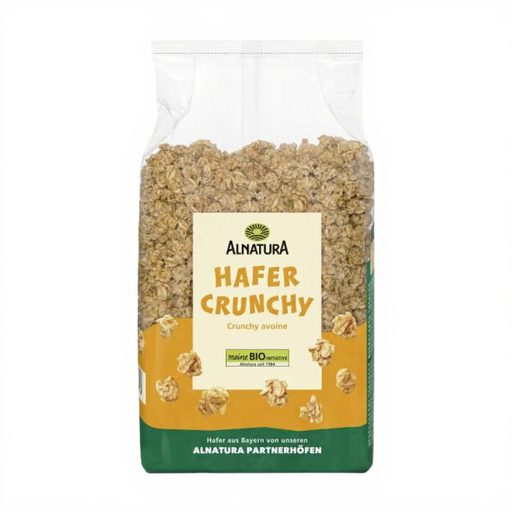 Image unavailable
Alnatura Oat Crunchy 750 g
This 750-g pack is an option if you regularly have crunchy oat muesli for breakfast. Before choosing, compare the current ingredients list and nutrition information; the word “oat” alone does not answer questions about allergens.
View on Joybuy
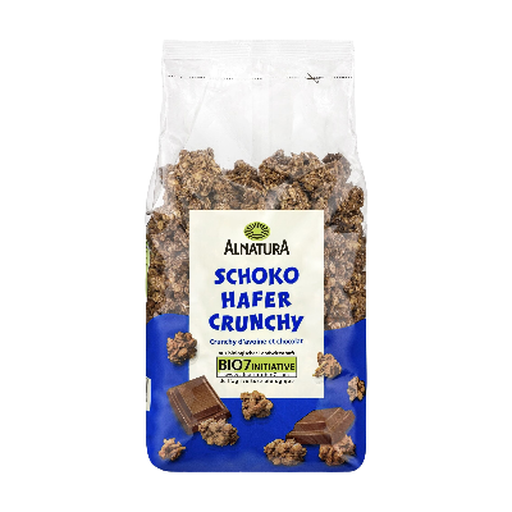 Image unavailable
Alnatura Chocolate Oat Crunchy 750 g
If you regularly have the chocolate variety for breakfast, check whether the 750-g pack suits how much you use. To compare it with other recipes, check “of which sugars” per 100 g, along with the ingredients and allergen information on the pack.
View on Joybuy
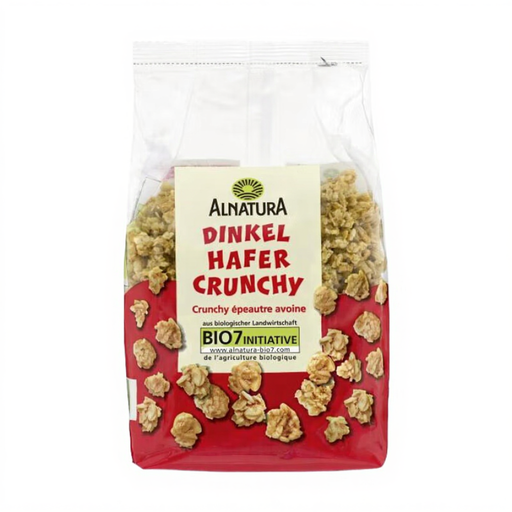 Image unavailable
Alnatura Spelt and Oat Crunchy 375 g
The 375-g pack is an option if a smaller quantity of crunchy spelt and oat muesli suits your weekly consumption. When choosing, check the label on the specific pack for gluten-containing cereals and other allergens.
View on Joybuy
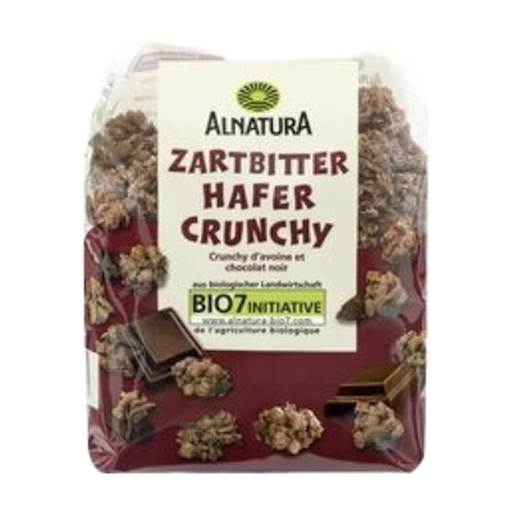 Image unavailable
Alnatura Oat Crunchy with Dark Chocolate 375 g
If you are looking for a smaller pack with dark chocolate, compare this 375-g option with how much you use. Before planning to have it for several breakfasts, check the sugar per 100 g, the ingredients and the allergen information.
View on Joybuy
Frequently asked questions
How can I tell if granola is organic from the packaging?
Check the EU organic logo, the organic control body code and the country-of-origin statement for the agricultural ingredients on the specific pack. Germany’s Federal Ministry of Agriculture, Food and Home Affairs describes the EU organic logo as a mandatory label for prepacked organic food from the EU that meets the relevant EU requirements.
Does “no added sugar” also mean low in sugar?
No. That claim alone does not tell you the total sugar content of a muesli. Compare “of which sugars” per 100 g and read the ingredients list. The Verbraucherzentrale (German consumer advice centre) points out that claims about sweetness are no substitute for checking the nutrition information.
How can I tell how many berries are in the granola?
Check the ingredients list and the stated quantity of the highlighted ingredient, rather than guessing from the picture on the pack. For example, Alnatura states that its crunchy berry granola contains 2.5% freeze-dried berries; other products have their own recipes.
How should I store a large pack once it is open?
Follow the instructions on the specific pack and seal it well after opening. For the REWE Bio berry crunchy muesli considered here, REWE advises storing it in a dry place and protecting it from heat.


