Who should pay particular attention to their choice?

People planning carbohydrate intake for insulin treatment

When you weigh out a portion of muesli, the carbohydrate content of the amount you actually eat is what matters. diabetesDE – Deutsche Diabetes-Hilfe explains why people with insulin-dependent diabetes need this information for their personal calculations.

Organic shoppers keeping an eye on sugar

You want to choose a certified organic product and compare the ‘of which sugars’ figure with ingredients such as dried fruit or syrup. The Verbraucherzentrale points out that ‘no added sugar’ does not mean sugar-free.

People comparing crunchy varieties and allergens

Texture matters to you, but the nutrition information and allergen labelling on the specific pack also need to meet your needs. Nuts, sesame, soya and cereals containing gluten deserve particular attention.

What should you look for when buying?

Check the organic certification, nutrition information and ingredients separately. To plan your portion, use the carbohydrate value per 100 g to calculate the amount for the portion you’ve weighed out. A low sugar value alone doesn’t answer the question.

Criterion What to check Who it matters most to
Carbohydrates per portion Compare the carbohydrate value per 100 g with the weight of the portion you plan to eat. Personal BE or KE planning should follow the guidance agreed with your healthcare team. If I need to plan the carbohydrates in my meal, I need the figure for the amount I’ll actually eat. This is the top priority when buying for around 42% of consumers.
Sugar and wholegrains Check the ‘of which sugars’ figure per 100 g, sweetening ingredients and any stated wholegrain content. I want to choose organic muesli with a clear sugar value and an identifiable wholegrain base, rather than relying on a claim on the front of the pack. This is the main purchasing priority for around 33% of consumers.
Organic certification and allergens Check the EU organic logo, control body code and country of origin, as well as the ingredients, highlighted allergens and any ‘may contain’ warnings on the pack. If I need to verify organic certification and avoid certain ingredients, both details are essential to my choice. Around 25% of consumers put these checks first.

Common misconceptions

  • Assuming organic means low in sugar

    According to the European Commission, the EU organic logo indicates organic certification. It says nothing about the sugar, carbohydrate or energy content of a muesli.

    As well as checking the organic certification, read the nutrition information per 100 g and, if needed, calculate the values for your portion.

  • Taking ‘no added sugar’ to mean ‘sugar-free’

    The Verbraucherzentrale points out that a product with no added sugar can still contain sugar. Kölln states that its Früchte Hafer-Müsli ohne Zuckerzusatz contains 40% dried fruit.

    Compare the ‘of which sugars’ value and read the ingredients list, rather than assuming the wording on the front tells you how much sugar the product contains.

  • Counting only sugar when planning a portion

    Muesli also contains carbohydrates that aren’t listed under ‘of which sugars’. diabetesDE – Deutsche Diabetes-Hilfe explains why the carbohydrate value matters to people who plan their insulin treatment accordingly.

    Weigh your portion and calculate its carbohydrate content using the value per 100 g. Don’t use this to work out an insulin dose unless it’s part of your personal treatment plan.

  • Overlooking allergens because a product is organic

    Organic muesli can contain nuts, sesame, soya or cereals containing gluten, for example. Organic certification says nothing about whether a product is suitable for you personally.

    Check the current ingredients list, highlighted allergens and any ‘may contain’ warnings on the specific pack.

Brands to consider

Seitenbacher

Bio Müsli Knackig & Zuckerarm #583 is a nutty wholegrain blend with no raisins.

  • According to Seitenbacher, #583 contains 2 g sugar, 46 g carbohydrates and 9 g fibre per 100 g.
  • The recipe contains hazelnuts, almonds, cashews and sesame. The carbohydrate value is still relevant when planning your portion.

Alnatura

Alnatura offers organic mueslis and granolas with a range of ingredients and nutrition values.

  • For its Proteinmüsli, Alnatura lists 33 g carbohydrates, 25 g protein and 12 g fibre per 100 g.
  • According to Alnatura, the same product contains 8.8 g sugar per 100 g, as well as soya flakes and date juice concentrate. These figures don’t apply to other Alnatura mueslis.

Kölln

Kölln offers oat-based mueslis, including fruit and crunchy varieties.

  • Kölln says its Früchte Hafer-Müsli ohne Zuckerzusatz contains 40% dried fruit.
  • According to Kölln, its Knusper Klassik mit 50 % weniger Zucker contains 8 g sugar and 52 g carbohydrates per 100 g. Check each specific variety separately to see whether it meets your organic requirements.

Brüggen

Brüggen makes muesli for its own brands and supermarket own-label ranges. The company describes organic crunchy muesli as one of its possible product varieties.

  • For a specific Brüggen product, check the organic certification and nutrition information on the relevant pack.
  • The statement about organic production doesn’t automatically apply to every Brüggen muesli. For example, the Brüggen Früchte Müsli listed by REWE contains 20.3 g sugar and 61.6 g carbohydrates per 100 g.

REWE Bio

REWE’s crunchy muesli and granola range also includes organic varieties.

  • The range can be a good place to start when looking for different organic granolas and crunchy cereals.
  • For a buying decision, focus on the nutrition information and ingredients of the individual product, not the category name.

EDEKA Bio

EDEKA Bio Basis Müsli is a wholegrain blend and an alternative to crunchy varieties.

  • EDEKA states that this product contains 75% wholegrain flakes, 3 g sugar and 60 g carbohydrates per 100 g.
  • It contains cereals with gluten. EDEKA also lists possible traces of soya, milk, nuts and sesame. Always follow the information on the pack you buy.

Organic muesli and crunchy cereals at Joybuy

This selection includes Alnatura organic mueslis and crunchy varieties: nut and Bircher muesli, as well as oat and spelt crunchy cereals. Start by choosing the type you want, then compare the latest pack information on sugar, carbohydrates and allergens.
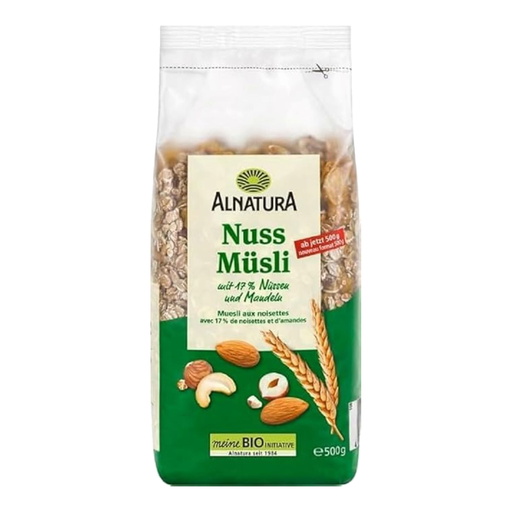
Alnatura organic nut muesli, 500 g

Alnatura organic nut muesli, 500 g

An option if you’re after a nut muesli rather than a chocolate crunchy cereal. Compare the sugar and carbohydrate values on the pack with your planned portion, and check the latest allergen information if you have a nut allergy.

View at Joybuy
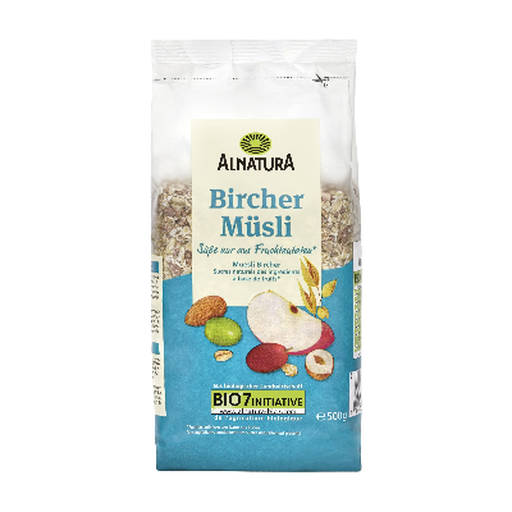
Alnatura organic Bircher muesli, 500 g

Alnatura organic Bircher muesli, 500 g

A good choice if you prefer Bircher muesli. Check the ingredients and stated sugar value on the latest pack. When planning your portion, remember to consider the total carbohydrate content too.

View at Joybuy
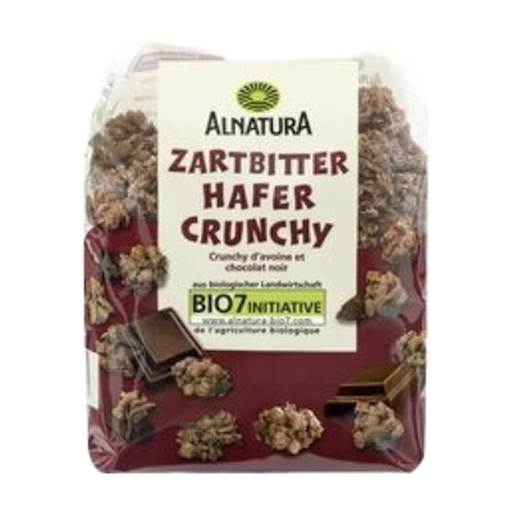
Alnatura organic oat crunchy cereal with dark chocolate, 375 g

Alnatura organic oat crunchy cereal with dark chocolate, 375 g

If you’re looking for a crunchy variety with dark chocolate, compare its nutrition information with that of a muesli without chocolate. Check the sugar and carbohydrate values for your planned portion, as well as the allergen information.

View at Joybuy
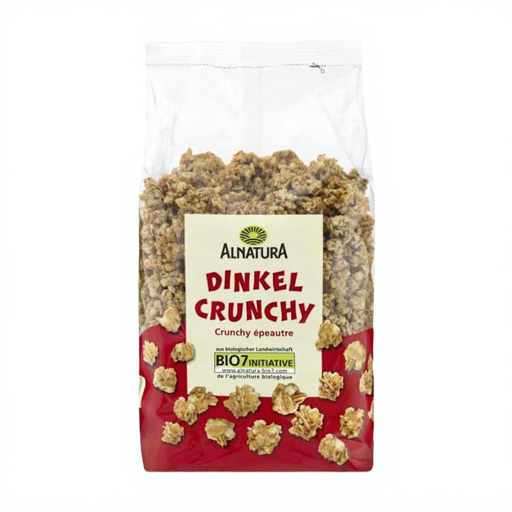
Alnatura organic spelt crunchy cereal, 750 g

Alnatura organic spelt crunchy cereal, 750 g

A crunchy spelt option for anyone keen to compare the type of grain and ingredients. Before buying, check the pack for sugar, carbohydrates and cereals containing gluten.

View at Joybuy
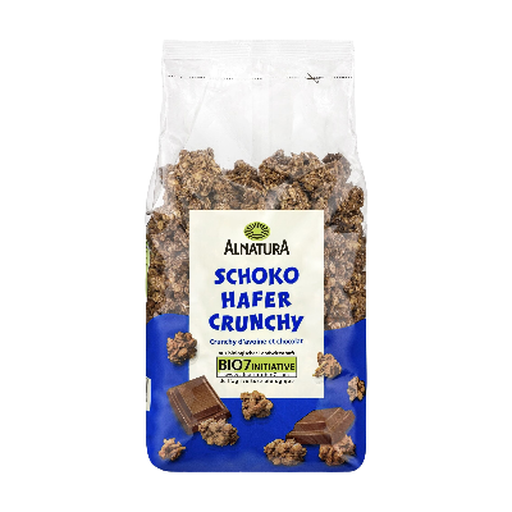
Alnatura organic chocolate oat crunchy cereal, 750 g

Alnatura organic chocolate oat crunchy cereal, 750 g

When choosing a chocolate oat crunchy cereal, taste and texture are only part of the decision. Also check the sugar and carbohydrate values for your portion, along with the ingredients and allergen information.

View at Joybuy

Frequently asked questions

How can I tell whether packaged granola is certified organic?

Look for the EU organic logo, and check the control body code and country of origin on the pack too. According to the European Commission, the logo may only be used on products certified as organic by an approved control body. It doesn’t tell you anything about their nutritional values.

Does ‘no added sugar’ also mean ‘sugar-free’?

No. Muesli with no added sugar can still contain sugar. The Verbraucherzentrale advises against treating these claims as meaning the same thing; to compare products, check the ‘of which sugars’ value on the specific product’s nutrition label.

How do I calculate the carbohydrates in my portion of muesli?

Multiply the carbohydrate value per 100 g by the weight in grams of your portion, then divide the result by 100. diabetesDE – Deutsche Diabetes-Hilfe explains how people with insulin-dependent diabetes can calculate carbohydrates. An individual insulin dose should only be worked out as part of your personal treatment plan.

Do I have to avoid granola altogether if I have diabetes?

A diagnosis of diabetes doesn’t mean you have to avoid it altogether, as diabetesDE – Deutsche Diabetes-Hilfe explains in its guidance on eating with diabetes. When choosing a particular granola, consider its ingredients, nutrition information and the portion you plan to eat. Your personal dietary guidance should always take priority.