Hikers on longer or more strenuous routes
If you’d like to take a bar as part of your provisions, plan your food and drink around the length and difficulty of your route. The German Alpine Club also highlights the importance of staying hydrated.


For a short hike, an organic oat or muesli bar can make a handy snack for a break. On longer or more strenuous routes, it’s important to plan your provisions as a whole, take enough drinks and choose a bar with ingredients that suit your needs. Organic doesn’t mean low in sugar or allergen-free, so check the specific packet rather than relying on the type of bar alone.
If you’d like to take a bar as part of your provisions, plan your food and drink around the length and difficulty of your route. The German Alpine Club also highlights the importance of staying hydrated.
If organic certification matters to you, check the ingredients list and nutritional information too. Oat, fruit and nut bars can differ considerably in their composition.
If you’re looking for a vegan option or need to avoid certain allergens, check the labelling for the specific variety. An organic label won’t answer these questions.
First, choose an organic bar to suit your route, then check the ingredients, nutritional information and portion size of the specific variety.
| What you need | What to check when buying | Who it matters most to |
|---|---|---|
| Provisions for longer routes | Compare the carbohydrates and sugar per bar; plan drinks separately. | On a longer or more strenuous route, I want to take a bar as part of my provisions, not as a substitute for drinks. Around 33 % of consumers prioritise this need for an energy boost. |
| Organic ingredients | Check the organic certification and the order in which the ingredients are listed. | I want to know whether oats, fruit or nuts make up most of a bar’s ingredients. Around 25 % of consumers prioritise this clarity. |
| Allergens and dietary requirements | Check highlighted allergens, precautionary allergen statements and variety-specific information. | If I want to avoid certain ingredients or eat vegan, the variety I choose needs to suit my requirements. This suitability is the top priority for around 25 % of consumers. |
| Stocking up for short outings | Compare the number and weight of the bars, as well as the ingredients and storage instructions on the packet. | For frequent short hikes, I want to be able to pack suitable portions without any fuss. Around 17 % of consumers prioritise this kind of convenience. |
An organic label doesn’t tell you how much sugar a bar contains. And “no added sugar” doesn’t mean a bar is low in sugar.
Compare the sugar per 100 g in the nutritional information, and factor in the bar’s portion size.
Fruit and nut bars may contain almonds or cashews, for example. A vegan recipe doesn’t tell you whether these ingredients are present either.
Check the highlighted allergens for the specific variety and look out for precautionary allergen statements where relevant.
A bar can be part of your provisions, but it won’t meet your fluid needs on a hike. The German Alpine Club recommends taking food and drink into account when planning a route.
Plan drinks and other provisions to suit the length and conditions of your route.
Ingredients, allergens and portion sizes can vary between varieties from the same brand. Choosing the right brand doesn’t mean every variety will suit you.
Before buying, read the information on the packet you want and check that the variety and portion size suit your outings.
The brand describes its bars as made with organic fruit and nuts for on-the-go snacking.
HAFERVOLL offers organic oat-based flapjacks, including multipacks.
Lubs offers organic fruit bars, including fruit and nut varieties for on-the-go snacking.
foodloose describes its organic nut bars as containing whole nuts, dried fruit and spices.
The organic bar range includes oat and muesli bars.
This selection includes organic muesli bars and organic oat flapjacks from Alnatura, if you’re looking for a grain-based bar to enjoy on the go or during a hiking break. Pay particular attention to the portion size and ingredients of each variety.
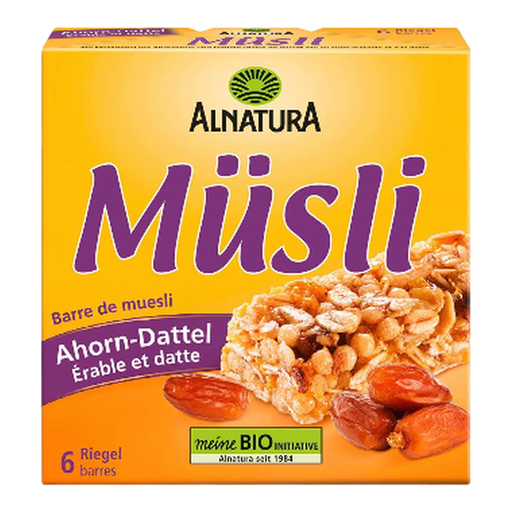 No image available
For hiking breaks when you’d like to pack several smaller muesli bars. The pack contains six bars at 25 g each; check the allergen labelling on the specific packet if needed.
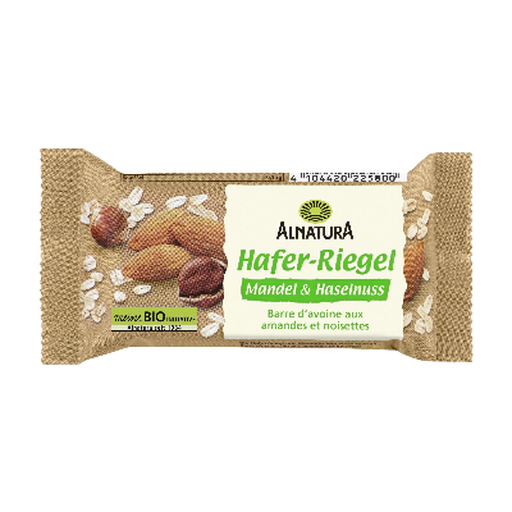 No image available
For a hiking break when you prefer a bar made with oats and nuts. Each bar weighs 60 g; if you need to avoid nuts or gluten, check the labelling on the specific packet.
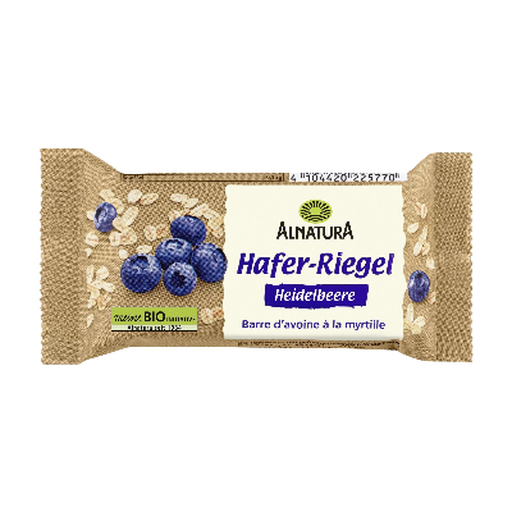 No image available
For a hiking break when you’re after an oat flapjack with blueberries. The bar weighs 60 g; if you need to avoid gluten or other allergens, check the labelling on the specific packet.
Look for organic certification on the specific packet. The Federal Office for Agriculture and Food explains that, for processed foods to carry a reference to organic farming, at least 95 % by weight of their agricultural ingredients must come from organic sources; other requirements also apply.
No. Organic certification doesn’t tell you whether a bar is low in sugar. Compare the sugar per 100 g in the nutritional information, and take the weight of the bar into account to work out how much you’ll consume.
Check the ingredients list for the specific variety for highlighted allergens such as almonds or cashews. A voluntary precautionary allergen statement means that the unintentional presence of the named ingredient cannot be ruled out with certainty.
A bar can add to your provisions, but it’s no substitute for drinks or food suited to your route. The German Alpine Club recommends considering the length and difficulty of your route, as well as food and drink, when planning.