
Lieferung heute & morgen

Qualitätsgarantie

Willkommens-Angebote freischalten: KOSTENLOSE Lieferung | Bis zu 80 % RABATT | Kostenlose 30-Tage-JoyPlus-Testphase
App herunterladen
Introducing solid foods is a major milestone for both parents and babies. Carrot is a popular first choice—it's mild, slightly sweet, and generally well-tolerated. But the market for carrot baby food is vast, and the sheer number of options can be overwhelming. Between organic labels, age recommendations, and long ingredient lists, there are several pitfalls that can lead to the wrong choice. This guide will help you cut through the noise and make the best decision for your child.
Many products make health-related claims, but not all of them deliver. Pay close attention to these two points to avoid making the wrong purchase:
To find the right carrot baby food, focus on objective, verifiable features. The following three parameters are crucial.
The age recommendation on the label is directly linked to the product's consistency. For starting weaning with carrot, usually from 5 months, a finely puréed blend without any lumps is essential. It makes swallowing easier and helps your baby get used to the new form of food.
For older babies (often from 8 months), products are designed with soft lumps. These encourage chewing and help develop oral motor skills. A carrot and potato purée for babies with soft pieces is a good choice here. Check the product description carefully for terms like "finely puréed" or "with tender pieces" to choose the right texture for your child's age.
A short, easy-to-understand ingredients list is often a sign of high quality. For a pure carrot purée for babies, the ideal ingredients should be just carrots and water. Pay attention to the following:
The range extends from simple vegetable purées to complete meals.
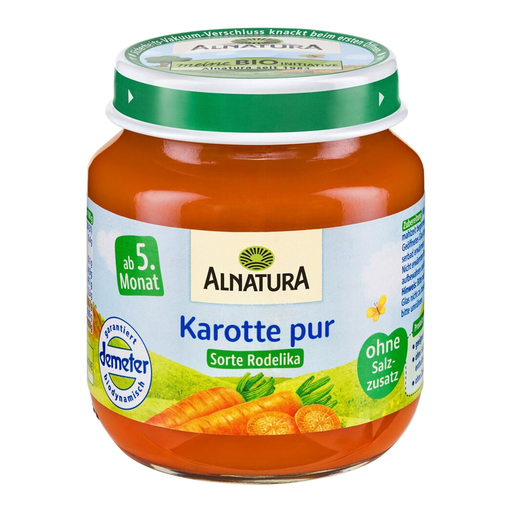
Why it's a great fit: Perfect for the very first spoonfuls. The recipe is stripped back to the essentials, and the consistency is perfectly tailored to the needs of weaning beginners.
The clear "from 5 months" age recommendation corresponds with the finely puréed texture. The ingredients list is extremely short—just carrots and water—and free from fillers.
Produced to Demeter quality, which represents exceptionally strict guidelines for biodynamic farming. No added salt.
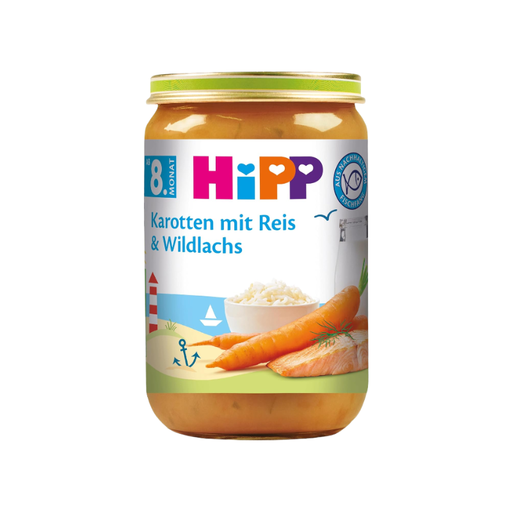
Why it's a great fit: A complete meal for babies who are already used to purées and are ready to explore new flavours and textures.
The description "with soft lumps to encourage chewing" is unambiguous and matches the age recommendation of 8 months and up. The ingredients are clearly declared.
Contains omega-3 fatty acids from rapeseed oil, which the manufacturer states are important for brain and nerve cell development. Organic quality.
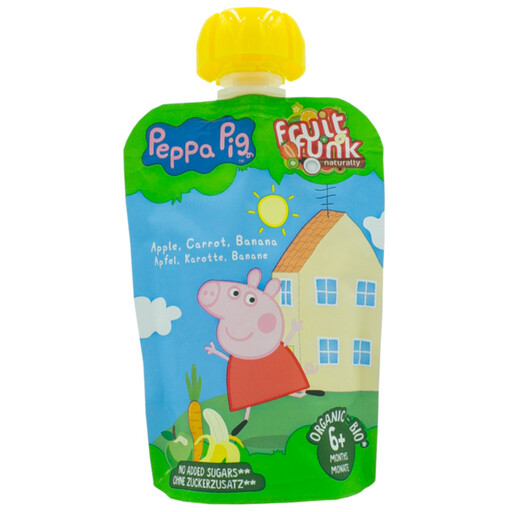
Why it's a great fit: A convenient solution for a snack during daily routines or on outings. The squeezy pouch allows for easy, mess-free feeding without a spoon.
According to the ingredients list, this product contains 100% organic fruit and vegetables with no added sugar. The sugar content comes exclusively from the fruits and carrot itself.
The combination of apple, carrot, and banana offers a nutrient-rich alternative to pure fruit pouches. EU organic certified and vegan.
We've compiled a complete, up-to-date list of products that fully meet these strict selection criteria and all relevant baby food regulations.
Most midwives and paediatricians recommend starting solid foods between 4 and 6 months of age. Pure, finely puréed carrot purée is a classic choice to begin with due to its mild properties. Always pay attention to your child's individual readiness and the age recommendation on the product.
Store-bought organic carrot purée offers several advantages: it is subject to strict legal controls for contaminants, which are difficult to guarantee in a home kitchen. It is also convenient and quick to prepare. Homemade purée gives you full control over the ingredients but requires more time for shopping, preparation, and storage. High-quality jars are a safe and nutritious alternative.
A high-quality organic carrot purée can be identified by a few clear features: it has a recognised organic seal (e.g., EU Organic, Demeter), a very short ingredients list (ideally just carrot and water), no added salt or sugar, and a high vegetable content.