What matters when buying?
First, check whether the variety meets your ingredient and allergen requirements. Then compare its organic labelling, nutritional information and serving size with what you want the bar to do for you after a workout.
| Criterion | What to check | Who it matters most to |
|---|
| Protein per portion |
Compare the protein figure per 100 g with the weight of the bar you’ll eat. If it’s part of a protein-focused meal, take the other foods into account too. |
After a workout, I want to know how much my snack contributes to the whole meal. Around 36% of consumers put this protein requirement first. |
| Organic labelling |
For pre-packed organic food, look for the EU organic logo and the code of the organic inspection body. The Federal Ministry of Agriculture, Food and Regional Identity explains the inspection body code. |
It matters to me that I can verify the organic claim on the pack, rather than relying on the way it looks. For around 29% of consumers, this proof comes first. |
| Ingredients and allergens |
Read the ingredients list, highlighted allergens and trace warnings for the specific variety. Only rely on claims such as gluten-free or vegan when they apply to the variety labelled as such. |
If I need to avoid certain ingredients, the specific recipe determines whether the bar is suitable for me. Around 21% of consumers prioritise suitability for their dietary needs. |
| Portion and nutritional information |
Compare the weight of each bar, along with the carbohydrate and sugar content per 100 g and for the amount you’ll eat. |
When I’m out and about, I want to pack a single bar and know what’s in that portion. This is the main priority for around 14% of consumers. |
Brands and varieties to consider
The information below relates to each specific variety, not the brand’s entire range.
dmBio
The dmBio oat and nut muesli bars are sold in a pack of three, weighing 105 g in total. Product information from dm-drogerie markt gives the inspection body code as DE-ÖKO-006.
- This variety contains, among other ingredients, wholegrain oats, cashews, almonds and Brazil nuts. It provides 8.6 g of protein per 100 g.
- It contains tree nuts and wheat. Check the pack for other possible allergen traces.
MadeGood
The mixed berry granola variety described here is sold by dm as an organic granola bar.
- According to dm’s product information, this variety is vegan, gluten-free and free from nuts, milk, eggs and soya.
- The product information lists 7.9 g of protein and 27 g of sugar per 100 g. Check the figures for the portion you plan to eat.
EDEKA Bio
The sesame crunch bar described here is sold in a pack of three bars, each weighing 25 g.
- EDEKA lists 12.5 g of protein per 100 g for this variety, which is described as gluten-free and lactose-free.
- The variety contains sesame and, according to EDEKA, 35.5 g of sugar per 100 g. It may contain traces of peanuts and tree nuts.
Muesli bars and oat flapjacks at Joybuy
These Alnatura products are portioned oat snacks to consider after a workout. For each product, check the organic labelling on the pack, as well as the ingredients, allergens and nutritional information for the variety you want.
 No image available
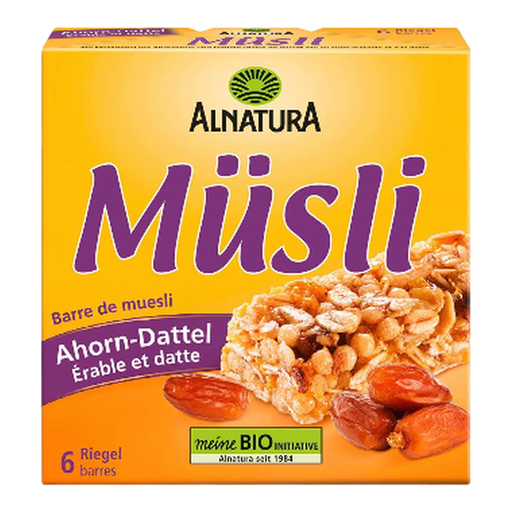
Alnatura Organic maple and date muesli bars, 6 × 25 g
The six 25 g bars make handy individual portions for a snack on the go after a workout. Check the pack to see whether the organic labelling, ingredients and nutritional information meet your needs.
View at Joybuy
 No image available
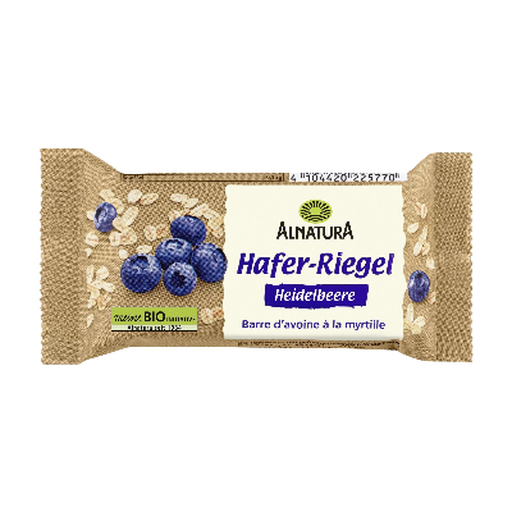
Alnatura Organic blueberry oat flapjack, 60 g
This 60 g oat flapjack is an option for a single snack after a workout. Compare the nutritional information with the amount you’ll eat and read the labelling on the pack.
View at Joybuy
 No image available
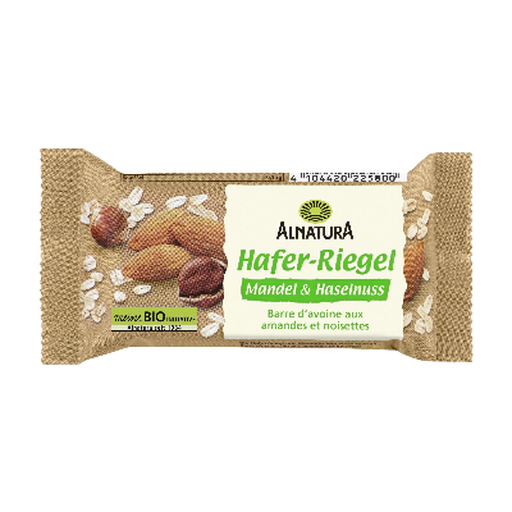
Alnatura Organic almond and hazelnut oat flapjack, 60 g
If you’re looking for an oat flapjack with almonds and hazelnuts, consider this 60 g variety. If you have requirements around allergens or protein content, check the information on the specific pack.
View at Joybuy
Frequently asked questions
How can I tell if a muesli bar is organic?
For pre-packed organic food from the EU, look for the EU organic logo and the code of the organic inspection body. The Verbraucherzentrale explains the EU organic logo, while the Federal Ministry of Agriculture, Food and Regional Identity describes the inspection body details. You’ll need to check the ingredients and nutritional information separately.
Is a muesli bar enough for a protein-focused meal after a workout?
Don’t plan on a single bar described here as a complete protein-focused meal based only on its protein content per 100 g. The American College of Sports Medicine suggests around 20–30 g of protein per meal for athletes. First work out how much protein is in the portion you’ll eat, then consider the rest of your meal.
Which of the varieties described here might be suitable for someone with a nut allergy?
dm’s product information describes the MadeGood variety as nut-free, but that doesn’t tell you anything about other varieties. The dmBio oat and nut muesli bar contains several tree nuts, while the EDEKA Bio sesame crunch bar may contain traces of peanuts and tree nuts. If you have an allergy, always read the current labelling on the pack.
How should I store the bars after buying them?
For the dmBio and MadeGood varieties described here, dm’s product information recommends storing them in a cool, dry place. Also follow the storage instructions on your bar’s pack and check that the packaging is in good condition.


