Organic shoppers watching their sugar intake
If you regularly have muesli for breakfast and want a low stated sugar content, compare organic products per 100 g. A less sweet flake or nut mix may suit your tastes better than a fruit muesli.


When choosing organic muesli for weekday breakfasts, first check the organic certification on the specific pack. Then compare sugar and fibre per 100 g, as well as the ingredients and allergens. If you want to keep the stated sugar content low, plain flakes or mixes with a suitably low figure may be a better fit. For fruity or crunchy varieties, the specific nutritional values and preparation instructions matter just as much as the taste.
If you regularly have muesli for breakfast and want a low stated sugar content, compare organic products per 100 g. A less sweet flake or nut mix may suit your tastes better than a fruit muesli.
The specific wholegrain ingredients and fibre content matter just as much as the organic certification. The German Nutrition Society describes wholegrain products as higher in fibre than more refined grain products.
A ready-made mix is easy to enjoy with milk, yoghurt or a plant-based alternative. Before buying, check the dried fruit, nuts, sugar per 100 g and whether it needs time to soak.
When choosing an organic breakfast, start with the certification on the pack. The right mix for you will then depend mainly on what matters most: sugar, wholegrains or how easy it is to prepare every day.
| What to consider | What to check when buying | Who it matters most to |
|---|---|---|
| Organic certification | The EU organic logo, organic control body code and the origin of the agricultural ingredients on the specific pack. | When I buy organic muesli specifically, I want to be able to check its certification rather than rely on the brand name. Around 36% of consumers put this organic proof first. |
| Sugar | Compare ‘of which sugars’ per 100 g and check the fruit and sweetening ingredients. | For my regular breakfast, I want to know how much sugar the finished mix actually contains, even if it tastes fruity. Around 29% of consumers prioritise a low sugar content. |
| Wholegrains and fibre | Check the wholegrain ingredients listed and the fibre per 100 g; consider the sugar content alongside them. | If a wholegrain base matters to me, the organic logo or a crunchy appearance alone isn’t enough to help me choose. Around 21% of consumers prioritise wholegrains and fibre. |
| Dietary needs and daily routine | Check allergens, may-contain warnings and preparation instructions on the current pack. | I need to avoid certain ingredients or want to get through breakfast without soaking time, so the specific recipe matters too. For around 14% of consumers, this practicality comes first. |
Organic certification doesn’t tell you about nutritional values: Seitenbacher states that its organic mueslis #583 and #545 contain 2 g and 14 g of sugar per 100 g respectively.
Compare ‘of which sugars’ using the same serving basis, and read the ingredients list too.
Fruit can also contribute to the stated sugar content. For Bauck Mühle Berry Spelt Muesli, which carries this claim, Müller Deutschland lists 13.5 g of sugar per 100 g.
Don’t rely on the claim instead of the nutritional information, and check what’s in the mix.
Some of the organic mueslis described contain gluten-containing grains and nuts, or carry warnings about possible traces of other allergens. A vegan label doesn’t tell you whether a product contains allergens either.
Read the ingredients, highlighted allergens and may-contain warnings on the current pack.
Bircher muesli may not be the right choice if you want to eat breakfast as soon as you’ve mixed it. Müller Deutschland recommends soaking Alnatura Organic Bircher Muesli for around ten minutes.
Check the preparation instructions, or choose a mix you can eat without soaking.
Organic mueslis #545 and #583 show how different a fruity mix and a nutty wholegrain mix can be.
Organic Bircher Muesli is a wholegrain mix with fruit and nuts, designed to be soaked before eating.
Organic Demeter Berry Spelt Muesli is an option for shoppers looking specifically for a spelt and berry mix.
Cini Minis is included here as a cinnamon-flavoured breakfast cereal for comparison, not as an example of an organic variety.
Kellogg's Variety is an example of why a familiar cereal brand name doesn’t replace checking individual products.
This selection includes ready-made muesli mixes, plain oats and cornflakes. Check which type of product you’re choosing: you can add your own toppings to a flake base, while Bircher muesli may need different preparation from crunchy mixes that are ready to eat.
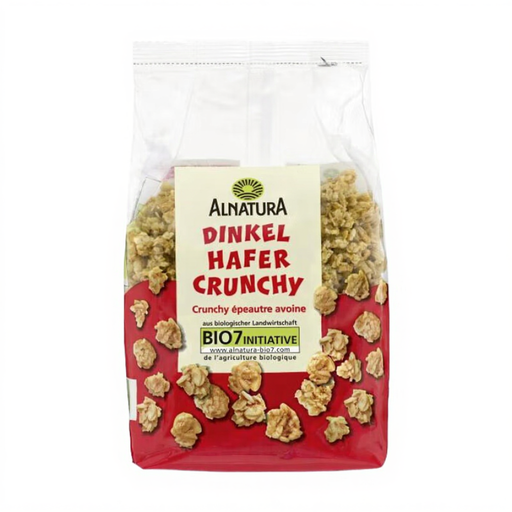 Image unavailable
For a crunchy breakfast with spelt and oats. Before buying, compare the sugar content per 100 g and check the allergen information on the pack.
 Image unavailable
A plain oat base for shoppers who want to make their own muesli rather than buy a ready-made fruit or crunchy mix. Check which preparation method fits your morning routine.
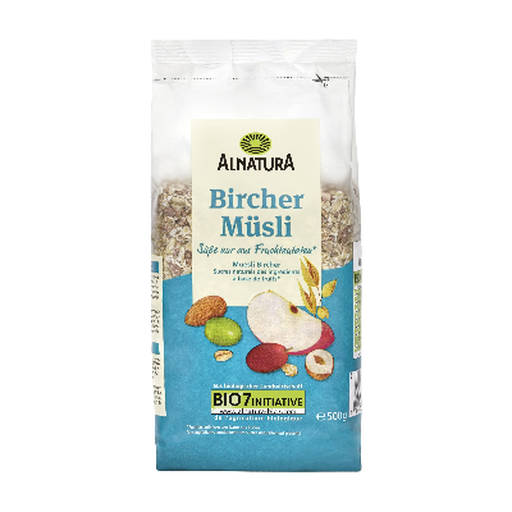 Image unavailable
For a Bircher-style breakfast with wholegrain cereals, fruit and nuts. Müller Deutschland recommends soaking this muesli for around ten minutes. Check the ingredients and sugar information on the current pack too.
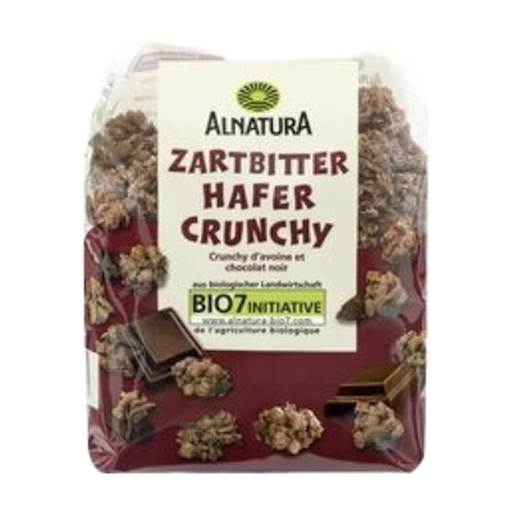 Image unavailable
A ready-to-eat, chocolatey crunchy muesli made with oats. If sugar content is a key factor in your choice, compare the nutritional information per 100 g with other mueslis.
 Image unavailable
A cornflake option for shoppers who aren’t looking for a muesli mix with fruit or nuts. Cornflakes and wholegrain muesli are different types of product, so check the nutritional values and allergens on the current pack rather than comparing them by name alone.
Check the EU organic logo, the organic control body code and the origin of the agricultural ingredients on the pack. According to the European Commission, processed products must contain at least 95% organic agricultural ingredients to carry the logo. The sugar content isn’t shown by the logo.
No. The claim doesn’t mean that the stated sugar content is zero. Müller Deutschland lists 13.5 g of sugar per 100 g for Bauck Mühle Organic Demeter Berry Spelt Muesli, which carries this claim. So compare the nutritional information and ingredients.
Organic certification and the muesli’s ingredients answer different questions. The German Nutrition Society describes wholegrain products as higher in fibre than more refined grain products. To compare specific products, check the wholegrain ingredients, fibre and sugar per 100 g.
No. Vegan doesn’t mean free from nuts or gluten. For each muesli, read the ingredients, highlighted allergens and may-contain warnings on the current pack.
Not necessarily. Müller Deutschland recommends soaking Alnatura Organic Bircher Muesli for around ten minutes after mixing. If you want to eat straight away in the morning, check the preparation instructions for your chosen mix before buying.