For shoppers who check organic certification
If organic production matters to you, look beyond the front-of-pack wording and check for the EU organic logo, the inspection body code and the ingredients list.


For a weekend breakfast you can customise yourself, a plain multigrain base is a good option. If you’d like fruit, nuts or crunch already in the mix, choose a variety that includes them. For any organic muesli, check the labelling, ingredients, sugar per 100 g and allergens. Neither ‘organic’ nor ‘no added sugar’ tells you how much sugar it contains on its own.
If organic production matters to you, look beyond the front-of-pack wording and check for the EU organic logo, the inspection body code and the ingredients list.
A flake or multigrain base is easy to customise at the weekend with fruit, yoghurt, milk or a plant-based drink.
With ready-made mixes, the specific variety determines the ingredients and texture. So compare the sugar content too, and check the allergen information if relevant.
First decide whether you want a base you can customise or a ready-made mix to serve. Then compare the labelling of varieties that suit the kind of breakfast you have in mind.
| What to consider | What to check | Who it matters to |
|---|---|---|
| Organic certification | The EU organic logo, inspection body code and the stated origin of agricultural ingredients. | If organic certification is a priority for me, I want to be able to verify it on the pack. Around 33% of consumers put this proof first. |
| Sugar and ingredients | Sugar per 100 g, as well as dried fruit and sweetening ingredients in the ingredients list. | With a fruity mix, I want to know how sweet it is overall, even if it says ‘no added sugar’. This comparison takes priority for around 25% of consumers. |
| Allergens | Allergens highlighted on the pack, the types of grain included and any product-specific ‘may contain’ warnings. | If I need to avoid certain ingredients, the variety name alone isn’t enough to help me choose. Around 25% of consumers put suitability first. |
| How you’ll serve it and its texture | A plain base or a ready-made fruit, nut or crunchy mix. | At the weekend, I want either to add my own ingredients or serve a mix with the texture I’m after. Around 17% of consumers make this their main consideration. |
Organic certification doesn’t tell you how much sugar a product contains. Fruit, honey or syrup can all contribute to the sugar content of muesli.
Compare the nutrition information per 100 g for the varieties you’re interested in and read the ingredients list. The Verbraucherzentrale (German Consumer Advice Centre) points out that claims such as ‘sweetened only with fruit’ don’t tell you the sugar content.
‘Fruit’, ‘nut’ or ‘multigrain’ doesn’t list every ingredient or tell you whether traces of other allergens may be present.
Check the ingredients list on the specific pack, including any highlighted allergens, and look out for ‘may contain’ warnings.
Texture alone doesn’t tell you how much sugar or fat a product contains. For example, Brüggen says its crunchy mueslis are made by mixing cereal ingredients with syrup and then baking them.
Choose a crunchy mix for its texture, then compare the ingredients and nutrition information with the alternatives to check how it measures up against your other criteria.
Alnatura makes organic muesli in several styles, including plain and fruit mixes.
The own-brand range includes both a plain multigrain base and fruitier mixes.
Seitenbacher makes organic muesli, including hearty mixes with nuts and seeds.
familia offers muesli ranges; if you’re planning a Bircher-style breakfast, compare the specific organic variety.
Here, Kölln is a point of comparison for fruit muesli, not a blanket organic recommendation.
Brüggen describes how it makes muesli for own-label ranges, including organic recipes.
This selection includes Alnatura mueslis to suit different breakfast preferences: nutty, fruity, Bircher-style, crunchy or a base mix with cornflakes. Always check the organic certification and any ingredients that matter to you on the specific pack.
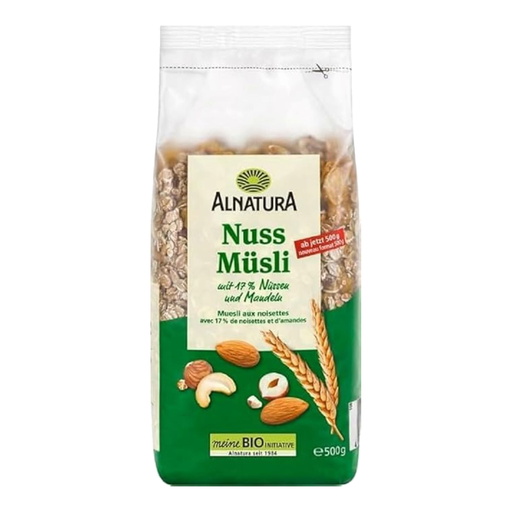 No image available
An option if you’re looking for a nut mix rather than a plain base for your weekend breakfast.
Pack size: 500 g. If needed, check which types of nuts it contains and the allergen information on the pack.
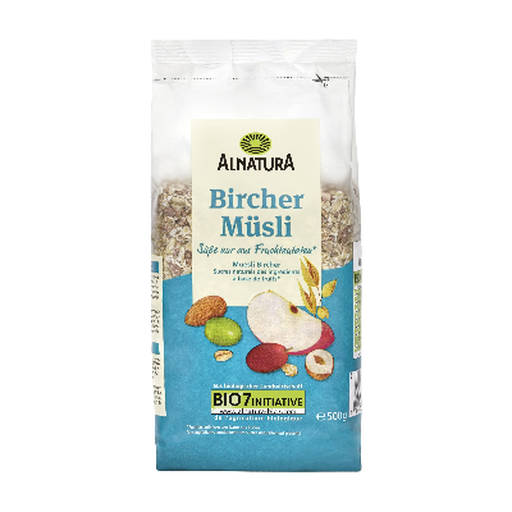 No image available
For a Bircher-style breakfast if you’re looking for a mix labelled accordingly.
Pack size: 500 g. Compare the sugar per 100 g and check the allergens on the pack.
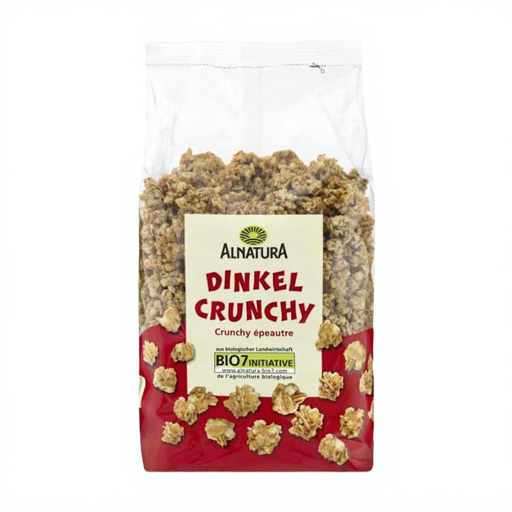 No image available
For a weekend breakfast where a crunchy mix made with spelt is just what you’re after.
Pack size: 750 g. Compare the ingredients and sugar content when choosing between different crunchy mueslis.
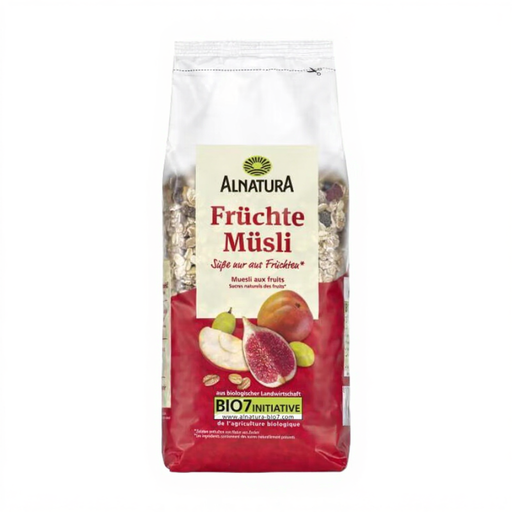 No image available
A mix described as fruity, if you’d rather not add the ingredients yourself.
Pack size: 750 g. The name includes ‘4-Nut’, but the ingredient information available doesn’t list any nuts. Check the pack to confirm what it contains, especially if you have an allergy.
 No image available
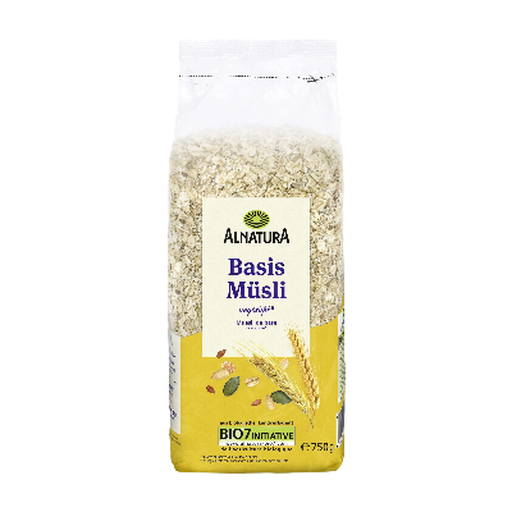
Worth considering if you’re looking for a variety described as a base muesli with cornflakes.
Pack size: 750 g. Check the ingredients list before treating it as a plain or unsweetened base.
For pre-packed organic muesli, look for the EU organic logo, the inspection body code and the stated origin of the agricultural ingredients. According to the European Commission, the logo is only used when the requirements for organic products are met. You should also check the ingredients and nutrition information when choosing a product.
No, these statements don’t mean the same thing. The Verbraucherzentrale (German Consumer Advice Centre) points out that wording such as ‘sweetened only with fruit’ doesn’t tell you the actual sugar content. To compare products, check ‘of which sugars’ per 100 g in the nutrition information.
Read the ingredients list on the specific pack and check for any ‘may contain’ warnings too. For pre-packed foods, allergens are highlighted in the ingredients list. A description such as ‘oats’ or ‘multigrain’ is no substitute for checking.
A plain multigrain mix without dried fruit gives you room to add fruit or other ingredients yourself. REWE describes its Bio 5-Korn-Müsli as this kind of base mix. Check the specific ingredients list too if you need to avoid certain ingredients.