Which nuts are right for you?

For organic-minded snackers

If you like to eat nuts plain and want as few ingredients as possible, look for unprocessed varieties. However, ‘unprocessed’ alone does not mean a product is organic: only the specific product’s labelling can confirm its organic status.

For Christmas market treats

If you’re after roasted flavours, spices or sweetness for an immediate treat, check the ingredients in coated or seasoned nuts. You can’t reliably tell the salt, sugar or types of nuts they contain from the variety name alone.

For shoppers keeping an eye on allergens

If allergens matter to anyone sharing your food, check the information for the specific product. For packaged products, read the ingredients list and allergen labelling; for loose products, ask the stallholder about allergen information before buying.

What should you look for when buying?

Whether you’re visiting a Christmas market or doing some festive baking, first decide how you’ll use the nuts: to eat straight away or as an ingredient. Then check the specific product’s organic certification, ingredients and allergen information.

What to check What to look for when buying Who it matters most to
Organic labelling Check the EU organic logo, control body code and country of origin on the specific product. Don’t assume ‘unprocessed’ means ‘organic’. If I’m specifically looking for organic nuts, I want to be able to confirm their organic status before choosing a flavour. Around 42% of consumers would make this labelling their top buying priority.
Ingredients and allergens For packaged products, read the ingredients list, highlighted allergens and any precautionary ‘may contain’ statements; for loose products, ask for allergen information. With a mix, I want to know what it contains besides nuts; if I have an allergy, information about the specific product is essential. Around 33% of consumers would prioritise ingredients and allergens.
How you’ll use them and flavour Choose plain nuts for recipes, or roasted, seasoned or sweet varieties to eat straight away. I need a different kind of nut for a recipe than I do for a sweet treat on the go. Around 25% of consumers would put choosing the right variety for its intended use first.

Which buying mistakes can you avoid?

  • ‘Unprocessed’ automatically means ‘organic’

    The term describes how a product is prepared, not whether it has organic certification. Nuts aren’t organic simply because they’re unsalted or unroasted.

    If organic certification is important to you, check the relevant labelling, control body code and country of origin on the specific product.

  • With sweet nuts, only the type of nut matters

    Caramelised, seasoned and mixed varieties may contain additional ingredients. Even products made with the same type of nut can have different ingredients.

    For packaged products, read the ingredients list and allergen labelling before choosing a variety.

  • Allergen information isn’t needed for loose products

    With nuts sold loose, you can’t tell what they contain just by looking. The German Federal Office of Consumer Protection and Food Safety notes that German food information rules also apply to non-prepacked foods.

    Ask the stallholder for the available allergen information before buying. If information you need is unclear, don’t choose that product.

  • A product description is the same for every pack

    Ranges can vary between shops. EDEKA also notes that its product information may differ from the packaging.

    Check the organic labelling, ingredients, allergens, weight and best-before date on the product itself.

Brands and ranges to help you choose

REWE Bio

An organic own-label range with different types of nuts to compare by ingredients and intended use.

  • REWE’s range overview includes organic cashew kernels, organic walnut kernels and organic peanuts.
  • Check which varieties are available at your chosen shop.

EDEKA Bio

An organic own-label range for shoppers looking, for example, for plain almonds to enjoy as a snack or use in recipes.

  • EDEKA lists plain organic almonds in a 200 g pack.
  • EDEKA notes that products may not be available in every shop and that online information may differ from the packaging.

ALDI BIO / NUR NUR NATUR

Organic brands from ALDI SÜD, where the labelling on the specific nut variety remains key.

  • ALDI SÜD says ALDI BIO products meet at least the requirements of the EU Organic Regulation; according to the retailer, most NUR NUR NATUR products are certified by Naturland.
  • Statements about the brands do not confirm the certification or availability of any particular nut variety.

Lidl Bio

Lidl’s organic range, with product choices based on the details shown on the specific item.

  • Lidl describes a range of around 950 organic products; this figure covers its entire organic range, not just nuts.
  • You can only tell whether the nut variety you’re looking for is available, and how it is labelled, by checking the specific product.

Seeberger

A nut brand offering plain and flavoured varieties for different tastes and uses in the kitchen.

  • Seeberger describes a range that includes unroasted, unsalted and roasted nuts.
  • Being part of the Seeberger range does not prove a product is organic; check the labelling on the specific variety.

Suitable products at Joybuy

The selection below features pine nuts to enjoy on their own or use as a kitchen ingredient. Caramelised almonds and other sweet Christmas market nuts call for different flavour and ingredient considerations.
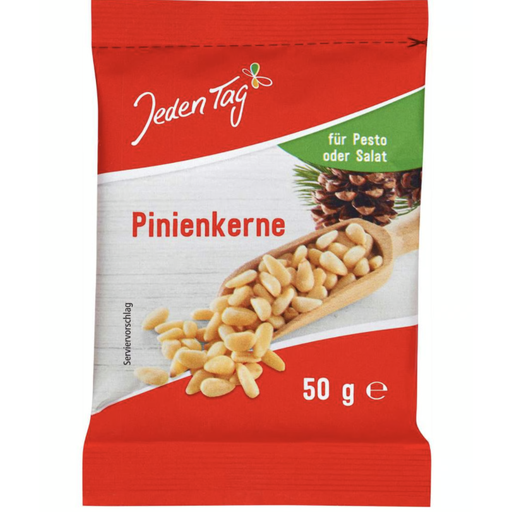
Jeden Tag Organic pine nuts, 50 g

Jeden Tag Organic pine nuts, 50 g

These pine nuts are suitable for enjoying on their own or using as an ingredient in dishes such as salads and pesto.

The pack contains 50 g. According to the product description, pine nuts are the only ingredient, and they come from certified organic farming.

If organic labelling is important to your choice, check the EU organic logo, control body code and country of origin on the current pack. Also check for possible traces of peanuts, cereals containing gluten, soya, sesame and other nuts. If you specifically want roasted or seasoned kernels, check how the product in the pack on offer has been prepared.

View at Joybuy

Frequently asked questions

How can I tell if packaged nuts are organic?

The EU organic logo is generally required on prepacked foods produced and sold as organic in the EU. According to the European Commission’s guidance, you should also check the control body code and country of origin on the specific product.

Are unprocessed nuts automatically organic?

No. ‘Unprocessed’ and ‘organic’ describe different things. Unprocessed nuts may be unroasted or unsalted, for example; you’ll need to check the labelling on the specific product to see whether they’re organic.

What should I check before buying if I have a nut allergy?

Check the allergen information for the specific product, not just its name. For packaged products, the relevant major allergens are highlighted in the ingredients list; also read any precautionary ‘may contain’ statements. If information about an allergen that matters to you is unclear, don’t buy the product.

How can I check loose nuts at a Christmas market?

Ask the stallholder for product and allergen information before buying loose nuts or caramelised almonds. According to the European Commission, the EU organic logo may be used voluntarily on non-prepacked organic products, so don’t rely on whether the logo is visible to confirm organic status.

Is the information in an online shop enough to help me choose?

Use the online information to narrow down your options, then check the current pack when you buy. EDEKA specifically notes that its product information may differ from the packaging.