What should you look for when buying?
First, decide whether organic certification is essential. Then compare the recipe, allergen information and pack format to find the right option for your workplace.
| Criteria |
What to check when buying |
Who it matters most to |
| Organic certification and ingredients |
Check the EU organic logo, control body code and origin information, as well as the ingredients list on the specific pack. |
If organic certification is essential to me, I also want to know what’s in the pack besides the nuts. Around 36% of consumers put this clarity on certification and ingredients first. |
| A simple nut snack |
Compare the ingredients, salt per 100 g and pack size; don’t assume that “organic” means “unsalted”. |
For a regular snack at my desk, I prefer a small portion with a simple recipe. Around 29% of consumers prioritise this. |
| Allergens in the team |
Read the highlighted allergens and any precautionary trace warnings on every pack. |
If several people share the office kitchen, I need to know what allergens may be present before sharing. This is the main concern for around 21% of consumers. |
| Portions and restocking |
Compare the net weight and product format; check availability at your chosen retailer. |
Between meetings, I want to be able to grab a suitable portion or restock without mistaking a bar for plain nuts. This is the most important factor for around 14% of consumers. |
A suitable product at Joybuy
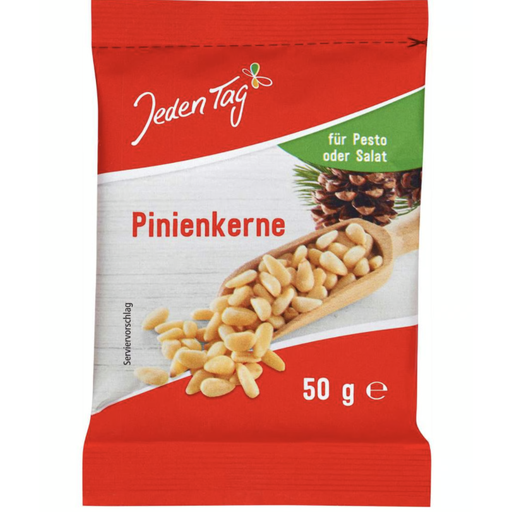
This pack of pine nuts could be a good option if you’re looking for a single variety in a 50 g pack for work, rather than a nut mix. Before buying, check the organic certification and information on the specific pack.
 No image available
Jeden Tag Organic pine nuts, 50 g
A single variety for work, if a 50 g pack suits you. Check the pack for the EU organic logo, control body code, ingredients and allergen information. If you’re looking for unsalted kernels, also compare the salt content in the nutrition information.
View at Joybuy
Frequently asked questions
How can I identify a packaged organic nut mix?
Check the EU organic logo and other organic information on the specific pack. According to the European Commission, the logo may only be used on products made up of at least 95% organic ingredients. Also look for the control body code and the origin information for the agricultural raw materials.
Do I still need to read the ingredients on organic nuts?
Yes, because organic certification doesn’t tell you whether your chosen mix contains oil, salt, dried fruit or other ingredients. The ingredients list and highlighted allergens help you check the recipe of the specific product.
Are roasted and salted organic nuts unsuitable as an office snack?
Not necessarily: they’re an option if that’s the recipe you want. But don’t treat them as identical to plain nuts. According to REWE, for example, the roasted and salted REWE Bio nut mix contains sunflower oil and salt.
Can I leave nuts out for everyone in the office to share?
First, consider allergies in the team and make sure the information on the original packaging is accessible. Nut mixes can contain peanuts and various tree nuts. If you’re unsure who might help themselves, an open bowl without the relevant allergen information isn’t a good choice.
Is Solevita a brand of organic nuts?
Lidl describes Solevita as a drinks brand, not its nut brand. Lidl lists Alesto for nuts; check the labelling on the pack to see whether a particular Alesto product is organic.


